Advertisement






What really powers the cloud? Behind every Google search, A...
A lot of what defines a home isn’t visible at handover. I...
Private equity has played a significant role in shaping Indi...
Luxury real estate is one of the most talked-about segments ...
Airports play a much bigger role than just enabling travel -...
The Navi Mumbai Municipal Corporation (NMMC) has identified more than 500 buildings as structurally unsafe following a city-wide survey, issuing evacuation notices to occupants in high-risk categories. The action, undertaken in compliance with court directions, primarily targets older structures requiring urgent structural audits and potential demolition or repair. Buildings classified under the most critical category have been directed to be vacated immediately, raising concerns over resident displacement and redevelopment readiness. The move highlights increasing scrutiny on ageing housing stock in the Mumbai Metropolitan Region, where structural safety, periodic audits and redevelopment planning remain key challenges for civic authorities and housing societies.
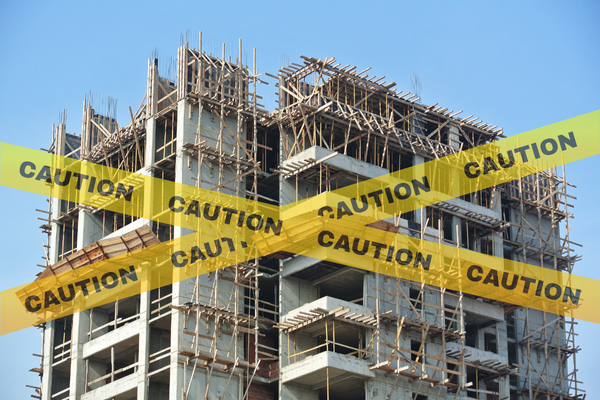
The Navi Mumbai Municipal Corporation (NMMC) has declared over 500 buildings within its jurisdiction as unsafe and issued evacuation notices to occupants, following a recent structural assessment carried out across the city. Advertisement






The action, initiated in the past week, forms part of compliance with judicial directives and provisions under the Maharashtra Municipal Corporation Act, which mandate identification and remediation of dangerous structures. According to civic officials, the buildings have been categorised based on structural condition, with those falling under the most critical ‘C-1’ classification deemed unfit for habitation and requiring immediate evacuation.
The survey covered ageing residential and mixed-use buildings, many of which are over three decades old and have not undergone mandatory structural audits. As per prevailing regulations, buildings older than 30 years are required to undergo structural audits every three years, while those between 15 and 30 years must be assessed every five years by empanelled engineers.
Civic authorities have directed housing societies and property owners to comply with evacuation orders and initiate necessary measures, including repairs, structural strengthening or demolition, depending on the severity of deterioration. In several cases, redevelopment is expected to emerge as a key pathway, particularly where repair is not viable.
The move follows incidents of structural instability observed during renovation activities, including flooring changes and reinforced concrete repairs, which have raised concerns over safety compliance and supervision. Authorities have emphasised that any such work must be undertaken with prior approval and under the supervision of registered structural engineers to prevent further risk.
For residents, the evacuation notices present immediate challenges related to temporary relocation, financial burden and uncertainty over redevelopment timelines. In many cases, delays in consensus among housing society members and developers can prolong displacement, adding complexity to implementation.
From an urban development perspective, the identification of unsafe buildings underscores the growing pressure on ageing housing stock in the Mumbai Metropolitan Region. Large clusters of older buildings, particularly those developed in earlier phases of urban expansion, now require either extensive retrofitting or redevelopment to meet current safety standards.
The situation also highlights enforcement challenges for civic bodies, including ensuring timely structural audits, monitoring compliance and taking decisive action where buildings pose a risk to life and property. While regulatory frameworks mandate periodic inspections, implementation gaps have often resulted in delayed intervention.
Authorities have indicated that further inspections and enforcement actions will continue, with a focus on preventing structural failures, particularly ahead of the monsoon period. The process is expected to involve coordination between civic departments, housing societies and redevelopment stakeholders to address both immediate safety risks and long-term urban renewal requirements.

5th Jun, 2025

25th May, 2023

11th May, 2023

27th Apr, 2023
Advertisement









 Facebook
 Whatsapp
