Advertisement










Private equity has played a significant role in shaping Indi...
In today’s real estate landscape, fitness is often treated...
In this episode of Prop Personalities, we sit down with Hars...
Luxury real estate is one of the most talked-about segments ...
Welcome to Prop Personalities by Prop News Time - a podcast ...
Telangana has initiated a detailed safety audit of electric vehicle charging stations across public and residential areas as EV usage continues to grow. The inspections focus on fire safety systems, technical reliability, and risk prevention measures at high-capacity charging points. Authorities reviewed systems such as thermal monitoring, earth-leakage protection, and automatic shutdown features. The findings are expected to guide stricter compliance norms for operators and improve safety in residential complexes. The move is part of the state’s wider effort to expand EV infrastructure while ensuring safe and reliable operations.
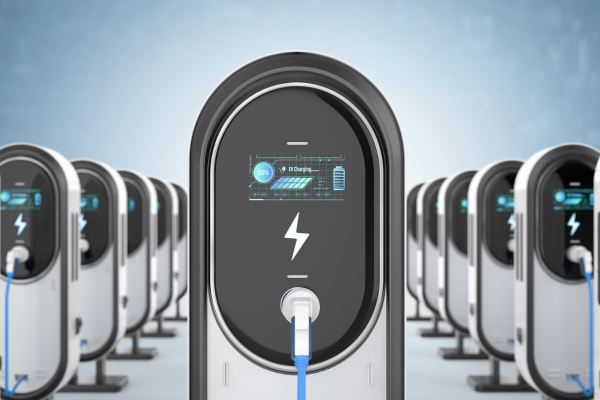
The Telangana government has begun a comprehensive safety audit of electric vehicle (EV) charging stations to strengthen fire safety and ensure reliable operations as EV adoption increases. The exercise covers both public charging hubs and residential installations, where charging infrastructure is becoming more common. Advertisement


The inspection drive was carried out by the state’s Fire, Disaster Response, Emergency and Civil Defence Department in Hyderabad’s Kokapet area, which has seen rapid development and a rise in EV-related infrastructure. Officials visited a public charging station operated by ChargeZone and also assessed a nearby high-rise residential complex to understand safety conditions in different settings.
During the inspection, Director General Vikram Singh Mann reviewed the functioning of high-capacity DC fast chargers along with technical teams. The assessment focused on key safety systems, including earth-leakage protection, thermal monitoring, and automatic shutdown mechanisms during faults or power fluctuations. These systems are important in preventing overheating and reducing fire risks, especially in high-usage locations.
The review also examined how these systems perform under regular load conditions and whether maintenance practices are being followed properly. Officials assessed if safety equipment was functional, accessible, and aligned with required standards, particularly in public charging stations where usage is higher and continuous.
In residential complexes, the focus was on enclosed parking areas where EV charging points are being installed. Authorities checked whether existing fire safety systems, such as sprinklers and ventilation, are sufficient to handle EV-related risks. The integration of charging infrastructure in such spaces is still evolving, and gaps in preparedness could pose safety concerns if not addressed early.
Vikram Singh Mann indicated that inputs from these inspections would be used to develop clearer and more practical safety guidelines for EV charging infrastructure. He highlighted that as the number of charging stations increases, consistent safety standards and regular monitoring will be necessary to avoid incidents.
Officials also indicated that the findings could lead to stricter compliance requirements for commercial charging operators, including mandatory safety checks and better system monitoring. The aim is to ensure that infrastructure expansion is supported by proper safeguards rather than only focusing on capacity growth.
The audit comes at a time when Telangana is actively working to expand its EV ecosystem. In the past week, the state has been considering measures such as a real-time dashboard to track charging stations and proposals to make EV charging facilities mandatory in residential buildings. These steps are expected to improve access while keeping safety as a priority.
The state has also been planning to scale up charging infrastructure across public transport systems, including bus depots and urban mobility networks. With more EVs expected on the road, the demand for reliable and safe charging infrastructure is likely to increase steadily.
Source PTI

5th Jun, 2025

25th May, 2023

11th May, 2023

27th Apr, 2023
Advertisement





 Facebook
 Whatsapp
