Advertisement










Private equity has played a significant role in shaping Indi...
In today’s real estate landscape, fitness is often treated...
In this episode of Prop Personalities, we sit down with Hars...
Luxury real estate is one of the most talked-about segments ...
Welcome to Prop Personalities by Prop News Time - a podcast ...
The Dharavi Redevelopment Project is set to provide larger rehabilitation homes to residents of chawls and formal buildings within the notified area. Around 8,700 households are expected to benefit, with flat sizes ranging from 500 sq ft to 754 sq ft. The proposal follows directions from the state government to improve living standards beyond earlier norms. Amendments to planning regulations have been initiated and opened for public feedback. While the move is seen as a step forward, residents continue to raise concerns around relocation, clarity on execution and eligibility criteria.
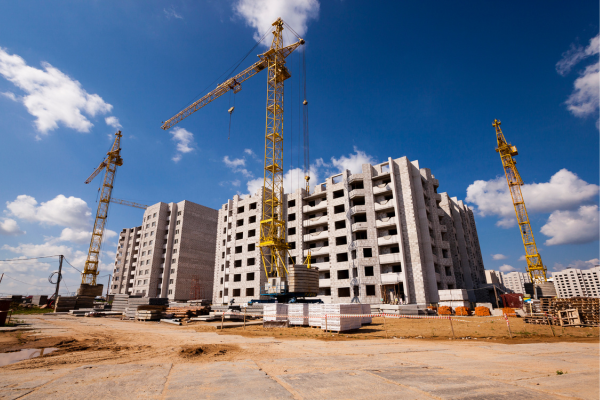
Residents living in chawls and residential buildings in the Dharavi Redevelopment Project (DRP) area are likely to receive larger rehabilitation homes under a revised proposal by the state government. The plan covers nearly 8,700 households within the Dharavi Notified Area and extends benefits to occupants of formal structures, who were earlier not fully aligned with standard slum rehabilitation provisions. Advertisement


As per the proposal, eligible residents will be provided free rehabilitation flats with a minimum carpet area of 500 sq ft, which can go up to 754 sq ft depending on eligibility and structure type. This is higher than the earlier rehabilitation sizes typically offered in such projects. The increase includes a base carpet area along with an additional fungible component. However, developers will not be allowed to claim extra floor space index (FSI) benefits on this additional area, ensuring that the increase is directed towards improving resident housing rather than project gains.
The revised plan has been prepared following directions from the state leadership, which had asked authorities to improve housing standards for residents of old buildings and chawls within Dharavi. This marks a shift in approach, as earlier redevelopment efforts largely focused on slum households, while occupants of authorised structures had separate and often limited provisions.
To implement the change, the urban development department has proposed amendments to Regulation 33(9)(A) under the Development Control and Promotion Regulations (DCPR) 2034. The draft amendments have been placed in the public domain, inviting suggestions and objections before final approval. This indicates that the proposal is still under review and may see further refinements based on stakeholder feedback.
At the same time, execution of the Dharavi redevelopment has started progressing on the ground. Work has begun on key land parcels, including railway land, where a large number of rehabilitation units are planned in the initial phase. Authorities have begun engaging with residents in certain sectors to facilitate relocation so that construction activity can move ahead without delays.
Despite the improved housing offer, several concerns continue to be raised by residents. These include lack of clarity on whether rehabilitation will be provided within Dharavi or at alternate locations, timelines for shifting, and detailed eligibility conditions. Such concerns have been part of the project for years, as Dharavi’s redevelopment has seen multiple delays, policy changes and revisions in planning models.
The Dharavi Redevelopment Project remains one of the largest urban renewal projects in the country, covering a vast and densely populated area in Mumbai. The plan aims to transform the locality into a planned urban cluster with better housing, infrastructure and services, while balancing rehabilitation needs with commercial development potential. The current proposal to increase rehabilitation flat sizes is being seen as an effort to address long-standing demands from residents of formal structures within the area.

5th Jun, 2025

25th May, 2023

11th May, 2023

27th Apr, 2023
Advertisement





 Facebook
 Whatsapp
