Advertisement










Private equity has played a significant role in shaping Indi...
In today’s real estate landscape, fitness is often treated...
In this episode of Prop Personalities, we sit down with Hars...
Luxury real estate is one of the most talked-about segments ...
Welcome to Prop Personalities by Prop News Time - a podcast ...
Sattva Group, in partnership with Knowledge Realty Trust and rePurpose Global, has launched a three-year Karnataka Zero Waste Initiative aimed at strengthening waste management systems along the state’s 320 km coastline. The programme targets recovery of 4.5 million kg of waste, integration of 50 coastal villages into formal systems, and connection of over 80,000 households. It also includes livelihood support for 200 waste workers through training and safer working conditions. With plastic accounting for nearly 60 per cent of coastal litter, the initiative focuses on structured, community-led waste handling, improved segregation and processing, and reduction of land-to-sea waste leakage. Implementation will be led by rePurpose Global with support from CARPE, combining operational execution with research-led methodologies.
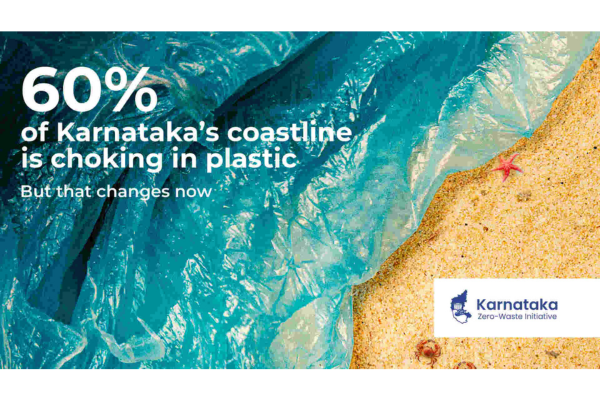
Sattva Group, in partnership with Knowledge Realty Trust and rePurpose Global, has launched the Karnataka Zero Waste Initiative, a three-year programme aimed at establishing structured waste management systems across the state’s coastline. Announced on the occasion of Earth Day, the initiative seeks to address rising plastic waste levels along Karnataka’s 320 km coastal belt by introducing community-led, financially viable waste handling frameworks. Advertisement


The programme targets the recovery and processing of approximately 4.5 million kilograms of waste over its duration, while integrating 50 coastal villages into formal waste management systems. It also aims to connect more than 80,000 households to organised waste collection and segregation networks, improving handling at the source and reducing environmental leakage into marine ecosystems. Plastic waste currently constitutes nearly 60 per cent of coastal litter in the region, underlining the scale of the issue.
In addition to waste recovery targets, the initiative includes a livelihood component focused on supporting around 200 waste workers. This will involve skill development, safer working conditions and improved income stability, with the objective of strengthening the informal waste value chain and enabling its transition into a more structured system.
Shivam Agarwal, Vice President – Strategy at Sattva Group, indicated that protecting Karnataka’s coastline remains essential for sustaining both environmental conditions and local economies. He conveyed that the initiative has been designed to enable community-led waste management systems that improve local practices while creating more stable livelihoods. He further stated that awareness and participation would be central to achieving measurable improvements in coastal conditions.
The programme places significant emphasis on behavioural change, encouraging communities to adopt improved waste segregation and disposal practices. Enhanced collection and processing systems are expected to support a more circular approach to material use, reducing reliance on landfill disposal and improving resource recovery outcomes.
From an institutional perspective, Knowledge Realty Trust highlighted that environmental risks extend beyond asset-level operations. Jiji Thomas, Head – ESG and Sustainability, indicated that coastal waste represents a material risk with implications for climate resilience and long-term asset value. She stated that the trust’s role would focus on strengthening governance, transparency and upstream awareness to reduce land-to-sea waste flows, while implementation partners address midstream and downstream interventions.
The initiative is being implemented in collaboration with rePurpose Global, which will lead on-ground execution, and the Centre for Applied Research and People’s Engagement (CARPE), which will act as the non-profit recipient of programme funds. rePurpose Global is responsible for designing and deploying waste recovery systems aligned with global standards, while CARPE contributes expertise in solid waste management, environmental restoration and data-driven programme execution.
Aditya Siroya, Founder and Chief Impact Officer at rePurpose Global, indicated that scalable waste management requires locally embedded systems supported by operational rigour. He added that the partnership aims to create models that reduce environmental impact while enabling community participation.
The Karnataka Zero Waste Initiative reflects a structured approach to waste management, combining measurable recovery targets with local participation and institutional oversight, with scope for replication across other regions over time.

5th Jun, 2025

25th May, 2023

11th May, 2023

27th Apr, 2023
Advertisement





 Facebook
 Whatsapp
