Advertisement






Private equity has played a significant role in shaping Indi...
In today’s real estate landscape, fitness is often treated...
In this episode of Prop Personalities, we sit down with Hars...
Luxury real estate is one of the most talked-about segments ...
Welcome to Prop Personalities by Prop News Time - a podcast ...
A government panel led by Vikas Kharge has found that revenue officials had identified irregularities in the Mundhwa land transaction in Pune and had blocked the mutation request at the initial stage. However, the issue was not escalated properly, allowing procedural lapses to weaken the scrutiny. The report highlights that around 45 acres of government land was registered in 2005 in the name of a private firm for INR 300 crore. It also points to administrative negligence, confusion in land classification, and improper actions related to the Botanical Survey of India's lease.
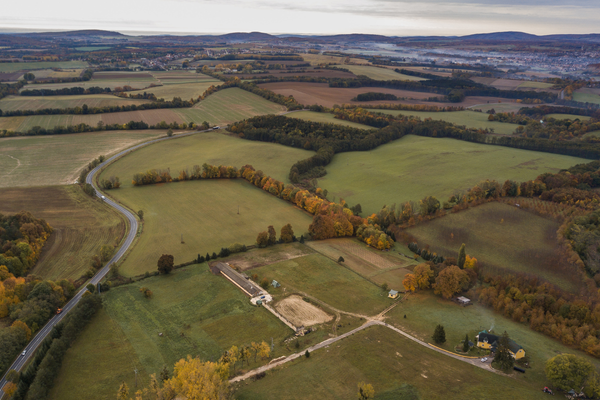
The inquiry into the Mundhwa land case has shown that irregularities were identified early at the local level, but follow-up action was not handled properly. A panel headed by Vikas Kharge noted that revenue officials, including the talathi and circle officer, had raised concerns about the transaction and had stopped the mutation process in the records. However, due to gaps in communication and lack of timely escalation, the issue did not move forward for deeper scrutiny at higher levels. Advertisement






The case involves nearly 45 acres of government land located in Pune's Mundhwa area. Records indicate that about 17 hectares of this land was registered in 2005 at the Haveli sub-registrar office in the name of Amadea Enterprises LLP for INR 300 crore. After the registration, one of the partners of the firm applied for mutation of the land in revenue records through the local office.
At the initial stage, the talathi found discrepancies and treated the case as a double entry. It was also observed that the 7/12 extract linked to the land had already been closed, making the mutation request invalid. Based on this, the application was not processed. A communication was issued stating that mutation could not be carried out, and this was routed through the tehsildar's office as the applicant's address details were incomplete.
Further verification by the circle officer also confirmed that the title record was closed and could not be entered into the system again. Despite these clear observations, the panel found that the matter was not escalated to senior authorities. The then tehsildar did not inform the district collector, which the report described as a failure in duty. This lack of escalation reduced the chances of timely intervention.
The report also examined actions taken by the private firm after the transaction. It noted that the firm had moved to evict the Botanical Survey of India from the land, stating that its lease, which dated back to October 1973, had expired. A notice was issued to take possession of the land. The panel observed that this step was not appropriate, as the legal status of the land had not been fully verified and higher authorities were not consulted before taking such action.
In addition, a government order issued in 2013 removed the land from the vatan category. This change added to the confusion regarding the classification and ownership of the land. The panel pointed out that such changes, along with weak record management and lack of coordination between departments, contributed to the overall situation.
The findings are part of a wider review of the Mundhwa land transaction, where concerns around illegal transfer of government land and manipulation of records have already been raised. The panel has suggested action against responsible officials and has highlighted the need for better systems to track and manage government land records, especially in cases involving large land parcels.

5th Jun, 2025

25th May, 2023

11th May, 2023

27th Apr, 2023
Advertisement









 Facebook
 Whatsapp
