Advertisement






What really powers the cloud? Behind every Google search, A...
A lot of what defines a home isn’t visible at handover. I...
Private equity has played a significant role in shaping Indi...
Luxury real estate is one of the most talked-about segments ...
Airports play a much bigger role than just enabling travel -...
Chandigarh is planning a significant expansion of its electric vehicle (EV) charging infrastructure, with authorities identifying 15 new locations for charging stations to meet rising demand. The proposal, prepared by the Chandigarh Renewable Energy Science and Technology (CREST) agency in the past week, comes amid sustained growth in EV adoption, with registrations exceeding 3,000 annually for the past three years. Notably, electric car registrations crossed 1,500 units in 2025, overtaking two-wheeler EVs for the first time. The expansion, subject to municipal approval, would increase the city's charging network from 36 to 51 stations. The initiative follows a public-private model where land is provided by the civic body and private firms handle installation and operations.
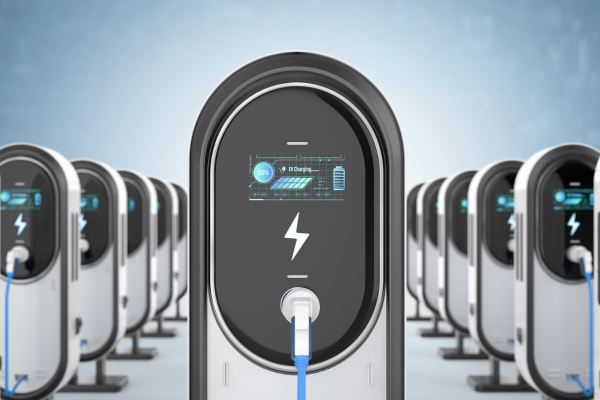
The Chandigarh administration is planning to expand its electric vehicle (EV) charging network by identifying 15 new sites across the city, following a surge in EV registrations, with the proposal submitted in the past week for approval by the municipal corporation. The plan has been prepared by the Chandigarh Renewable Energy Science and Technology (CREST) agency to strengthen charging infrastructure in response to increasing adoption of electric mobility. Advertisement






The proposed locations have been selected after a ground-level assessment, focusing on high-traffic commercial areas and densely used public spaces where demand for charging facilities is rising. Officials indicated that these sites are largely situated within paid parking zones, requiring detailed evaluation of financial viability and parking logistics before final clearance is granted.
The expansion is driven by consistent growth in EV adoption within the city. Registrations have exceeded 3,000 units annually over the past three years, reflecting a steady shift towards electric mobility. In 2025, electric four-wheeler registrations surpassed those of electric two-wheelers for the first time, with more than 1,500 electric cars added during the year.
If approved, the addition of 15 new charging stations will increase Chandigarh's network from 36 to 51 locations, ensuring wider coverage across major commercial sectors and public zones. The initiative is structured under a public-private partnership model, wherein the municipal corporation provides land, while private operators selected through competitive bidding are responsible for installation, operation, and maintenance of the infrastructure.
Under this arrangement, the civic body receives a fixed rental income from the allocated sites, while private operators retain revenue generated from charging services. Officials indicated that the model has already demonstrated financial viability, with the existing charging network generating approximately INR 1 crore in revenue over the past year. Of this, around INR 26 lakh accrued to the municipal corporation, with the remainder supporting private operators managing the facilities.
The proposed expansion reflects broader trends in urban transport planning, where infrastructure is being scaled in line with shifts in vehicle ownership patterns. While electric mobility adoption continues to grow, availability of charging infrastructure remains a critical factor influencing user confidence and long-term transition.
Chandigarh has been among the early adopters of EV-focused policies, and the current proposal builds on earlier efforts to promote clean mobility through incentives and infrastructure development. As electric vehicle penetration increases, the integration of charging networks into urban planning frameworks is becoming central to sustaining adoption.
The final decision on the proposed sites will depend on municipal approval and feasibility assessments, including space utilisation and revenue considerations. Once implemented, the expanded network is expected to improve accessibility and support continued growth in electric vehicle usage across the city.
Advertisement













 Facebook
 Whatsapp
