Advertisement










When should a housing society in Mumbai start considering re...
From GST on JDAs to SEBI’s REIT reclassification and the S...
Stay ahead in the world of real estate with our daily podcas...
Stay ahead in the world of real estate with our daily podcas...
India's luxury housing market is witnessing a structural shift as Tier 2 cities emerge as key demand centres, driven by locally generated wealth and end-user aspirations rather than metropolitan spillover. According to Anarock, premium and luxury homes now form a rising share of new launches across several non-metro markets, reflecting developer confidence in sustained demand. The trend is supported by enterprise-led growth, including expansion of family-run businesses, SME clusters and startup exits. Demand is largely end-user driven, with business families, next-generation buyers and returning NRIs investing in primary residences. The shift indicates a move away from investment-led buying in metros towards consumption-led, locally anchored housing demand in emerging urban centres.
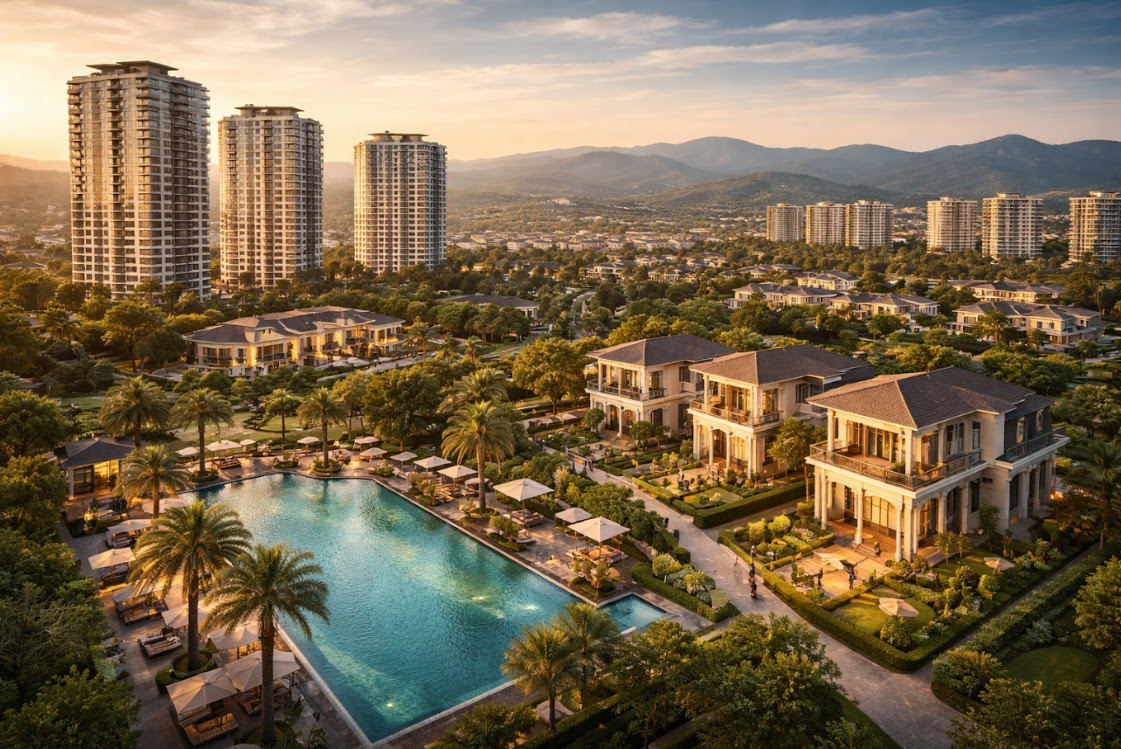
India's residential real estate market is undergoing a shift, with Tier 2 cities emerging as significant centres for luxury housing demand, driven by locally generated wealth and changing homeownership preferences, according to industry assessments in recent months. Advertisement


The transition reflects a departure from the long-standing dominance of metropolitan markets in the luxury segment. Developers and consultants indicate that demand in cities such as Chandigarh, Mohali, Lucknow and Dehradun is increasingly being led by end users seeking to upgrade primary residences rather than by investors acquiring second homes. This trend is linked to a broader redistribution of wealth, with economic activity expanding beyond traditional urban centres.
Data from Anarock shows that premium and luxury housing has gained a larger share of new residential launches in several Tier 2 cities, signalling growing confidence among developers in the sustainability of demand. The underlying driver is a shift from salary-based income growth to enterprise-led wealth creation, supported by the expansion of family-owned businesses, startup ecosystems and regional industrial clusters.
Market participants indicate that this change is influencing not only the scale of housing demand but also its nature. Buyers in these markets are prioritising larger homes, low-density developments, villa formats and gated communities that emphasise privacy and long-term occupancy. Unlike metropolitan markets, where luxury housing is often linked to portfolio diversification or investment strategies, demand in Tier 2 cities is primarily consumption-led and tied to long-term habitation.
Developers operating in northern markets have observed that buyers are increasingly willing to invest in high-value housing within their home cities rather than relocating to metros. Industry executives have indicated that this reflects a growing confidence among affluent households to upgrade living standards locally, supported by improving infrastructure and economic stability.
In cities such as Lucknow, stakeholders have noted a shift in buyer preferences towards design quality, detailing and lifestyle-oriented features, suggesting a more mature and discerning consumer base. Similarly, markets like Dehradun are witnessing demand for boutique developments and villa projects that combine residential use with lifestyle considerations such as open spaces and wellness-oriented design.
Land acquisition patterns are also evolving in response to this demand. Developers are increasingly targeting peripheral areas in Tier 2 cities, where early-stage growth is translating into price appreciation and long-term development potential. While infrastructure expansion is supporting this trend, industry participants have indicated that demand is largely driven by existing local affluence rather than being created by new projects.
The ongoing shift highlights a broader rebalancing in India's housing market, where multiple cities are emerging as independent centres of demand rather than relying on metropolitan spillover. For developers, this transition requires a greater focus on product quality, community planning and long-term value creation, as buyer expectations in these markets continue to evolve alongside economic growth.

5th Jun, 2025

25th May, 2023

11th May, 2023

27th Apr, 2023
Advertisement








 Facebook
 Whatsapp
