Advertisement






What really powers the cloud? Behind every Google search, A...
A lot of what defines a home isn’t visible at handover. I...
Private equity has played a significant role in shaping Indi...
Luxury real estate is one of the most talked-about segments ...
Airports play a much bigger role than just enabling travel -...
The Pune Municipal Corporation (PMC) has introduced a new policy mandating developers to link building permissions with land acquisition for road widening, aimed at addressing persistent infrastructure bottlenecks. Under the rule, developers must submit proposals to surrender affected land within 15 days of applying for approvals and physically hand it over before construction reaches the plinth level. The move comes as Pune's road network remains underdeveloped, with only about 9% of land allocated to roads against a recommended 15%. With traffic concentrated on a limited network of arterial roads, the civic body is seeking to streamline land acquisition and reduce litigation. The policy is expected to play a key role in supporting planned road expansion and improving urban mobility.
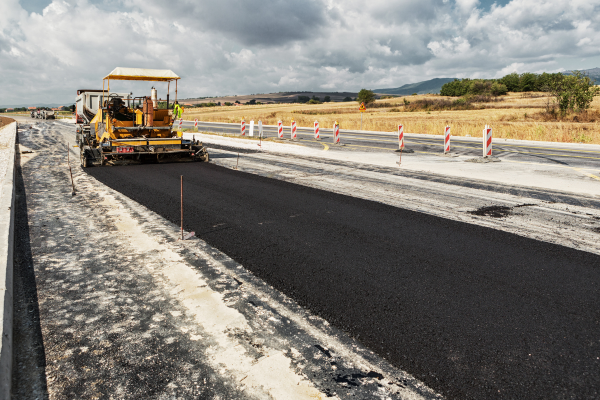
The Pune Municipal Corporation (PMC) has introduced a regulatory change requiring developers to link building permission approvals with land acquisition for road widening, in an effort to address long-standing delays in infrastructure execution and reduce congestion across key corridors in Pune. Advertisement






Under the new mandate, developers applying for construction approvals must submit a formal proposal within 15 days identifying land parcels affected by proposed road widening. The policy further requires that such land be physically handed over to the civic body before the building reaches the plinth level, effectively making land surrender a precondition for continued construction.
The civic administration has indicated that strict monitoring mechanisms will be put in place to ensure compliance. Officials stated that the move is intended to prevent situations where buildings are completed while adjacent road infrastructure remains constrained due to delays in acquiring land from private owners.
The decision follows persistent challenges faced by the PMC in securing land for road projects. Historically, delays in acquisition have resulted in incomplete widening works, with several stretches witnessing prolonged litigation and traffic bottlenecks. In many instances, landowners did not transfer land even after project completion, complicating execution and delaying network upgrades.
The policy has been introduced against the backdrop of a significant infrastructure gap in the city. Data from the civic body shows that only around 9% of Pune's total land area is currently dedicated to roads, well below the urban planning benchmark of 15%. This imbalance has placed pressure on a limited set of arterial routes.
Pune's road network extends approximately 2,273 km, but traffic is heavily concentrated on about 32 arterial roads covering roughly 270 km, which carry nearly 80% of the city's vehicular movement. Civic officials have indicated that improving these high-load corridors through timely land acquisition is critical to easing congestion.
The PMC has outlined plans to expand the road network by about 10.75% in the upcoming financial period. As part of this strategy, an allocation of INR 5 crore has been earmarked for upgrading 30 major junctions, while the civic body also intends to develop at least one road of international standard in each of the 32 newly merged villages under its jurisdiction.
Officials have maintained that integrating land acquisition into the building permission process will improve coordination between development activity and infrastructure provision. By aligning private construction with public road expansion requirements, the administration aims to reduce execution delays and ensure that new developments are supported by adequate road capacity from the outset.
The move reflects a shift in regulatory approach, placing greater onus on developers to facilitate infrastructure readiness alongside project execution, as the city continues to experience sustained growth and increasing pressure on its transport network.
Advertisement













 Facebook
 Whatsapp
