Advertisement










Private equity has played a significant role in shaping Indi...
In today’s real estate landscape, fitness is often treated...
In this episode of Prop Personalities, we sit down with Hars...
Luxury real estate is one of the most talked-about segments ...
Welcome to Prop Personalities by Prop News Time - a podcast ...
India's aviation sector is facing delays in aircraft deliveries due to global supply chain disruptions, with around 1,700 planes on order likely to take up to 15 years to be delivered. The government is addressing this through faster imports and a push for domestic manufacturing under national initiatives. Plans include joint ventures with global players and expansion of airport infrastructure. Demand for air travel continues to rise, increasing the need for pilots and connectivity. At the same time, new routes, airport upgrades, and future infrastructure targets reflect long-term growth plans for the aviation sector.
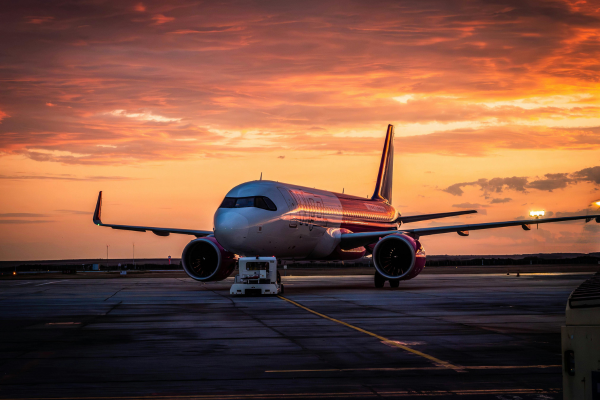
India's aviation sector is witnessing a growing mismatch between demand and aircraft availability, with delays in deliveries becoming a key concern. Civil Aviation Minister K Rammohan Naidu stated that although Indian airlines have placed orders for around 1,700 aircraft, global supply chain issues could delay deliveries by up to 15 years. Advertisement


He explained that after the COVID-19 pandemic, aircraft manufacturing faced multiple challenges, including disruptions in the supply chain, which slowed down production capacity worldwide. As a result, the expected pace and scale of aircraft manufacturing have reduced, creating a bottleneck for airlines looking to expand operations.
The minister noted that while developing airport infrastructure becomes manageable once land is available, the real challenge now lies in procuring aircraft. He indicated that airlines are placing large orders to meet increasing passenger demand, and the country will require nearly 30,000 pilots in the coming years to operate these aircraft once they are delivered.
To address the shortage, the government is working on speeding up aircraft imports while also focusing on boosting domestic manufacturing. These efforts are aligned with national initiatives such as Aatmanirbhar Bharat and Make in India. The minister stated that the government is encouraging global companies to set up manufacturing units in India through joint ventures.
As part of this strategy, India has tied up with Embraer to manufacture aircraft domestically. In addition, a partnership with Hindustan Aeronautics Limited is underway to produce the Sukhoi Superjet 100 within the country. These initiatives are expected to improve aircraft availability over time and reduce dependency on imports.
During a recent visit to Bhavnagar, the minister flagged off a new flight connecting the city with Navi Mumbai, operated by IndiGo. The move is part of broader efforts to enhance regional connectivity and expand access to air travel.
He also highlighted that India's aviation sector has grown significantly over the past decade, with the number of airports, aircraft, and passengers doubling since 2014. Recently, the country's 165th airport was inaugurated in Noida at Jewar, reflecting continued infrastructure expansion.
Looking ahead, the government plans to develop 50 new airports over the next five years and aims to scale up to more than 350 airports across the country by 2047. These targets underline the long-term vision of expanding aviation infrastructure to support rising demand.
Focusing on regional infrastructure, the minister pointed out that Bhavnagar Airport requires expansion to handle larger aircraft. The existing runway of 1,900 metres needs to be extended to 2,400 metres, for which around 200 acres of land will be required. He indicated that once the state government provides the land, the central government will undertake the expansion work.
In addition, facilities such as the Udan Yatri Cafe were inaugurated at Rajkot Airport, along with the virtual launch of similar amenities at multiple airports. The Rajkot airport is also expected to get an air cargo terminal and international flight connectivity in the near future.
The minister further stated that the inquiry report into the Ahmedabad plane crash from the past year will be released soon. The incident involved an Air India flight AI 171, operated by a Boeing 787-8, which crashed shortly after takeoff from Sardar Vallabhbhai Patel International Airport while en route to London Gatwick Airport, resulting in significant loss of life both onboard and on the ground.
Source PTI
FAQ
Q1: What is causing delays in aircraft deliveries in India?
Global supply chain disruptions following the COVID-19 pandemic have slowed aircraft manufacturing, leading to delays in deliveries despite large orders placed by Indian airlines.
Q2: How many aircraft are currently on order by Indian airlines?
Indian airlines have placed orders for around 1,700 aircraft, but deliveries are expected to be spread over a long period due to production constraints.
Q3: How long could these delivery delays last?
According to Civil Aviation Minister K Rammohan Naidu, the delays could extend up to 15 years, creating a gap between demand and available fleet capacity.
Q4: What steps is the government taking to address this issue?
The government is working on speeding up aircraft imports while also promoting domestic manufacturing through initiatives like Make in India and Aatmanirbhar Bharat.
Q5: Are there plans for aircraft manufacturing within India?
Yes, India is exploring joint ventures with global players such as Embraer and collaborations with Hindustan Aeronautics Limited to manufacture aircraft domestically.
Q6: What impact is rising demand having on the aviation sector?
Increasing passenger demand is putting pressure on airlines to expand capacity, which is also expected to drive the need for around 30,000 pilots in the coming years.
Q7: What are the government's long-term plans for aviation infrastructure?
The government plans to develop 50 new airports in the next five years and expand the network to over 350 airports by 2047, along with upgrading existing airports and improving regional connectivity.

5th Jun, 2025

25th May, 2023

11th May, 2023

27th Apr, 2023
Advertisement





 Facebook
 Whatsapp
