Advertisement










Private equity has played a significant role in shaping Indi...
In today’s real estate landscape, fitness is often treated...
In this episode of Prop Personalities, we sit down with Hars...
Luxury real estate is one of the most talked-about segments ...
Welcome to Prop Personalities by Prop News Time - a podcast ...
China's top state-owned banks recorded largely flat profit growth over the past year as the ongoing property crisis continued to impact lending and credit demand. Weak housing sales, falling prices, and financially stressed developers have slowed loan growth and affected bank earnings. While net interest margins remained stable, overall performance stayed subdued across major lenders. Some support is expected from deposit repricing and policy measures, but risks remain due to global uncertainty and weak real estate activity. The banking sector continues to adjust to reduced dependence on property-driven growth.
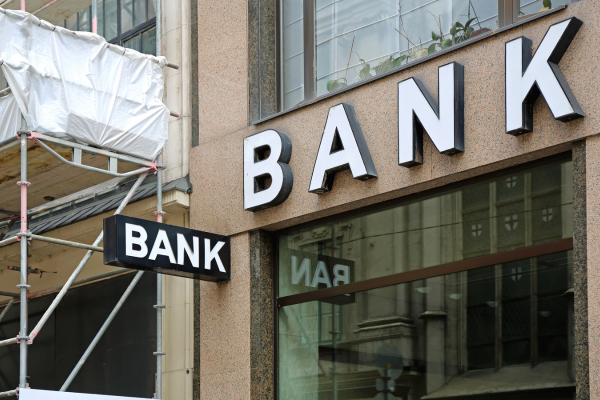
China's largest state-owned banks reported marginal growth in profits over the past year, reflecting continued stress from the country's prolonged real estate slowdown and weak economic conditions. The performance highlights how closely the banking sector remains linked to property market activity, which has not yet shown a strong recovery. Advertisement


Industrial and Commercial Bank of China and China Construction Bank posted less than 1% increase in net profits, while Bank of Communications reported a relatively better rise of around 2.2%. Despite these gains, overall earnings across major lenders remained largely unchanged, indicating limited growth momentum.
The subdued performance is mainly due to ongoing challenges in the property sector. Housing prices have continued to decline in several cities, and many developers remain under financial stress. Instead of expanding, several developers have been managing existing debt obligations, which has reduced fresh borrowing and slowed credit demand for banks.
The property downturn began after tighter regulations and debt issues faced by large developers, and it has now continued for multiple years. This has resulted in lower home sales, higher unsold inventory, and weaker buyer confidence. As a result, banks are facing slower loan growth and increased caution in lending to the real estate sector.
At the same time, banks have managed to maintain relatively stable net interest margins. This shows that while income growth is limited, core lending spreads have not deteriorated significantly. However, analysts expect some pressure on margins going ahead due to competition for quality borrowers and overall weak demand.
There are also external risks that could impact the sector. Global economic uncertainty and geopolitical factors may affect asset quality and investor confidence. These risks add to the existing pressure created by the domestic property slowdown.
Some support for banks may come from the repricing of high-cost deposits. A large volume of such deposits is expected to be adjusted, which could reduce funding costs and provide slight improvement in profitability. In addition, banks are gradually increasing exposure to sectors such as infrastructure and technology, in line with policy direction, to reduce reliance on real estate lending.
Authorities are also considering measures to strengthen the banking system, including easing shareholding rules to attract more capital. This is part of broader efforts to maintain financial stability while supporting economic growth.
The broader economic environment remains challenging. Real estate, which earlier contributed significantly to China's economic expansion, now plays a reduced role. Lower land sales have also affected local government revenues, adding another layer of pressure on the financial system.
Source Reuters

5th Jun, 2025

25th May, 2023

11th May, 2023

27th Apr, 2023
Advertisement





 Facebook
 Whatsapp
