Advertisement










When should a housing society in Mumbai start considering re...
From GST on JDAs to SEBI’s REIT reclassification and the S...
Stay ahead in the world of real estate with our daily podcas...
Stay ahead in the world of real estate with our daily podcas...
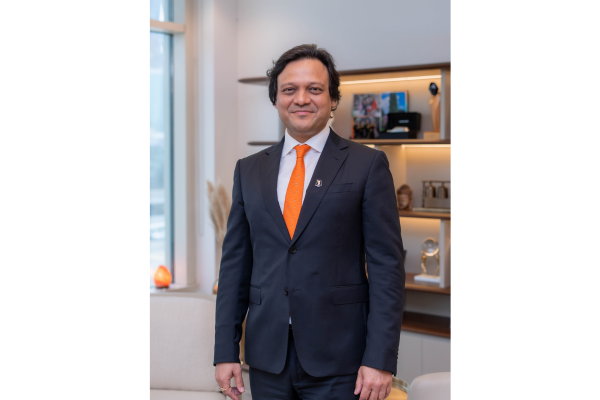
Global real estate is gaining prominence as a long-term wealth allocation tool among high-net-worth individuals and family offices, according to Porush Jhunjhunwala of Banke International Properties. With the global property market valued at approximately USD 390 trillion, investors are increasingly viewing real estate as a means of diversification, income generation and capital preservation. Cross-border investments in markets such as Dubai, London and Mumbai are being driven by structural factors including urbanisation, infrastructure development and regulatory stability. The approach emphasises long-term holding, disciplined asset selection and risk management through governance structures, as investors seek to balance returns with resilience across economic cycles.
Global real estate is increasingly being positioned as a core component of long-term wealth portfolios, particularly among high-net-worth individuals and institutional investors seeking diversification and stable income streams across geographies. Advertisement


According to Porush Jhunjhunwala, chief executive of Banke International Properties, the global property market, estimated at approximately USD 390 trillion, represents one of the largest asset classes worldwide, exceeding the combined value of equities and bonds. Despite this scale, real estate remains underutilised in structured wealth strategies, often treated as a domestic or short-term investment rather than a cross-border, long-term asset.
He indicated that well-planned global real estate investments can provide sustained returns over extended periods, offering a combination of rental income, capital appreciation and capital preservation. Unlike more liquid asset classes, real estate benefits from its tangible nature and ability to generate income, while also acting as a hedge against inflation and currency fluctuations.
The increasing interest in international property markets reflects a broader shift towards geographic diversification. Investors are expanding beyond domestic markets to access opportunities in cities such as Dubai, London and Mumbai, where demand fundamentals are supported by population growth, infrastructure investment and established regulatory frameworks. Such diversification enables investors to mitigate risks associated with economic or policy changes in any single market.
Industry participants noted that property cycles differ across regions, allowing investors to balance exposure between markets experiencing varying phases of growth. This approach can help reduce volatility and provide resilience during downturns, as performance in one geography may offset softness in another.
In addition to financial returns, global real estate investments are also associated with lifestyle and mobility benefits. In certain jurisdictions, property ownership may be linked to residency or citizenship pathways, offering access to education, healthcare and international mobility. However, such considerations remain secondary to core investment criteria focused on long-term value and stability.
Market selection remains a critical factor in determining outcomes. Investors are advised to prioritise locations with strong structural drivers, including economic growth, infrastructure development and transparent legal systems. Mature markets typically offer liquidity and stable rental demand, while emerging hubs may provide higher growth potential.
Risk management continues to be a key consideration, with factors such as currency fluctuations, regulatory changes and taxation impacting returns. Structured investment approaches, including the use of special purpose vehicles and moderate leverage, are being adopted to manage exposure and ensure compliance with local regulations.
The evolving investment approach reflects a shift towards treating real estate as a strategic, income-generating asset within diversified portfolios. As investors adopt longer investment horizons, global property is increasingly being positioned alongside traditional asset classes as a stable component of wealth creation strategies across economic cycles.

5th Jun, 2025

25th May, 2023

11th May, 2023

27th Apr, 2023
Advertisement








 Facebook
 Whatsapp
