Advertisement










In this episode of Prop Personalities, we sit down with Hars...
Luxury real estate is one of the most talked-about segments ...
Welcome to Prop Personalities by Prop News Time - a podcast ...
Airports play a much bigger role than just enabling travel -...
Why does the same hotel brand operate multiple properties in...
DeHaat, in partnership with the National Horticulture Board under the Ministry of Agriculture, has launched a grape cluster development programme in Nashik, Maharashtra. The initiative aims to improve India's competitiveness in global horticulture markets by encouraging adoption of premium, export-oriented grape varieties. The programme offers financial assistance of 30-50 per cent across components such as irrigation, varietal expansion and post-harvest infrastructure, alongside end-to-end value chain support. It is expected to strengthen farm productivity, improve quality standards and enhance export linkages in one of India's key grape-producing regions.
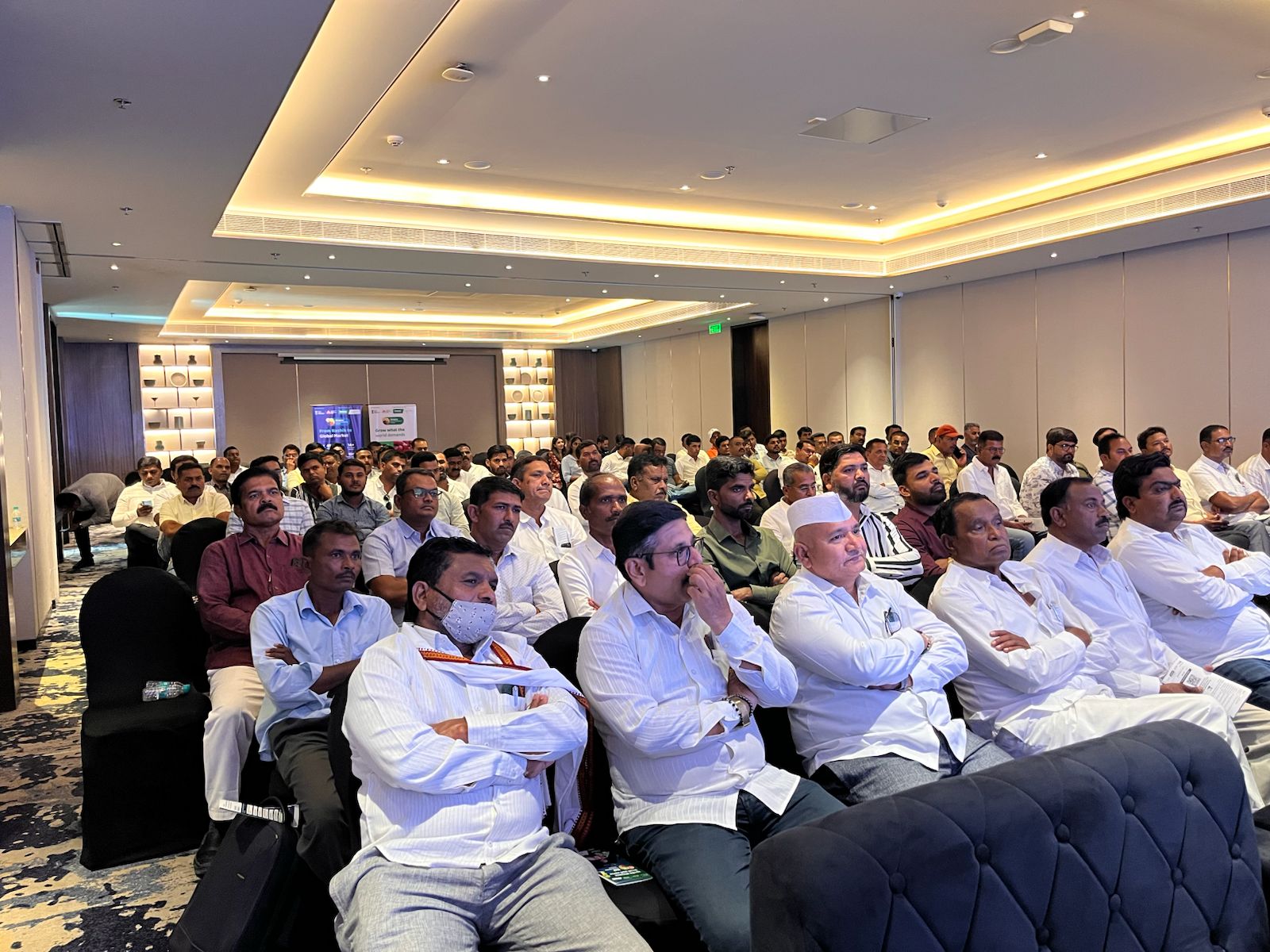
DeHaat has launched a grape cluster development programme in the past week in Nashik, Maharashtra, in collaboration with the National Horticulture Board (NHB), with the objective of strengthening India's position in global horticulture exports. The programme is being implemented in one of the country's primary grape-producing regions, where export-oriented cultivation has gained increasing importance. Advertisement


The initiative focuses on enabling farmers to transition from traditional open grape varieties, such as Thompson Seedless, to premium and licensed varieties that are increasingly preferred in international markets. Global demand patterns have shifted towards produce with improved shelf life, uniformity and traceability, requiring changes in cultivation practices and varietal selection.
Under the programme, farmers will receive support across multiple aspects of the agricultural value chain. This includes financial assistance ranging between 30 and 50 per cent for eligible components such as expansion of cultivation under new varieties, installation of drip irrigation systems, adoption of Good Agricultural Practices (GAP) and Integrated Pest Management (IPM), orchard rejuvenation and canopy management. Additional support will be provided for post-harvest handling and export linkages, aimed at improving market access.
Officials from the National Horticulture Board indicated that the programme has been structured to provide targeted assistance and facilitate integration of farmers with organised markets. The focus is on improving both productivity and compliance with international quality standards, which are essential for accessing high-value export markets.
Industry stakeholders highlighted that the transition towards new-generation grape varieties is becoming necessary as global buyers increasingly favour consistency and quality attributes. The adoption of such varieties is expected to enable farmers to achieve better price realisation and strengthen their competitiveness in export markets.
DeHaat will implement the programme through its Seeds to Market platform, which integrates advisory services, input supply, aggregation and market linkage. The company has an established export presence in Nashik under its Freshtrop brand, which is expected to support the programme's execution and facilitate connections with international buyers.
A senior executive at DeHaat indicated that the next phase of growth for Nashik's grape sector would depend on alignment with global requirements, including improved varieties, stronger quality systems and traceability mechanisms. The executive added that farmers adopting these practices early are likely to benefit from improved market access.
The programme is expected to be implemented over the next three to five years, with a focus on accelerating varietal transition and strengthening export readiness. Nashik has historically been a key contributor to India's grape exports, and initiatives of this nature are aimed at reinforcing its position as a globally competitive horticulture cluster.
The development reflects a broader shift towards integrated agricultural value chains, where production, quality control and market access are being aligned to meet international demand standards.

5th Jun, 2025

25th May, 2023

11th May, 2023

27th Apr, 2023
Advertisement





 Facebook
 Whatsapp
