Advertisement










Private equity has played a significant role in shaping Indi...
In today’s real estate landscape, fitness is often treated...
In this episode of Prop Personalities, we sit down with Hars...
Luxury real estate is one of the most talked-about segments ...
Welcome to Prop Personalities by Prop News Time - a podcast ...
The Ahmedabad Dholera Greenfield Expressway, a 109.019 km project under Bharatmala Pariyojana, is improving connectivity between Ahmedabad, Bhavnagar, and the Dholera Special Investment Region. Built at a cost of INR 5,800 crore, the expressway has reduced travel time significantly, cutting journeys such as Ahmedabad to Dholera to about 45 minutes. Currently open for testing, it is already easing travel for commuters while also supporting economic activity in the region. The project also incorporates environmental measures such as reuse of waste materials and large-scale plantation efforts along the corridor.
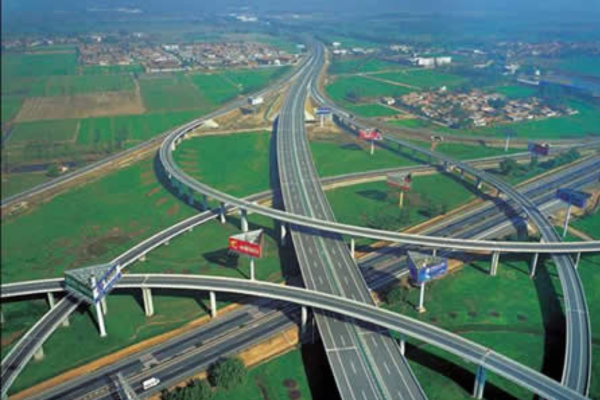
The Ahmedabad Dholera Greenfield Expressway (NE-8), spanning 109.019 km, has been developed under the Bharatmala Pariyojana to improve connectivity across key regions in Gujarat. The project links Ahmedabad and Bhavnagar districts with the Dholera Special Investment Region (DSIR) and also connects to the coastal highway, enhancing movement of people and goods across this corridor. Advertisement


Built at a total project cost of INR 5,800 crore, the expressway is one of the significant infrastructure developments in the region. It is currently open to the public for testing purposes, allowing commuters to use the route while final operational readiness is being assessed by authorities.
The expressway has already brought noticeable changes in travel time for daily commuters. For example, the journey between Ahmedabad and Dholera has been reduced from around 100 km taking over 2 hours to approximately 83 km that can now be covered in about 45 minutes. Similarly, travel between Ahmedabad and Bhavnagar has been reduced from about 169 km taking over 3 hours to roughly 141 km that takes around 1 hour 45 minutes.
For regular travellers, the reduced travel time has improved daily routines and personal schedules. Commuters who previously spent several hours on the road now report saving time that can be used for family and other activities. The improved connectivity has also made intercity travel more predictable and less time-consuming.
The expressway is also expected to support economic activity in the Dholera region. Better connectivity has made access to Dholera easier for investors and businesses, reducing earlier concerns related to travel time and accessibility. With Ahmedabad now reachable in under an hour from Dholera, the corridor is becoming more attractive for planned development and investment activities linked to the Special Investment Region.
From a residential perspective, the expressway has also improved the perception of distance between towns and the main city. Areas that were earlier considered far from Ahmedabad are now effectively integrated into the city's travel network due to reduced commute times.
The project has also been designed with environmental considerations. Construction has included the reuse of 60 lakh metric tonnes of waste from Ahmedabad Municipal Corporation for embankment work and the utilisation of 22 lakh metric tonnes of fly ash to reduce industrial waste impact. In addition, large-scale plantation efforts have been undertaken, with over 2,70,675 plants in the median and 1,56,097 avenue plantations along the corridor.
Key structural features of the expressway include a 30-metre-wide median designed to allow future expansion to an eight-lane road, direct connectivity to Dholera International Airport through an interchange at chainage 67, and provisions for a semi high-speed rail corridor running parallel with land already acquired for it. The expressway also follows a closed tolling system and includes multiple infrastructure components such as interchanges, flyovers, underpasses, culverts, and service facilities to support smooth traffic movement.
Source Dholera

5th Jun, 2025

25th May, 2023

11th May, 2023

27th Apr, 2023
Advertisement





 Facebook
 Whatsapp
