Advertisement






What really powers the cloud? Behind every Google search, A...
A lot of what defines a home isn’t visible at handover. I...
Private equity has played a significant role in shaping Indi...
Luxury real estate is one of the most talked-about segments ...
Airports play a much bigger role than just enabling travel -...
The Ghaziabad Development Authority (GDA) has made it mandatory for developers and plot owners to earmark space for rooftop solar panels in building plans submitted for approval, with non-compliant proposals liable for rejection. The directive, introduced in the past week, applies across residential, commercial and industrial developments and is linked to the PM Surya Ghar scheme. Applicants are also required to deposit a refundable fee based on plot size, ranging from INR 20,000 to INR 2 lakh, which is returned after installation is verified. The move forms part of a broader push to increase renewable energy adoption and reduce dependence on conventional power sources, with the authority targeting a defined share of solar energy in the city's overall consumption mix.
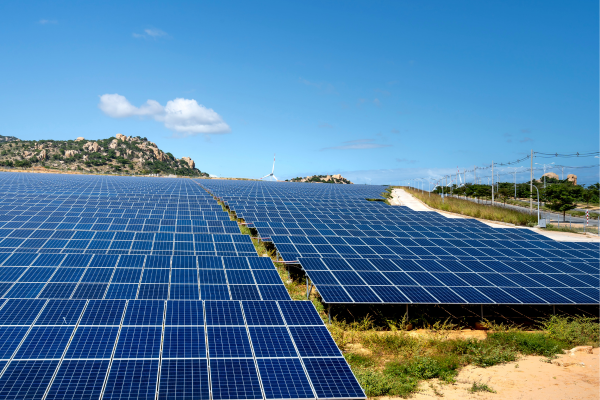
The Ghaziabad Development Authority (GDA) has mandated that all building plans submitted for approval must include designated space for rooftop solar panel installations, making compliance a prerequisite for obtaining construction permissions across the city. Advertisement






The directive was introduced in the past week as part of revised building approval norms, under which developers and individual plot owners must incorporate solar infrastructure planning at the design stage. Officials indicated that any building map that does not provide for rooftop solar installation will be rejected, effectively making renewable energy integration compulsory for new developments.
The requirement applies to residential, commercial and industrial projects and is aligned with the PM Surya Ghar scheme, under which solar adoption is being incentivised at the household and community level. As part of the approval process, applicants are required to deposit a refundable security amount, which serves as a compliance mechanism to ensure installation after project completion.
The deposit is structured according to plot size. For plots between 200 and 500 square metres, the fee is set at INR 20,000, while plots ranging from 500 to 1,000 square metres attract a charge of INR 50,000. Larger developments between 1,000 and 5,000 square metres are required to deposit INR 1 lakh, and projects exceeding 5,000 square metres must pay INR 2 lakh. The amount is refunded once authorities verify that the solar panels have been installed and are operational.
The policy has been framed as part of a broader effort to promote decentralised renewable energy generation in Ghaziabad, where peak electricity demand has been recorded in the range of 1,400 MW to 1,600 MW. By integrating solar provisions into building plans, the authority aims to reduce reliance on the conventional power grid and encourage energy-efficient construction practices at the outset.
Officials indicated that embedding solar requirements within the approval framework is intended to address compliance gaps typically observed when sustainability measures are introduced post-construction. By linking approvals and financial deposits to installation, the authority has created a mechanism to ensure that developers follow through on proposed energy systems.
The move is part of a wider regulatory shift in urban planning, where local authorities are increasingly incorporating sustainability measures such as rooftop solar systems and water conservation infrastructure into statutory building norms. In Ghaziabad, these provisions are expected to influence design considerations, cost structures and project timelines, as developers align layouts to accommodate solar installations and related infrastructure from the planning stage.

5th Jun, 2025

25th May, 2023

11th May, 2023

27th Apr, 2023
Advertisement









 Facebook
 Whatsapp
