Advertisement










Private equity has played a significant role in shaping Indi...
In today’s real estate landscape, fitness is often treated...
In this episode of Prop Personalities, we sit down with Hars...
Luxury real estate is one of the most talked-about segments ...
Welcome to Prop Personalities by Prop News Time - a podcast ...
A recent working paper by the World Inequality Lab highlights significant inequality in rural land ownership across India. It finds that a large share of land is concentrated among a small percentage of households, while nearly half of rural families remain landless. The study, based on extensive data covering millions of people and villages, also points to the influence of historical systems, social structures, and agro-ecological factors on land distribution. It further notes that improved access to markets has not been sufficient to address these long-standing disparities in ownership patterns.
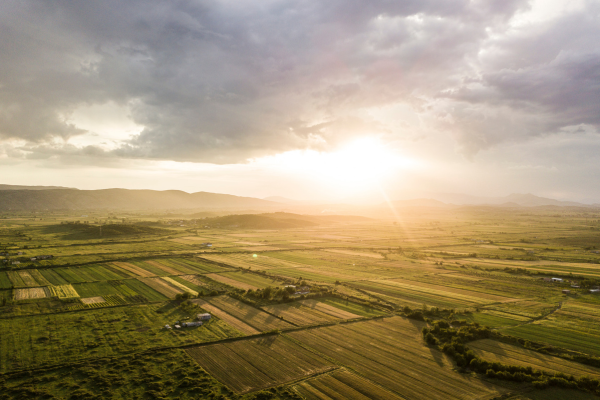
A working paper released by the World Inequality Lab has highlighted the extent of disparity in rural land ownership across India, showing that a significant portion of land is concentrated among a small segment of households. The study found that the top 10 per cent of rural households hold about 44 per cent of total land, while nearly 46 per cent of rural households do not own any land. Advertisement


The paper, titled Land Inequality in India: Nature, History, and Markets, noted that the top 5 per cent of households account for 32 per cent of land ownership, and the top 1 per cent alone controls 18 per cent. The findings are based on one of the largest datasets assembled on the subject, covering nearly 650 million individuals across approximately 2,70,000 villages.
According to the study, the average village-level land Gini index, which measures inequality on a scale of 0 to 100, stands at 71 when landless households are included. It also observed that, on average, the largest landholder in a village controls around 12 per cent of total land. In some cases, a single individual owns more than half of the agricultural land in a village.
The report pointed out that the variation in land inequality across Indian states is comparable to the differences seen between countries globally. It also established a strong link between agricultural productivity and land concentration, noting that villages with better agro-ecological conditions tend to have higher levels of land inequality, with larger landowners holding a greater share.
The study further explained that historical land systems continue to influence current ownership patterns. Villages that were under direct British colonial rule were found to have higher levels of land inequality compared to those governed by Indian rulers.
Social structure also plays a key role in determining land access. The authors observed that villages with higher populations of Scheduled Castes and Scheduled Tribes tend to report higher levels of landlessness, reflecting the long-standing impact of social hierarchies. However, regions such as Kerala and West Bengal were identified as exceptions, where land reforms under left-leaning governments have contributed to relatively more balanced distribution.
The paper also examined the role of infrastructure and market access, concluding that proximity to towns, roads, and markets has not been sufficient to reduce deeply rooted inequalities shaped by historical and institutional factors.
Source PTI

5th Jun, 2025

25th May, 2023

11th May, 2023

27th Apr, 2023
Advertisement





 Facebook
 Whatsapp
