Advertisement










Private equity has played a significant role in shaping Indi...
In today’s real estate landscape, fitness is often treated...
In this episode of Prop Personalities, we sit down with Hars...
Luxury real estate is one of the most talked-about segments ...
Welcome to Prop Personalities by Prop News Time - a podcast ...
The Brihanmumbai Municipal Corporation (BMC) has begun testing low-cost air quality sensors under the MANAS project in collaboration with IIT Kanpur to improve pollution monitoring across Mumbai. Around 75 sensors will be installed before the monsoon, offering hyperlocal data on pollutants like PM2.5 and PM10. The system will divide the city into smaller grids and use real-time dashboards for better decision-making. The initiative builds on existing monitoring at construction sites and aims to strengthen targeted action to manage rising air pollution levels in the city.
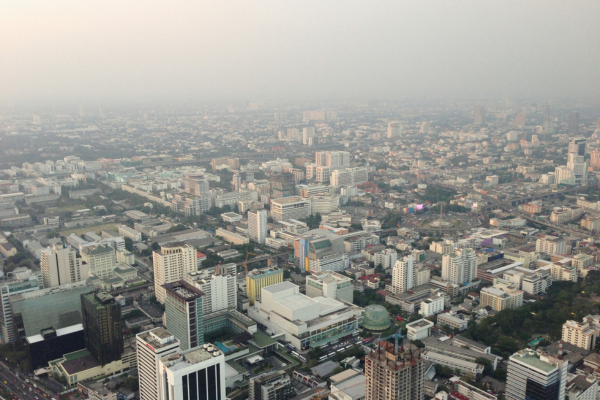
The Brihanmumbai Municipal Corporation has initiated the testing and calibration of low-cost air quality sensors across Mumbai under the MANAS (Mumbai Air Network for Advanced Sciences) project, in collaboration with IIT Kanpur. The move is aimed at strengthening localised monitoring of air pollution and improving response mechanisms. Advertisement


As part of the project, around 75 sensors are planned to be installed across different parts of the city before the monsoon. These sensors are currently being tested alongside reference-grade monitoring stations to check their accuracy. Civic officials stated that the devices are being calibrated to adjust to Mumbai's coastal weather conditions, where humidity and temperature can affect readings.
The sensors will be placed at key civic locations such as ward offices, hospitals and schools. They will monitor pollutants including PM2.5 and PM10, which are considered critical indicators of air quality in urban areas. The collected data will be connected to a central cloud-based system, allowing real-time tracking through a dashboard and enabling officials to take faster and more localised decisions.
To improve the effectiveness of monitoring, the city will be divided into grids of around eight square kilometres each. This grid-based approach is expected to help identify pollution hotspots more clearly and support targeted enforcement measures. The total cost of the project is estimated at around INR 13 crore.
This initiative adds to the existing air quality monitoring framework in Mumbai. The civic body has already installed over 2,500 monitoring units at construction sites, out of which more than 2,100 are actively providing data. These systems were introduced as part of earlier measures to control dust pollution, making it mandatory for construction projects to track and display air quality levels.
Mumbai has been facing concerns over air quality, with particulate matter levels often crossing recommended limits in several areas. The need for more detailed and localised data has been highlighted in recent years, especially as construction activity and traffic continue to contribute to pollution levels.
The MANAS project builds on earlier steps taken by the civic body, including stricter monitoring of construction sites and enforcement actions against violations. By introducing hyperlocal sensors, the BMC aims to improve the quality and reach of its data, making it easier to identify problem areas and respond with specific measures rather than city-wide actions.

5th Jun, 2025

25th May, 2023

11th May, 2023

27th Apr, 2023
Advertisement





 Facebook
 Whatsapp
