Advertisement






What really powers the cloud? Behind every Google search, A...
A lot of what defines a home isn’t visible at handover. I...
Private equity has played a significant role in shaping Indi...
Luxury real estate is one of the most talked-about segments ...
Airports play a much bigger role than just enabling travel -...
Maharashtra is establishing the Maharashtra State River Rejuvenation Authority (MSRRA) to address river pollution and manage basin-level restoration projects. The authority will focus on 54 polluted river stretches, with priority rivers including the Godavari, Bhima, Indrayani, Mula, Mutha, and Nag. The Environment Ministry aims to secure an annual allocation of INR 400 crore, forming part of a planned INR 2,000 crore fund over five years. The authority will integrate multiple departments, streamline project execution, and consolidate existing river-cleaning initiatives to improve effectiveness and prevent duplication of efforts.
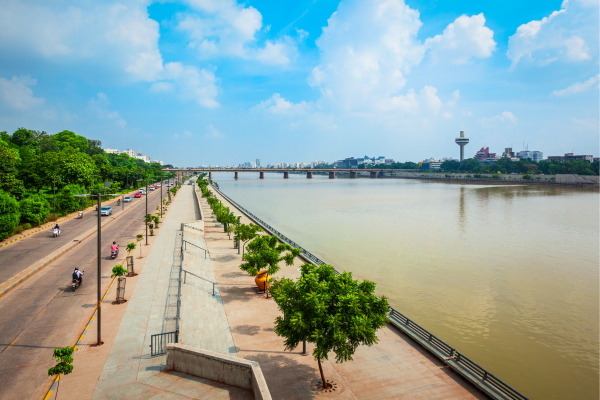
The Maharashtra government has approved the creation of the Maharashtra State River Rejuvenation Authority (MSRRA) to oversee pollution control and basin-level restoration for the state's rivers. The authority will serve as the apex body for planning, monitoring, and coordinating river rejuvenation projects. State Environment and Climate Change Minister Pankaja Munde noted that this initiative is the first of its kind in India and is aimed at addressing river pollution through a coordinated, multi-departmental approach. Advertisement






The MSRRA will focus on 54 polluted stretches identified based on biological oxygen demand (BOD) levels, the highest number in the country. Priority will be given to major rivers, including the Godavari, Bhima (Chandrabhaga), Indrayani, Mula, Mutha, and Nag. The authority will integrate regulatory and developmental roles, approving Detailed Project Reports (DPRs) and river basin management plans while ensuring collaboration among departments of water resources, urban development, rural development, and industry.
The authority will be chaired by the Chief Minister, with the Environment Minister serving as deputy chairperson. Other members will include ministers responsible for finance, water resources, urban development, industries, and rural development. A State Executive Committee, led by the Environment Minister, will oversee project implementation, monitor progress, and address bottlenecks such as land acquisition, encroachments, power supply, and contractual issues through high-level coordination and periodic reviews.
Funding for the MSRRA will come from the state budget, the Maharashtra Pollution Control Board (MPCB), corporate social responsibility (CSR) contributions, and international agencies. An annual allocation of INR 400 crore is proposed as part of a five-year INR 2,000 crore plan. The authority will also receive 10 percent of royalty earnings from sand excavation in riverbeds. Supplementary demands for the current fiscal year will be raised in the upcoming monsoon session of the state legislature to finance initial activities.
The MSRRA will integrate technical expertise from institutions such as the National Environmental Engineering Research Institute (NEERI) and Indian Institutes of Technology (IITs). Agencies like the MITRA platform will assist in mobilising international funding. DPRs for pollution reduction projects will be finalised first, while existing river-cleaning initiatives will be consolidated under the authority to ensure convergence, avoid duplication, and strengthen implementation.
Officials highlighted that fragmented implementation and limited local financial and technical capacity, especially in rural areas, have hindered past river restoration efforts. A unified authority like the MSRRA is intended to overcome these challenges and ensure consistent, effective execution of projects. The authority may prioritise the Godavari as the Kumbh Mela approaches, adopting an approach similar to the Centre's Namami Gange programme, focusing on rejuvenation from a river's origin to its outfall.

5th Jun, 2025

25th May, 2023

11th May, 2023

27th Apr, 2023
Advertisement









 Facebook
 Whatsapp
