Advertisement










Private equity has played a significant role in shaping Indi...
In today’s real estate landscape, fitness is often treated...
In this episode of Prop Personalities, we sit down with Hars...
Luxury real estate is one of the most talked-about segments ...
Welcome to Prop Personalities by Prop News Time - a podcast ...
Indian Railways is planning to revise its parcel leasing policy to improve flexibility and attract more participation from logistics players. The changes include extending contract durations, easing penalty rules for overloading, and reducing security deposit requirements. These steps build on earlier reforms where entry barriers like turnover criteria were removed. The revised framework is expected to provide better business stability, improve parcel space utilisation, and support steady growth in rail-based cargo movement. The focus remains on making parcel operations more practical and aligned with market needs.
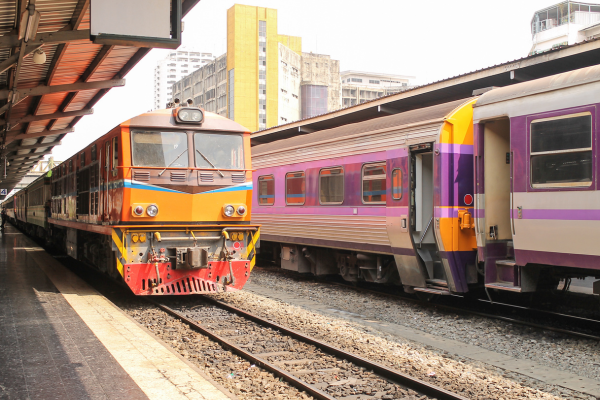
Indian Railways is preparing to update its parcel leasing policy to make operations more flexible for businesses using its network. The proposed changes aim to provide more stability to operators while ensuring better utilisation of parcel space across trains. Advertisement


Under the revised policy, long-term parcel leasing contracts of three years may be allowed to continue beyond the initial period. Operators with a clean track record, especially those without overloading violations, could be given two additional extensions of one year each. During these extensions, the freight rate is expected to increase by 10 per cent for each extended year. This approach is a shift from the earlier system where extensions were limited and mostly allowed only under specific administrative conditions, creating uncertainty for operators.
The Railways is also planning to relax penalty provisions related to overloading. Earlier, contracts could be terminated after two instances of overloading. The revised proposal increases this limit, allowing up to four such instances during the contract period before termination is considered. However, if the threshold is crossed, the contract may still be cancelled and the security deposit forfeited. This change is expected to give operators some operational flexibility while still maintaining discipline in cargo handling.
Another key change relates to reducing the financial burden on businesses. The security deposit requirement is likely to be lowered to around 5 per cent of the annual contract value. This is expected to improve cash flow for operators and make participation easier, especially for small and mid-sized logistics companies that often face capital constraints.
These measures come after earlier reforms introduced in the past year to open up the parcel segment. The Railways had removed minimum turnover requirements such as INR 10 crore for leasing parcel cargo express trains and INR 50 lakh for parcel aggregators. This step was aimed at encouraging more players to enter the segment and increase competition.
The parcel business has been a focus area for Indian Railways as it looks to diversify revenue beyond traditional freight. Parcel services use available space in passenger and cargo trains, making it an efficient way to move goods across cities. However, strict rules and financial conditions in the past had limited wider participation.
With the proposed policy changes, the Railways is trying to create a more balanced system that supports both compliance and ease of doing business. The aim is to improve utilisation levels, reduce idle capacity, and ensure consistent movement of goods through the rail network without disruptions caused by rigid rules.

5th Jun, 2025

25th May, 2023

11th May, 2023

27th Apr, 2023
Advertisement





 Facebook
 Whatsapp
