Advertisement










Private equity has played a significant role in shaping Indi...
In today’s real estate landscape, fitness is often treated...
In this episode of Prop Personalities, we sit down with Hars...
Luxury real estate is one of the most talked-about segments ...
Welcome to Prop Personalities by Prop News Time - a podcast ...
The Brihanmumbai Municipal Corporation (BMC) is planning to impose parking restrictions in narrow lanes across Mumbai to address obstruction faced by emergency services. The move, under consideration in the past week, targets densely populated localities such as Kalbadevi, Girgaon, and Byculla, where illegal and haphazard parking has been delaying fire engines and ambulances. Authorities are evaluating measures including odd-even parking and no-parking zones in highly congested stretches. Industry stakeholders have highlighted that the issue reflects a broader infrastructure gap, calling for integration of structured and technology-driven parking solutions in urban planning. The development comes amid increasing vehicle ownership and limited availability of organised parking infrastructure in older parts of the city.
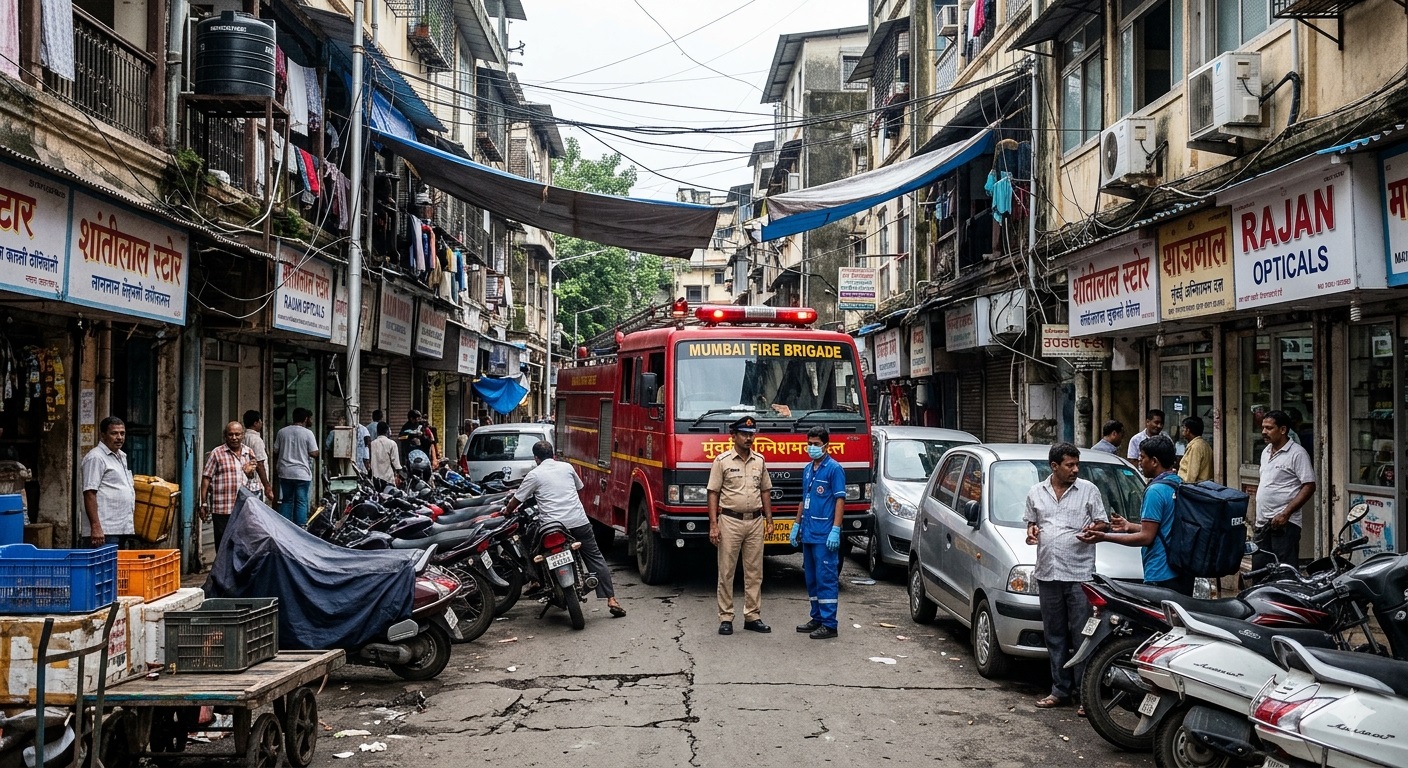
The Brihanmumbai Municipal Corporation is planning to introduce parking restrictions in narrow lanes across several high-density localities in Mumbai, following concerns that unregulated parking is obstructing emergency services such as fire engines and ambulances. The proposal, under preparation in the past week, is expected to be implemented in phases across older parts of the city where road widths are limited and vehicular congestion is acute. Advertisement


The proposed measures include the introduction of odd-even parking systems in select lanes and the declaration of complete no-parking zones in others, particularly in stretches where road width allows passage of only a single vehicle at a time. Civic officials indicated that strict enforcement action will be taken against violations once the policy is rolled out.
Localities identified for intervention include Chandanwadi, Girgaon, Kalbadevi, Gaondevi, Tardeo, Mumbai Central, Nagpada, Agripada, and Byculla. These areas collectively account for over 240 narrow lanes, with nearly 35 to 40 stretches so constricted that only one vehicle can pass at a time. Vehicles parked on both sides of such lanes have been cited as a major bottleneck, particularly during emergencies where response time is critical.
The issue is more pronounced in commercial zones such as Kalbadevi and Zaveri Bazaar, where wholesale trade activity leads to continuous vehicular movement and on-street parking pressure throughout the day. Authorities have expressed concerns that restricted access in such areas could result in delays in emergency response, with potential risks to life and property.
Industry stakeholders have indicated that while regulatory measures are necessary in the short term, the underlying challenge stems from a mismatch between rising vehicle ownership and limited parking infrastructure. A representative from NAREDCO Maharashtra conveyed that the issue reflects a structural gap in urban planning and requires integration of planned parking facilities within both city infrastructure and new developments.
Similarly, a senior executive from Nextkraft Parking Technologies highlighted the need for scalable solutions such as automated and multi-level parking systems. The executive indicated that such systems can increase parking capacity within existing footprints and reduce dependence on on-street parking, thereby keeping access routes clear for essential services.
However, the proposed restrictions have raised concerns among residents and businesses regarding the availability of alternative parking options. In the absence of adequate off-street or structured parking facilities, enforcement of restrictions may create operational challenges, particularly in densely built neighbourhoods with limited open space.
The development reflects the growing pressure on urban infrastructure in Mumbai, where increasing vehicle ownership and constrained land availability have intensified parking challenges. While immediate regulatory interventions aim to address safety concerns, long-term solutions are likely to depend on integrating parking infrastructure within broader urban planning and redevelopment frameworks.

5th Jun, 2025

25th May, 2023

11th May, 2023

27th Apr, 2023
Advertisement





 Facebook
 Whatsapp
