Advertisement






What really powers the cloud? Behind every Google search, A...
A lot of what defines a home isn’t visible at handover. I...
Private equity has played a significant role in shaping Indi...
Luxury real estate is one of the most talked-about segments ...
Airports play a much bigger role than just enabling travel -...
The Maharashtra government has announced a major underground metro corridor connecting Wadala to the Gateway of India in Mumbai at an estimated cost of INR 23,487 crore. The project, proposed as Metro Line 11, was outlined during the state budget presentation and aims to strengthen connectivity to South Mumbai. The government also indicated plans to extend the line from Dharavi to Bandra suburban railway station and Bandra Terminus in the future. Along with this corridor, the state highlighted progress on several metro expansions, tunnel projects and transport infrastructure developments aimed at improving urban mobility across the Mumbai Metropolitan Region.
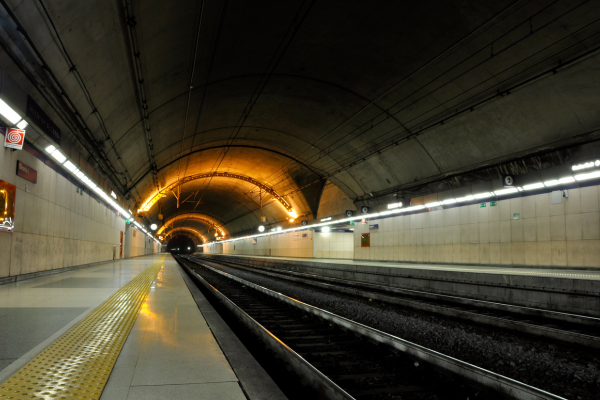
The Maharashtra government has announced a fully underground metro corridor connecting Wadala to the Gateway of India in Mumbai. The project, estimated to cost around INR 23,487 crore, will be developed as Metro Line 11 and was announced during the presentation of the state Budget 2026-27 in the legislative assembly by Chief Minister Devendra Fadnavis. Advertisement






According to the Chief Minister, the proposed corridor will improve connectivity to South Mumbai, an area that currently has limited metro access compared to other parts of the city. The underground alignment will connect Wadala with the Gateway of India and is expected to ease travel for commuters moving between central and southern parts of Mumbai.
The government also indicated that the metro corridor is planned to be extended in the future from Dharavi to Bandra suburban railway station and Bandra Terminus. This extension is expected to create better integration between the metro network and the suburban rail system as well as long-distance railway services operating from Bandra Terminus.
The proposed Metro Line 11 is part of a larger plan by the state government to significantly expand urban transport infrastructure across Maharashtra. The government has set a target to develop around 1,200 km of metro rail network and more than 6,000 km of expressways across the state by 2047 in order to improve connectivity between cities and strengthen urban transport systems.
Progress on metro construction across major cities was also highlighted during the budget announcement. The state government stated that work on about 490 km of metro corridors has already been taken up across Mumbai, Pune and Nagpur. Out of this, nearly 173 km of metro routes are currently operational and serving commuters.
Authorities further indicated that an additional 50 km of metro lines are expected to become operational over the coming year. At the same time, around 165 km of new metro corridors are planned to be completed by 2029 as part of the ongoing expansion of the network across the state.
Alongside the metro project, the government also provided an update on an underground road tunnel project connecting Orange Gate on the Eastern Freeway to Marine Drive in South Mumbai. The Chief Minister informed the assembly that the launching shaft required for the tunnel construction has already been completed.
The underground road tunnel is planned to reduce travel time between eastern parts of Mumbai and the southern business district by providing a direct underground route. According to the government's update, the project is targeted to be completed by December 2028.
Another metro project announced during the budget relates to Navi Mumbai. The state government has proposed Navi Mumbai Metro Line 2 between Taloja and Khandeshwar with an estimated project cost of around INR 5,575 crore. This corridor is expected to improve connectivity within Navi Mumbai and support the growing residential and commercial development in the satellite city.
Infrastructure planning outlined by the government also includes the development of underground tunnel networks in both Mumbai and Pune. These projects are part of a broader effort to address increasing travel demand, improve traffic flow and strengthen long-term urban mobility planning.
Over the past several years, Mumbai has seen steady expansion of its metro network, including both elevated and underground corridors. Several metro lines have already opened in phases, while many others remain under construction across the Mumbai Metropolitan Region. The newly proposed Metro Line 11 is expected to further expand metro access into South Mumbai, which has historically depended mainly on suburban railways and road transport.
Source PTI
FAQ
1. What is the new metro project announced by the Maharashtra government?
The Maharashtra government has announced a fully underground metro corridor that will connect Wadala to the Gateway of India in Mumbai. The project, proposed as Mumbai Metro Line 11, is estimated to cost about INR 23,487 crore. The corridor aims to strengthen public transport access to South Mumbai, which currently has fewer metro connections compared to other parts of the city.
2. Who announced the project and in what context?
The project was announced by Devendra Fadnavis during the presentation of the state's Budget 2026-27 in the legislative assembly. The announcement forms part of a broader infrastructure plan aimed at expanding metro rail systems, improving urban mobility, and supporting long-term transportation needs across the state.
3. Why is the Wadala Gateway of India metro corridor important?
The proposed corridor is expected to significantly improve connectivity between central Mumbai and the southern part of the city. South Mumbai is one of the main commercial and administrative hubs but currently depends largely on suburban railways and road transport. By introducing a direct underground metro line, the project aims to reduce travel time, ease congestion, and provide commuters with a faster and more efficient alternative for daily travel.
4. Are there plans to extend the metro line in the future?
Yes, the government has indicated that the metro corridor could be extended from Dharavi to the Mumbai Suburban Railway station at Bandra as well as Bandra Terminus. This proposed extension would improve integration between the metro network, suburban rail services, and long-distance train routes, creating a more connected public transport system.
5. How does this project fit into Maharashtra's broader metro expansion plan?
The state government has outlined an ambitious goal of developing around 1,200 km of metro rail network and more than 6,000 km of expressways across Maharashtra by 2047. At present, work on roughly 490 km of metro corridors has already been undertaken across major cities including Mumbai, Pune, and Nagpur. Of these, about 173 km are operational, while several other corridors remain under construction or in advanced planning stages.
6. What other transport projects were highlighted alongside this announcement?
During the budget presentation, the government also provided an update on an underground road tunnel that will connect Orange Gate on the Eastern Freeway to Marine Drive in South Mumbai. This tunnel project is intended to create a faster route between eastern parts of the city and the southern business district, reducing congestion and travel time for commuters once it is completed.
7. What additional metro developments are planned in the Mumbai region?
Apart from Metro Line 11, the government has proposed another corridor in Navi Mumbai known as Navi Mumbai Metro Line 2 with an estimated cost of about INR 5,575 crore. This line is expected to improve connectivity within Navi Mumbai and support the rapid residential and commercial development taking place in the satellite city as part of the wider Mumbai Metropolitan Region.

5th Jun, 2025

25th May, 2023

11th May, 2023

27th Apr, 2023
Advertisement









 Facebook
 Whatsapp
