Advertisement






What really powers the cloud? Behind every Google search, A...
A lot of what defines a home isn’t visible at handover. I...
Private equity has played a significant role in shaping Indi...
Luxury real estate is one of the most talked-about segments ...
Airports play a much bigger role than just enabling travel -...
Patna will soon have Bihar's largest sewage treatment plant with a capacity of 400 million litres per day (MLD) to reduce untreated discharge into the Ganga. The project follows directions issued during a recent Namami Gange review meeting in Delhi. The Bihar Urban Infrastructure Development Corporation (Buidco) has begun site surveys between Danapur and Patna City. The plant will connect major drains across the city and may be built as one 400 MLD unit or two 200 MLD units. The move is part of Bihar's broader plan to expand sewage treatment capacity across Ganga towns.
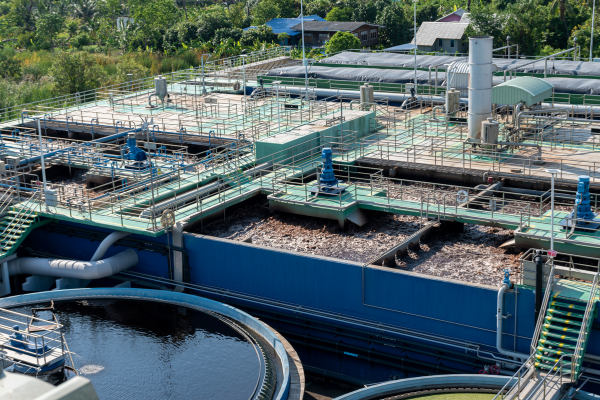
Patna is set to develop a 400 MLD sewage treatment plant (STP), which will be the largest in Bihar. The decision follows directions given during a recent Namami Gange meeting in Delhi, after which the state's urban development and housing department instructed the Bihar Urban Infrastructure Development Corporation (Buidco) to initiate action on the project. Advertisement






The proposed plant is aimed at stopping untreated sewage from flowing directly into the Ganga. Officials have stated that all major drains in Patna will be intercepted and diverted to the new facility for treatment before discharge. Areas such as Digha, Kurji, Rajapur, Mandiri, Anta Ghat and Mittan Ghat are expected to be linked to the plant. The project will largely rely on existing drainage channels to avoid large-scale excavation and minimise inconvenience to residents.
Buidco has surveyed potential locations between Danapur and Patna City. Final approval from higher authorities is awaited. Authorities are evaluating whether the project should be executed as a single 400 MLD unit or split into two 200 MLD units for operational efficiency.
At present, Bihar has 39 sewage treatment plants with a sanctioned investment of INR 7,752 crore. The state government is working to increase this number to 45. Towns along the Ganga generate nearly 1,100 MLD of sewage daily, making additional capacity necessary. In districts such as Munger, Bhagalpur, Chhapra and Patna, 21 STPs are already functional.
Within Patna, four plants located at Beur, Saidpur, Karmalichak and Pahadi are operational. The Digha and Kankarbagh plants are partially functional and handling limited load. Several more projects are underway in Motihari, Supaul, Jamui and Rohtas. Tendering processes are ongoing for new facilities in Buxar, Muzaffarpur, Katihar, Arrah and Lakhisarai. These projects are expected to be completed over the next couple of years.
The new 400 MLD plant will significantly increase Patna's treatment capacity and is expected to play a major role in improving water quality in the Ganga, especially as the city continues to expand and generate higher volumes of wastewater.

5th Jun, 2025

25th May, 2023

11th May, 2023

27th Apr, 2023
Advertisement









 Facebook
 Whatsapp
