Advertisement






Private equity has played a significant role in shaping Indi...
In today’s real estate landscape, fitness is often treated...
In this episode of Prop Personalities, we sit down with Hars...
Luxury real estate is one of the most talked-about segments ...
Welcome to Prop Personalities by Prop News Time - a podcast ...
Navi Mumbai Municipal Corporation's property tax amnesty scheme has recorded a strong response, with 5,744 defaulters clearing dues worth INR 20.15 crore within nine days of its launch. Introduced earlier this month, the scheme offers a 50 per cent waiver on late payment penalties for those settling outstanding dues in a lump sum. The initiative, valid until the end of March, covers residential, commercial, industrial, and vacant land properties. A significant share of payments has been made through digital channels, indicating growing adoption of online tax services. The civic body has extended operational hours, including on public holidays, to facilitate higher collections and encourage compliance.
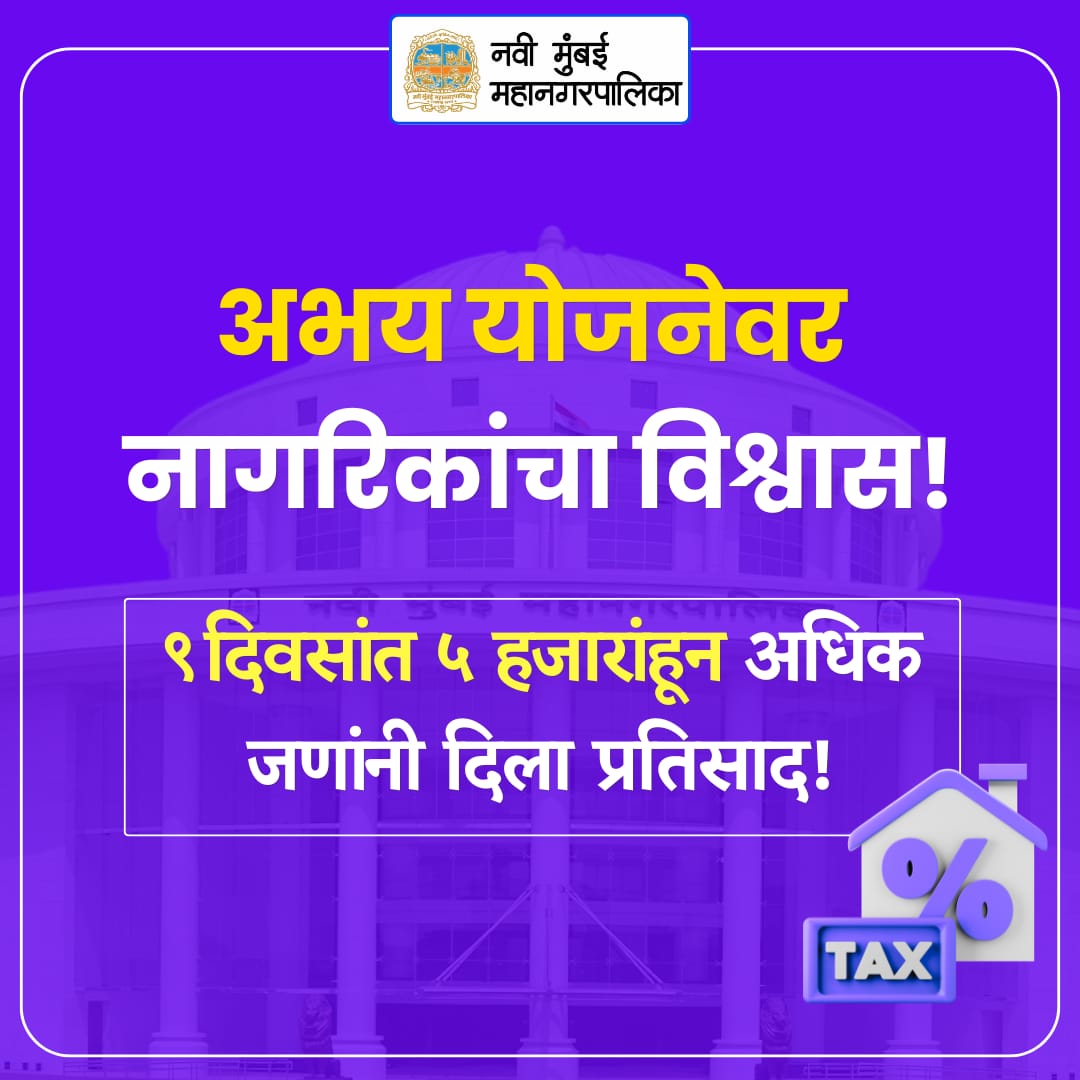
The Navi Mumbai Municipal Corporation (NMMC) has collected over INR 20.15 crore in property tax dues from 5,744 defaulters within nine days of launching its amnesty scheme, aimed at improving tax compliance and boosting revenue collections, according to an official statement issued in the past week. The scheme, introduced earlier this month, will remain open until the end of March. Advertisement






The initiative offers a 50 per cent waiver on penalty charges for property owners who clear their outstanding dues in a single payment. It applies to residential, non-residential, industrial properties, as well as vacant land parcels, provided the entire pending tax amount up to the current financial year is settled within the specified period.
The civic body stated that the scheme has witnessed a favourable response from property owners, with collections amounting to INR 20,15,12,527 recorded within the initial nine-day period. The payments were made between the scheme's launch and mid-March, indicating early traction among taxpayers.
A breakdown of collections across administrative wards shows varying levels of participation. The Nerul ward reported the highest collection at approximately INR 5.70 crore from 899 property owners, followed by Koparkhairane with INR 4.48 crore from 737 taxpayers. Ghansoli recorded collections of INR 2.88 crore from 1,260 property holders, while Belapur contributed INR 2.61 crore. Other wards including Turbhe, Vashi, Airoli, and Digha also reported contributions across smaller ticket sizes.
The municipal corporation noted that while a significant number of taxpayers have availed the scheme, a section of property owners is yet to clear pending dues. Authorities have urged such defaulters to take advantage of the limited-time waiver and regularise their tax payments before the deadline.
Digital payment channels have seen increased usage under the scheme. Of the total number of taxpayers who cleared dues, around 55 per cent, or 3,134 property owners, opted for online payment methods. The civic body has facilitated multiple payment options, including its official website and a WhatsApp-based chatbot service, alongside physical payment at designated collection centres.
To further support compliance, the NMMC has decided to keep tax collection centres operational on weekends and public holidays, including festivals such as Gudi Padwa, Ramzan Eid, Ram Navami, and Mahavir Jayanti. The move is intended to provide flexibility for salaried individuals and other taxpayers who may not be able to visit centres during regular working days.
The response to the amnesty scheme reflects ongoing efforts by urban local bodies to enhance revenue collection through incentive-based measures. Such schemes are typically deployed to reduce outstanding tax liabilities while encouraging voluntary compliance among property owners, particularly in rapidly urbanising cities like Navi Mumbai.

5th Jun, 2025

25th May, 2023

11th May, 2023

27th Apr, 2023
Advertisement









 Facebook
 Whatsapp
