Advertisement






What really powers the cloud? Behind every Google search, A...
A lot of what defines a home isn’t visible at handover. I...
Private equity has played a significant role in shaping Indi...
Luxury real estate is one of the most talked-about segments ...
Airports play a much bigger role than just enabling travel -...
The government has revised the model concession agreement for multi-modal logistics parks to improve project execution and attract private investment. The updated framework introduces clearer performance standards, better monitoring, and faster dispute resolution. These parks, planned across 35 high freight locations, will be developed under a public-private partnership model. The changes aim to address delays seen in earlier infrastructure projects and improve ease of doing business. The initiative is aligned with larger connectivity programmes and is expected to reduce logistics costs and improve supply chain efficiency in India.
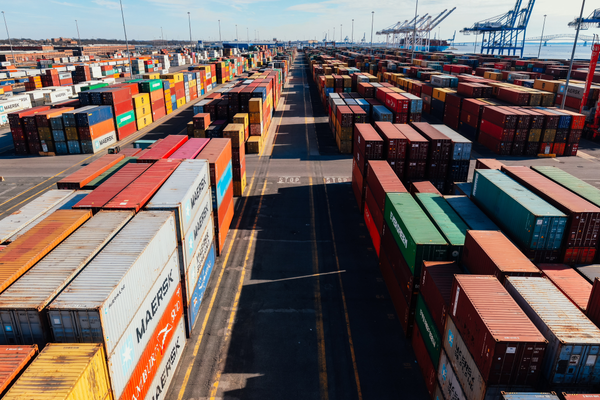
The Ministry of Road Transport and Highways has updated the model concession agreement for multi-modal logistics parks to streamline project execution and make the framework more practical for private developers. The revised agreement focuses on improving clarity in roles, responsibilities, and performance expectations, which were earlier seen as gaps in infrastructure contracts. Advertisement






A key change in the updated pact is the introduction of clearly defined performance indicators. These benchmarks are expected to help in monitoring progress more effectively and ensuring that developers meet construction and operational timelines. The agreement also provides for stricter oversight during the concession period, which is aimed at reducing delays and improving accountability.
The revised framework places greater emphasis on faster dispute resolution. Infrastructure projects in India have often faced delays due to prolonged legal and contractual disputes. To address this, the government has strengthened provisions for quicker resolution through structured mechanisms and the involvement of independent experts. This is expected to improve investor confidence and reduce project risks.
Multi-modal logistics parks are being developed under a design, build, finance, operate and transfer model through public-private partnerships. These projects are implemented by National Highways Logistics Management Limited, a wholly owned subsidiary of the National Highways Authority of India. The structure allows private players to invest and operate the parks for a fixed concession period before transferring them back to the authority.
The government has identified 35 locations across key freight corridors for developing these parks. The sites have been selected based on cargo movement patterns and connectivity to industrial zones, ports, and consumption centres. These parks are designed to function as integrated hubs where goods can be aggregated, stored, and distributed efficiently.
The logistics parks follow a hub-and-spoke model, which helps in consolidating cargo and reducing multiple handling points. This is expected to bring down transportation costs and improve turnaround time for freight movement. The facilities will include mechanised warehouses, cargo handling systems, and support services such as packaging, labelling, and in some cases customs clearance.
Another important aspect of these parks is the integration of different modes of transport, including road, rail, and where feasible, waterways. This multi-modal approach is aimed at reducing dependency on road transport alone, which currently dominates India's logistics sector. Better modal integration is expected to improve efficiency and reduce overall logistics costs, which are relatively higher in India compared to global standards.
The revised concession agreement is aligned with broader infrastructure initiatives such as Bharatmala and PM Gati Shakti. These programmes focus on improving connectivity and creating a more coordinated logistics network across the country. In the past, lack of coordination between different transport modes and agencies has affected efficiency, and this integrated approach aims to address that issue.
The government has been working on logistics reforms for several years, as high logistics costs estimated to be around 13-14 per cent of GDP have been a concern for businesses. Multi-modal logistics parks are a key part of this strategy, as they aim to centralise operations, reduce inefficiencies, and improve supply chain reliability.

5th Jun, 2025

25th May, 2023

11th May, 2023

27th Apr, 2023
Advertisement









 Facebook
 Whatsapp
