Advertisement






What really powers the cloud? Behind every Google search, A...
A lot of what defines a home isn’t visible at handover. I...
Private equity has played a significant role in shaping Indi...
Luxury real estate is one of the most talked-about segments ...
Airports play a much bigger role than just enabling travel -...
The Indian-flagged tanker Jag Laadki, carrying approximately 80,886 MT of crude oil from the UAE, reached Mundra Port in Gujarat recently, highlighting the port's role in managing key energy imports amid the ongoing Middle East conflict. Earlier, LPG carriers Nanda Devi and Shivalik docked at Vadinar and Mundra ports, respectively. The arrivals ensure continuity for India's refineries despite supply disruptions caused by the blockade of the Strait of Hormuz. India imports over 85% of its energy from the Middle East, making secure maritime routes vital for energy security.
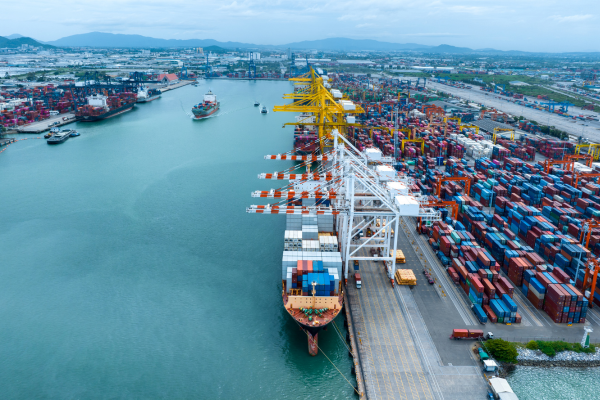
The Indian-flagged tanker Jag Laadki arrived at Mundra Port in Gujarat carrying around 80,886 MT of crude oil amid rising tensions in West Asia, according to officials. The crude was sourced from the UAE and loaded at Fujairah Port, which has recently been under drone and missile attacks linked to the ongoing Israel-US and Iran conflict. Advertisement






Just a day before, LPG carrier Nanda Devi reached Vadinar Port in Gujarat's Devbhumi Dwarka district, carrying 46,500 MT of liquefied petroleum gas after navigating the Strait of Hormuz. On Monday, another LPG vessel, Shivalik, also docked at Mundra Port, reinforcing India's supply chain for commercial and industrial consumption.
Adani Ports, the operator of Mundra, said Jag Laadki measures 274.19 metres in length, 50.04 metres in beam, with a deadweight tonnage of roughly 164,716 tonnes and gross tonnage of around 84,735 tonnes. The port emphasized that such arrivals demonstrate its capacity to handle substantial crude imports, essential for maintaining refinery operations and supporting India's energy security during regional supply disruptions.
India relies heavily on energy imports, sourcing about 88% of crude oil, 50% of natural gas, and 60% of LPG from overseas. Prior to the US-Israel strikes on Iran and Tehran's retaliation, over half of India's crude, roughly 30% of its natural gas, and 85-90% of its LPG came from the Middle East, including Saudi Arabia and the UAE.
The ongoing conflict has disrupted the Strait of Hormuz, a crucial transit route for Gulf energy exports. India has partly mitigated crude supply disruptions by importing oil from other sources such as Russia. However, gas supply for industrial users and LPG availability for commercial establishments like hotels and restaurants has been temporarily limited. The port provided safe berthing and coordinated maritime operations to safeguard these critical energy lifelines.
Source PTI
FAQ
Q1: Which tanker recently arrived at Mundra Port, and what cargo was it carrying?
A1: The Indian-flagged tanker Jag Laadki recently reached Mundra Port in Gujarat carrying approximately 80,886 MT of crude oil sourced from the UAE. The arrival underscores Mundra's capacity to handle large-scale crude shipments, especially during disruptions in the Middle East caused by regional conflicts.
Q2: Why is this arrival significant for India's energy security?
A2: India imports more than 85% of its energy from the Middle East, including crude oil, natural gas, and LPG. With tensions affecting the Strait of Hormuz and regional supply routes, the safe arrival of Jag Laadki helps maintain refinery operations, supports industrial consumption, and reinforces India's energy security amid supply uncertainties.
Q3: Were there other energy shipments around the same time?
A3: Yes. Just a day earlier, LPG carrier Nanda Devi docked at Vadinar Port carrying 46,500 MT of LPG, and Shivalik arrived at Mundra Port. These arrivals together ensure continuity of supply for commercial, industrial, and household needs despite regional disruptions.
Q4: What are the specifications of the Jag Laadki tanker?
A4: Jag Laadki is 274.19 metres long, has a beam of 50.04 metres, a deadweight tonnage of about 164,716 tonnes, and a gross tonnage of approximately 84,735 tonnes. These dimensions make it capable of transporting large volumes of crude efficiently, supporting India's high-volume import requirements.
Q5: How has the Middle East conflict affected India's energy imports?
A5: The US-Israel strikes on Iran and Iran's retaliatory actions disrupted shipping through the Strait of Hormuz, a critical transit route for Gulf energy exports. India has mitigated some of the impact by sourcing crude from other countries, including Russia. However, LPG and natural gas supplies have faced temporary limitations for industrial and commercial use.
Q6: How are ports like Mundra ensuring safe arrivals during these tensions?
A6: Ports such as Mundra provide secure berthing, coordinated maritime operations, and operational monitoring to safeguard vessels carrying critical energy supplies. Efficient handling of tankers ensures uninterrupted delivery of crude, LPG, and other fuel imports essential for India's refineries, industries, and domestic consumption.
Q7: What is India's dependence on Middle East energy imports?
A7: India imports roughly 88% of its crude oil, 50% of natural gas, and 60% of its LPG from overseas, with a significant share coming from Saudi Arabia, UAE, and other Gulf nations. Maintaining uninterrupted maritime supply routes is vital to sustain energy availability and economic stability, particularly during periods of geopolitical tension.

5th Jun, 2025

25th May, 2023

11th May, 2023

27th Apr, 2023
Advertisement









 Facebook
 Whatsapp
