Advertisement










Private equity has played a significant role in shaping Indi...
In today’s real estate landscape, fitness is often treated...
In this episode of Prop Personalities, we sit down with Hars...
Luxury real estate is one of the most talked-about segments ...
Welcome to Prop Personalities by Prop News Time - a podcast ...
Choosing between ready to move and under construction homes involves balancing immediate comfort with future potential. Market data in 2025–26 show that under construction (UC) properties in many metros have risen above ready-to-move (RTM) prices, underlining strong demand and increasing construction costs. Ready homes offer immediate possession, rental income, GST exemptions and early tax benefits. Under construction homes provide lower initial costs, flexible payments and potential for capital growth. Understanding personal priorities, financial capacity and risk tolerance is key to making the right choice.
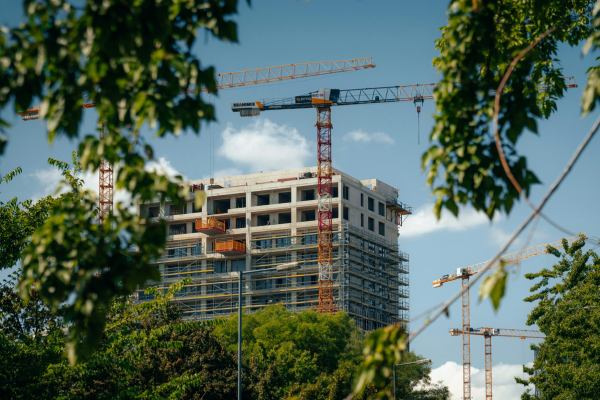
Deciding between a ready to move (RTM) home and an under construction (UC) property remains one of the most important choices Indian homebuyers face in 2025–26. Both have distinct financial, lifestyle and risk profiles, and understanding current market trends, costs and future potential can help buyers make a more informed decision. This article compares the two options using recent market data and expert perspectives to help you choose the right path.
Advertisement


Ready to move properties are completed homes with an occupation certificate, available for immediate possession and use. Buyers can move in or rent them out right after buying. Under construction properties are still being built and are sold with staged payment plans, with possession usually several months or years later.
Recent price trends indicate notable shifts in Indian housing markets. According to analysis reported by Fortune India, under construction homes in key areas like Delhi and Mumbai have become costlier per square foot than ready to move units, reflecting strong demand for new supply and rising construction costs. In Delhi, for example, this data showed UC prices at about INR 25,921 per sq. ft. compared with INR 18,698 per sq. ft. for RTM homes, a significant difference that buyers cannot ignore.
Similarly, as noted by DWELLO, under construction homes have shown robust appreciation in recent cycles, especially in growth corridors where buyers are seeking modern designs and amenities. In addition, Navbharat Times reported record growth in apartment registrations in markets like Kolkata, showing that housing demand remains active across regions. Beyond metros, real estate investment in states such as Uttar Pradesh has surged, according to The Times of India, highlighting expanding demand beyond traditional urban hotspots.
Advantages
Immediate possession and use: Buyers can occupy or rent out the property immediately after closing the deal, enabling immediate rental income without waiting.
Lower risk of delays: Since construction is complete and an occupation certificate has been issued, buyers avoid delay risks associated with construction.
GST advantage: As explained by real estate experts at NewSpace India, ready to move homes with completion certificates are exempt from GST, which can save up to 5–12% compared to under construction units that attract 5% GST (1% for affordable units).
Tax benefits can start sooner: Loan related tax deductions under Sections 24(b) and 80C of the Income Tax Act can begin as soon as possession is taken.
Limitations
Higher initial cost: RTM homes tend to be priced higher than equivalent UC homes, due to the value of certainty and immediate usability, as highlighted by NewSpace India.
Limited availability: Preferred layouts or floors may already be sold, leaving fewer choices for buyers.
Older design and features: Completed projects may lack the latest features or sustainability elements found in newer developments.
Advantages
Lower entry cost: Under construction homes often start at a lower price point, making them attractive for budget conscious and first time buyers, a trend noted by property analysts at LetsRentz.
Flexible payment plans: Construction linked payment schedules allow buyers to spread costs over the duration of construction, easing short term financial load.
Appreciation potential: In emerging development corridors, UC properties can appreciate notably by the time of completion. This potential for capital growth has been discussed in multiple real estate reports.
Modern amenities and design: Developers typically include contemporary fixtures, smart features and lifestyle amenities in new projects.
Limitations
Risk of delays: Even with RERA supervision, construction timelines can extend due to regulatory or financial issues, as detailed in buyer guides from ghar.tv.
No immediate rental income: Until possession is granted, buyers are unable to occupy or derive rental returns.
Additional taxes and charges: UC properties attract GST and may include extra charges that increase overall cost.
Uncertainty about final quality: Buyers must rely on mock ups and brochures, not the finished product.
Looking at price movements across Indian cities, several real estate research sources such as MagicBricks have highlighted a new trend: under construction homes in many areas have risen above ready to move prices. This reflects both rising construction costs and strong preference for contemporary layouts.
When it comes to rental yield and capital gains, industry insights like those from Prateek Group show that RTM units can generate immediate rental returns (commonly around 2.5–4% per year in prime locations) while UC properties, though not immediately income producing, may deliver comparatively higher price appreciation in developing corridors.
Tax implications also differ: RTM homes enable immediate tax deductions and avoid GST, whereas UC homes incur GST and offer tax benefits only after possession, as explained by market observers.
In 2025–26, buyer preferences vary across regions. Established areas with strong rental demand tend to attract buyers to ready to move homes for stability and income potential. At the same time, investors and long term buyers often choose under construction homes in growth corridors with improving infrastructure and connectivity, expecting stronger capital gains over time. Many industry analysts see this as a balanced market where both options have clear roles based on buyer goals.

5th Jun, 2025

25th May, 2023

11th May, 2023

27th Apr, 2023
Advertisement





 Facebook
 Whatsapp
