Advertisement










Private equity has played a significant role in shaping Indi...
In today’s real estate landscape, fitness is often treated...
In this episode of Prop Personalities, we sit down with Hars...
Luxury real estate is one of the most talked-about segments ...
Welcome to Prop Personalities by Prop News Time - a podcast ...
Cargo Matters has announced a major investment of INR 66 crore to establish over 550 smart, solar-integrated EV charging stations across Andhra Pradesh, Telangana, Karnataka, Tamil Nadu, and Kerala. Partnering with TRYK Charge Services LLP, the network will feature 360 kW DC fast chargers and standard AC options, aiming to address infrastructure gaps in commercial logistics and passenger transport. The stations will be managed via a unified Charge Point Operator platform, integrating existing third-party chargers and introducing an RFID-based charging card to simplify access, enhancing both operational efficiency and user experience.
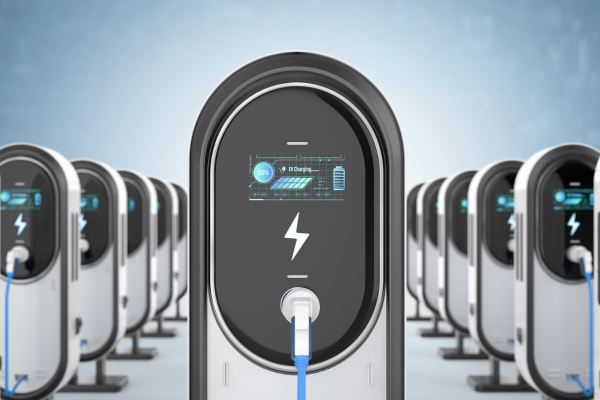
Logistics operator Cargo Matters recently unveiled plans to invest INR 66 crore to set up more than 550 smart electric vehicle (EV) charging stations across South India, including Andhra Pradesh, Telangana, Karnataka, Tamil Nadu, and Kerala. These stations will integrate solar power and smart grid technology, aiming to strengthen EV infrastructure for both commercial and passenger vehicles. Advertisement


The company has partnered with EV charging infrastructure provider TRYK Charge Services LLP to implement the project. The network is designed to feature 360 kW DC fast chargers along with standard AC charging options, ensuring compatibility with global standards. The move targets the current bottleneck in scaling electric logistics in India, which lies in the lack of reliable heavy-duty charging facilities along key freight corridors.
Umesh Padala, Founder and Chairman of Cargo Matters, emphasized that while electric vehicles are ready for wider adoption, the missing piece for commercial fleets has been robust charging infrastructure. He highlighted that the INR 66 crore investment will help secure India's operational future and accelerate the electrification of commercial transport.
All stations will be managed via a comprehensive Charge Point Operator (CPO) platform, offering real-time analytics, remote monitoring, and operational control. To unify the fragmented charging market, Cargo Matters plans to integrate existing unmanaged third-party chargers into its platform. This approach aims to optimise operations and open new revenue opportunities for independent charger owners.
Additionally, the two partners are introducing an RFID-based charging card that will provide single-tap access to all stations, making the user experience seamless for both commercial fleets and individual EV drivers. Kulbhushan Gawande, CEO of TRYK Charge Services, noted that the collaboration allows deployment of advanced technology, including ultra-fast DC chargers, at an unprecedented scale. He added that the joint effort is building a unified ecosystem for high-tonnage commercial fleets and everyday EV users.
Source PTI
FAQ
Q1: What is Cargo Matters investment plan for EV charging?
A1: Cargo Matters plans to invest INR 66 crore to establish over 550 smart EV charging stations across Andhra Pradesh, Telangana, Karnataka, Tamil Nadu, and Kerala. The project includes both fast DC chargers and standard AC chargers, integrated with solar power and smart grid technology.
Q2: Who is Cargo Matters partnering with for this project?
A2: The company has partnered with TRYK Charge Services LLP, an EV charging infrastructure provider, to implement and manage the smart charging network.
Q3: What types of chargers will be installed?
A3: The network will feature 360 kW DC fast chargers for high-capacity commercial vehicles, along with standard AC chargers to serve passenger EVs and smaller vehicles.
Q4: How will the stations be managed?
A4: All stations will be managed via a unified Charge Point Operator (CPO) platform, which offers real-time monitoring, remote management, and analytics to optimize operations.
Q5: Will existing charging stations be integrated?
A5: Yes, Cargo Matters plans to integrate unmanaged third-party chargers into its platform, creating a unified network and opening new revenue opportunities for independent charger owners.
Q6: How will customers access the charging stations?
A6: An RFID-based charging card will allow single-tap access to all stations, making charging convenient and seamless for both commercial fleet operators and individual EV users.
Q7: What is the primary goal of this initiative?
A7: The project aims to address infrastructure gaps for commercial logistics and passenger EVs, accelerate the electrification of transport, and enhance operational efficiency across South India.
Q8: What is the significance of solar integration in these stations?
A8: Solar integration helps reduce the carbon footprint of the charging network, lowers energy costs, and ensures a more sustainable and environmentally friendly EV infrastructure.
Q9: How does this project support India's EV adoption?
A9: By providing reliable, fast, and widely distributed charging options, the network removes a major barrier to EV adoption, particularly for high-tonnage commercial fleets, while also improving convenience for everyday EV drivers.

5th Jun, 2025

25th May, 2023

11th May, 2023

27th Apr, 2023
Advertisement





 Facebook
 Whatsapp
