Advertisement










Private equity has played a significant role in shaping Indi...
In today’s real estate landscape, fitness is often treated...
In this episode of Prop Personalities, we sit down with Hars...
Luxury real estate is one of the most talked-about segments ...
Welcome to Prop Personalities by Prop News Time - a podcast ...
The Centre has started identifying new locations in Jammu and Kashmir for hydropower projects to boost electricity generation and meet rising demand. Alongside this, it is reviewing proposals to divert water to northern states through canal and tunnel networks. Work has resumed on previously stalled projects, while desilting efforts are being carried out to improve reservoir efficiency. The move is part of a broader strategy to expand renewable energy capacity, supported by thermal and nuclear power to ensure stable supply and long-term energy security.
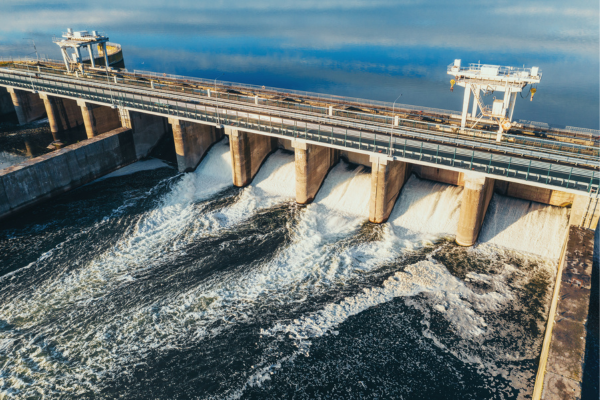
The Centre has initiated the process of identifying suitable sites in Jammu and Kashmir for new hydropower projects, aiming to strengthen electricity generation in the region and support increasing demand across northern India. This step forms part of a wider plan to utilise the Union Territory's river resources more effectively. Advertisement


Union Power Minister Manohar Lal Khattar indicated that several hydropower plants are already operational in the region. He explained that efforts are underway to improve the performance of existing infrastructure, including desilting reservoirs to restore their storage capacity and efficiency.
He further stated that construction activity has resumed on three to four hydropower projects that were earlier stalled due to various challenges. In addition to reviving these projects, the government has now moved towards planning new developments, with site identification currently in progress at multiple locations.
The Centre is also examining proposals to divert water from Jammu and Kashmir to states such as Punjab, Rajasthan, Haryana, Uttar Pradesh and Delhi. This is being explored through canal systems and underground tunnels. According to the minister, different alignments are under study. A route passing through Jammu city has been found less feasible, while an alternative route bypassing the city is being assessed for its financial and technical viability.
The push for hydropower development is aligned with India's broader energy strategy, where renewable energy is being expanded alongside conventional sources. While solar power remains a key focus, the government is also working on storage solutions to manage supply gaps due to its intermittent nature.
At the same time, thermal power continues to play a role in maintaining grid stability, with around 20,000 MW of capacity under development. Nuclear energy is also expected to contribute significantly over the long term, with a target of reaching about 100 GW capacity by 2047.
Jammu and Kashmir holds substantial hydropower potential, especially along river systems such as the Chenab basin. Several large projects are already under construction or in advanced stages of planning, including Pakal Dul (1,000 MW), Ratle (850 MW) and Kiru (624 MW). These projects are part of a broader pipeline aimed at tapping the region's water resources for large-scale power generation.
The current initiative also builds on earlier policy efforts to revive delayed hydropower projects in the region and improve utilisation of available water resources. By combining new project identification with the revival of stalled developments and infrastructure upgrades, the Centre is working towards creating a more stable and diversified energy base.

5th Jun, 2025

25th May, 2023

11th May, 2023

27th Apr, 2023
Advertisement





 Facebook
 Whatsapp
