Advertisement










Private equity has played a significant role in shaping Indi...
In today’s real estate landscape, fitness is often treated...
In this episode of Prop Personalities, we sit down with Hars...
Luxury real estate is one of the most talked-about segments ...
Welcome to Prop Personalities by Prop News Time - a podcast ...
The Maharashtra Housing and Area Development Authority (MHADA) is planning to push redevelopment of several ageing housing layouts across Mumbai, Pune and Nashik to improve housing conditions and create additional supply in established urban areas. Many of these layouts are over four decades old and require redevelopment to upgrade infrastructure and living standards. At the same time, MHADA is working on a rental housing policy aimed at improving access to accommodation in cities. Strong response to housing lotteries and higher redevelopment premiums have improved the authority's financial position, enabling it to expand redevelopment and housing initiatives across Maharashtra.
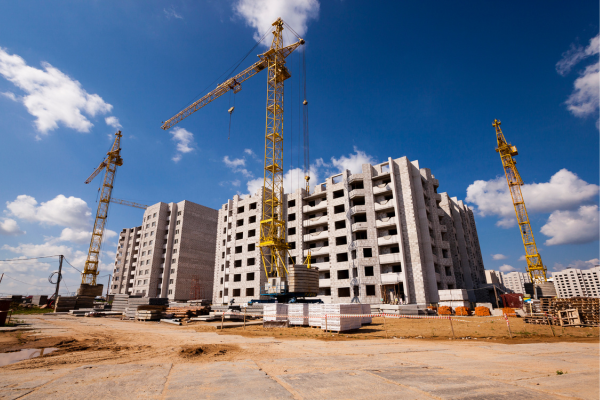
The Maharashtra Housing and Area Development Authority is preparing to move ahead with redevelopment of several ageing housing layouts located in major cities such as Mumbai, Pune and Nashik. These residential clusters were largely developed several decades ago and now require rebuilding to improve living conditions, infrastructure and housing supply in established urban areas. Advertisement


Redevelopment of such brownfield sites has been supporting activity in the real estate sector across Maharashtra in recent years. Projects located in well-developed areas continue to attract demand as they already have access to transport networks, social infrastructure and employment centres. Officials indicated that redevelopment has therefore become an important tool for adding new housing stock in cities where large vacant land parcels are limited.
Anil Wankhede, deputy chief executive officer of MHADA, explained that the authority has been focusing on redevelopment of old layouts, particularly those built around 40 to 45 years ago. Many of these buildings have reached the stage where redevelopment is required instead of repeated repairs. He indicated that MHADA is working to create a framework that encourages private developers to participate in such redevelopment projects while ensuring that affordable housing continues to be created as part of these developments.
MHADA has played a major role in housing development in the state since its formation. The authority has constructed nearly nine lakh homes across Maharashtra over the years, including around 2.5 lakh housing units in Mumbai alone. Redevelopment of older housing clusters is now being seen as the next phase in its housing strategy, especially in cities where housing demand remains high.
Along with redevelopment initiatives, MHADA has prepared a rental housing policy that has been submitted to the state government for approval. The policy aims to expand rental housing options in urban areas where purchasing a home has become difficult for many people due to high property prices. Officials explained that housing in India has traditionally focused on ownership, but there is a growing need for organised rental housing in major cities.
Rental housing is expected to benefit several groups such as students, working professionals, working women, senior citizens and people who move temporarily to cities for work, education or medical treatment. By creating a structured rental housing ecosystem, the authority aims to provide more flexible accommodation options in urban centres.
While drafting the rental housing policy, MHADA consulted industry stakeholders including developer associations such as NAREDCO. Developers pointed out that rental housing typically generates returns of about 4 to 4.5 percent, compared with nearly 20 percent returns in conventional real estate development. Because of this gap, the policy is expected to include incentives and supportive measures that could encourage developers to participate in rental housing projects.
MHADA is also advancing several large redevelopment projects within Mumbai. These include major housing layouts such as Motilal Nagar, which spreads across around 114 acres, along with Adarsh Nagar in Worli, Bandra Reclamation and SV Nagar. Officials indicated that many of these projects have reached advanced planning stages and are expected to move towards the tendering phase in the near future.
The authority's housing lotteries continue to see strong demand from homebuyers. In the most recent housing lottery offering about 3,500 homes in Mumbai, MHADA received nearly 1.5 lakh applications. The authority plans to continue offering around 4,000 to 5,000 homes through its lotteries each year, with additional housing announcements likely in the coming months.
MHADA's financial position has also improved significantly over the past few years. Around mid-2023, the authority had funds of approximately INR 150 crore. This amount has increased to more than INR 5,000 crore, largely due to premiums collected from developers participating in redevelopment projects.
Redevelopment of old cess buildings in Mumbai remains another major focus area. Historically, the city had around 19,500 such buildings, many of which were constructed before independence. The number has now reduced to around 13,500, but a large portion of these structures still require redevelopment.
Progress on these projects has often been slow because of tenant disputes, legal challenges and other administrative hurdles. To address this, MHADA is working on regulatory changes and an exit policy that could help accelerate redevelopment. Officials believe that with improved policy support, most of these buildings could be redeveloped over the next 15 years rather than undergoing repeated structural repairs.
Redevelopment has therefore become central to Maharashtra's housing strategy. By rebuilding ageing residential layouts and using land more efficiently, the state aims to increase housing supply, upgrade urban infrastructure and improve the living environment for residents in older neighbourhoods.

5th Jun, 2025

25th May, 2023

11th May, 2023

27th Apr, 2023
Advertisement





 Facebook
 Whatsapp
