Advertisement










In this episode of Prop Personalities, we sit down with Hars...
Luxury real estate is one of the most talked-about segments ...
Welcome to Prop Personalities by Prop News Time - a podcast ...
Airports play a much bigger role than just enabling travel -...
Why does the same hotel brand operate multiple properties in...
A Liberia-flagged oil tanker, Shenlong, carrying Saudi Arabian crude oil arrived in Mumbai after safely crossing the Strait of Hormuz, a key global oil transit route that has been under heightened security concerns. The vessel transported about 135,335 metric tonnes of crude and docked at the Jawahar Dweep terminal off Mumbai's coast for unloading. The shipment is considered significant as it was among the first crude deliveries to India through the strait after regional tensions disrupted shipping activity. The cargo will be processed at refineries in eastern Mumbai, supporting India's energy supply that relies heavily on West Asian crude imports.
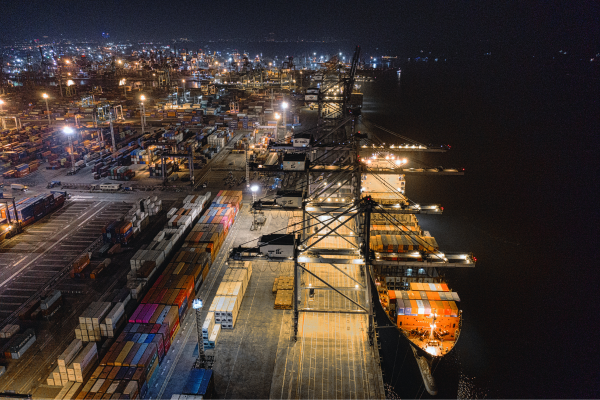
A crude oil tanker named Shenlong, sailing under the Liberia flag, reached Mumbai carrying Saudi Arabian crude oil after successfully crossing the Strait of Hormuz, one of the world's most critical oil shipping routes. The vessel completed its journey to India despite security concerns in the region that have affected maritime movement through the narrow waterway connecting the Persian Gulf to international sea routes. Advertisement


The tanker docked at the Jawahar Dweep terminal, also known as Butcher Island, located off the coast of Mumbai. Shipping data showed that the vessel delivered around 135,335 metric tonnes of crude oil. From the offshore terminal, the crude cargo will be transferred through pipelines to refineries in the Mahul area in eastern Mumbai for processing.
The Shenlong had earlier departed from Ras Tanura, a major oil export terminal in Saudi Arabia, before heading towards India. During its passage through the Strait of Hormuz, reports indicated that the vessel briefly switched off its Automatic Identification System (AIS), which is used to track ships. This step is sometimes taken by vessels travelling through sensitive or high-risk maritime zones to reduce potential security threats.
The successful arrival of the tanker is notable because it came at a time when regional tensions in West Asia have raised concerns over shipping safety in the Strait of Hormuz. Several ships operating near the strait had faced security incidents in recent weeks, leading to caution among shipping operators and energy companies.
The Strait of Hormuz remains one of the most important maritime choke points for global energy trade. Nearly one-fifth of the world's crude oil shipments move through this narrow passage between the Persian Gulf and the Gulf of Oman. Any disruption in the area can directly affect international oil markets and countries that depend heavily on imported energy supplies.
India is among the world's largest crude oil importers and relies significantly on shipments from West Asian producers such as Saudi Arabia, Iraq and the United Arab Emirates. Oil tankers arriving from the region regularly use the Strait of Hormuz before sailing towards Indian ports including Mumbai, Jamnagar and Mangalore.
Shipping reports suggested that at least two tankers carrying close to three million barrels of crude oil for India managed to cross the strait during the same period. Some vessels temporarily disabled their tracking signals while passing through the sensitive area as a precautionary measure.
After unloading its cargo in Mumbai, the Shenlong is expected to depart and sail towards the UAE port of Fujairah. The vessel operates as a Suezmax-class tanker, a category of large crude carriers capable of transporting over one million barrels of oil in a single voyage.
The ship's crew reportedly includes seafarers from several countries, including India. Maritime agencies monitoring vessel movement have been closely tracking oil shipments through the Strait of Hormuz to ensure the safe passage of energy supplies to major importing countries.

5th Jun, 2025

25th May, 2023

11th May, 2023

27th Apr, 2023
Advertisement





 Facebook
 Whatsapp
