Advertisement










In this episode of Prop Personalities, we sit down with Hars...
Luxury real estate is one of the most talked-about segments ...
Welcome to Prop Personalities by Prop News Time - a podcast ...
Airports play a much bigger role than just enabling travel -...
Why does the same hotel brand operate multiple properties in...
Western Railway is planning to monetise elevated decks being built above platforms at several suburban stations in Mumbai as part of ongoing station improvement works. The decks are being developed by the Mumbai Rail Vikas Corporation to ease congestion and improve passenger circulation at busy stations. Railway authorities are now examining ways to lease these newly created spaces for retail outlets, kiosks and passenger facilities to generate non-fare revenue. Officials say the commercial use will be planned carefully so that commuter movement remains unaffected while the additional space contributes to station maintenance and infrastructure upgrades.
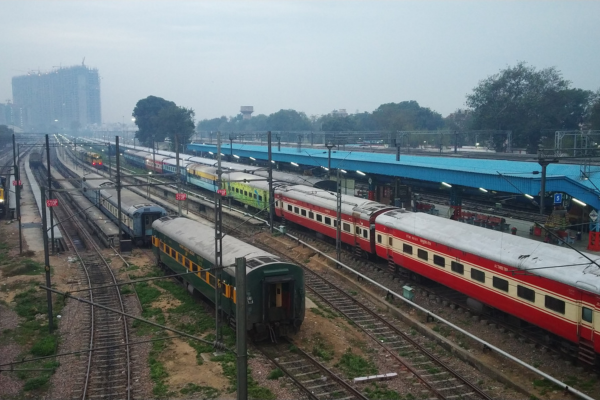
Western Railway (WR) is planning to monetise elevated decks that are being constructed above platforms at several suburban railway stations in Mumbai. The decks are part of a broader station improvement initiative designed to increase passenger circulation space and reduce congestion at some of the busiest stations on the suburban network. Advertisement


The structures are being developed by the Mumbai Rail Vikas Corporation (MRVC) under ongoing railway infrastructure projects in the Mumbai metropolitan region. While the primary purpose of these decks is to improve commuter movement and provide additional passenger amenities, railway authorities are now exploring the possibility of commercially utilising the space to generate non-fare revenue.
Officials said the decks have created large areas above platforms that can be used for facilities such as kiosks, small retail outlets, food counters and passenger services. These spaces may be leased or licensed to private operators, allowing the railways to earn additional income without affecting daily train operations.
The elevated deck concept was introduced to address severe crowding at suburban stations in Mumbai, where millions of commuters use the railway network every day. Many of these stations were designed decades ago and were not built to handle the present passenger volumes. By creating a deck level above the platforms, authorities can move several passenger facilities away from the platform level and distribute commuter movement more evenly.
Amenities such as ticket counters, seating areas, food stalls and restrooms can be shifted to the elevated level. This reduces congestion on platforms and foot overbridges and allows passengers to move between entrances, ticketing areas and platforms more smoothly.
The model has already been implemented at stations such as Andheri railway station, Borivali railway station and Goregaon railway station, where elevated decks have helped create additional circulation space for passengers. These projects demonstrated that vertical expansion within existing railway premises can help address space constraints in dense urban areas like Mumbai.
Encouraged by these results, the railways expanded the plan to more stations along the suburban corridors. Construction of similar decks is underway or planned at several other locations across the suburban railway network as part of station modernisation works.
Railway officials indicated that commuter movement will remain the priority while planning commercial use of the deck spaces. Any retail or service outlets will be placed in a way that does not obstruct pedestrian movement or create congestion.
The proposal also aligns with the broader effort by Indian Railways to increase revenue from non-fare sources. Over the past several years, the railway system has explored different ways to monetise station infrastructure through advertising rights, retail leasing and station redevelopment projects.
Officials believe that using elevated deck space for limited commercial activity can support the maintenance of station facilities and help fund further infrastructure improvements, especially in suburban systems that handle extremely high commuter volumes every day.

5th Jun, 2025

25th May, 2023

11th May, 2023

27th Apr, 2023
Advertisement





 Facebook
 Whatsapp
