Advertisement






What really powers the cloud? Behind every Google search, A...
A lot of what defines a home isn’t visible at handover. I...
Private equity has played a significant role in shaping Indi...
Luxury real estate is one of the most talked-about segments ...
Airports play a much bigger role than just enabling travel -...
Dubai-based logistics major DP World reported that its flagship facility, Jebel Ali Port, continues to operate normally with no damage to infrastructure despite disruptions caused by the ongoing Iran conflict. However, inbound vessel traffic has declined as the conflict has severely affected shipping routes through the Strait of Hormuz. The situation has increased security and logistical challenges for port operators across the Gulf. DP World has implemented rerouting and mitigation measures while reporting strong financial performance and cargo volumes across its global terminal network.
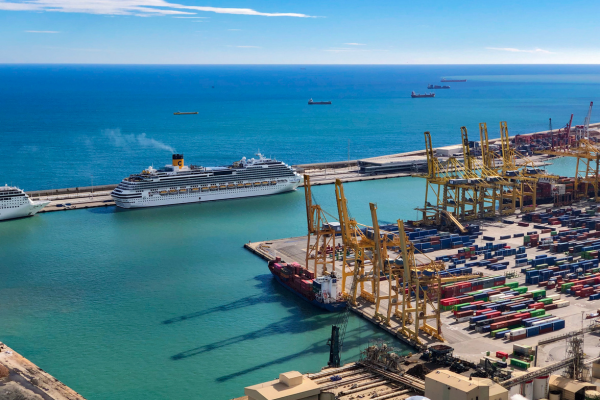
Dubai-based port operator DP World has confirmed that its flagship container hub, Jebel Ali Port, is fully operational and has not suffered any infrastructure damage. However, the company indicated that inbound vessel traffic has declined due to the ongoing war involving Iran, which continues to disrupt shipping activity in the region. Advertisement






The conflict began nearly two weeks earlier following joint air strikes by the United States and Israel on Iran. Since then, tensions in the Gulf have intensified and maritime movement has been heavily affected. The situation has effectively disrupted passage through the Strait of Hormuz, a critical global shipping corridor through which a large share of the world's oil exports normally pass.
The Strait of Hormuz is one of the most strategically important waterways for global energy and trade flows. Most major Gulf ports including Dubai's Jebel Ali as well as primary ports in Kuwait, Bahrain, Qatar and Saudi Arabia's Gulf coast depend on traffic moving through this narrow passage. As a result, the ongoing conflict has raised operational and security risks for shipping lines, logistics companies and port operators across the region.
DP World's Chief Executive Officer, Yuvraj Narayan, stated that although port infrastructure continues to operate normally, the company has introduced regional rerouting and operational mitigation measures to ensure supply chain continuity during the current disruption. These measures are aimed at maintaining cargo movement while adjusting to reduced traffic and heightened security conditions.
Security risks around the port remain elevated. Maritime authorities reported that a container ship was struck by an unidentified projectile roughly 35 nautical miles north of Jebel Ali, which caused a small onboard fire. The incident highlighted the growing risks to commercial vessels navigating waters close to the conflict zone.
Despite the geopolitical disruptions, DP World remains one of the largest global port and logistics operators. The company manages a wide network of terminals and logistics operations across multiple regions, including Canada, Peru, India and Angola. Its global footprint allows the company to redirect cargo and adjust operational strategies when specific trade routes are disrupted.
Financially, the company reported strong performance in the previous year. Profit attributable to the owners of the company increased by nearly 43 percent, reaching USD 1.07 billion. The growth was supported by strong activity at its ports and terminals as well as solid contributions from its logistics division, both of which helped increase overall revenue.
Operational data also showed strong cargo throughput at its flagship facility. During the previous year, Jebel Ali handled 15.6 million twenty-foot equivalent units (TEU). Across DP World's global terminals, the company recorded a consolidated throughput of 56.1 million TEU, reflecting continued demand for container shipping despite geopolitical pressures affecting some routes.
Jebel Ali remains the largest container port in the Middle East and one of the busiest transshipment hubs globally. Its strategic location has historically connected Asia, Europe and Africa, making it a key gateway for regional trade. Any disruption to shipping routes in the surrounding waters therefore has direct implications for global supply chains.
Source Reuters

5th Jun, 2025

25th May, 2023

11th May, 2023

27th Apr, 2023
Advertisement









 Facebook
 Whatsapp
