Advertisement










Private equity has played a significant role in shaping Indi...
In today’s real estate landscape, fitness is often treated...
In this episode of Prop Personalities, we sit down with Hars...
Luxury real estate is one of the most talked-about segments ...
Welcome to Prop Personalities by Prop News Time - a podcast ...
The Delhi government is preparing to introduce a Green Budget for the financial year 2026-27 to integrate environmental priorities into its fiscal planning. The initiative aims to track public spending related to pollution control, clean energy, water conservation and biodiversity protection across various departments. By mapping such expenditures, the government intends to improve transparency and ensure that sustainability initiatives receive focused funding. The move comes as Delhi continues to face severe air pollution and rising urban pressures. Officials believe the framework will help guide future investment decisions and strengthen the city's long-term environmental planning.
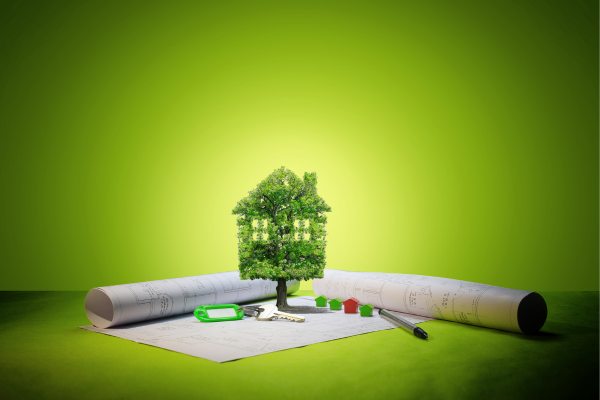
The Delhi government is working on a Green Budget for the financial year 2026-27, an initiative aimed at aligning public expenditure with environmental priorities and sustainable development goals. The proposed budgeting framework is expected to identify and track spending on programmes that contribute to environmental protection and climate-related initiatives across different government departments. Advertisement


Under this framework, expenditures related to pollution control, renewable energy adoption, water conservation, waste management and biodiversity protection will be mapped within the budget. Officials involved in the process indicated that the objective is to understand how much government spending directly contributes to improving environmental conditions in the national capital.
The initiative is also intended to make environmental spending more transparent. By clearly identifying these allocations in the budget structure, policymakers will be able to assess whether resources are being directed toward areas that support sustainability and climate resilience. Officials believe that such a system can help improve policy coordination among departments that run environment-related programmes.
Delhi has been facing long-standing environmental concerns, particularly severe air pollution during winter months, increasing waste generation and growing pressure on water resources due to rapid urbanisation. The government believes that integrating environmental priorities directly into the budgeting process could help address these issues in a more structured manner.
The proposed green budgeting approach is expected to cover spending by multiple departments, including those responsible for environment, transport, energy, water supply and urban development. Many of these departments already run schemes linked to clean mobility, renewable energy adoption, green spaces and water management. The new framework aims to consolidate these expenditures and evaluate their environmental impact.
Green budgeting has been adopted by several governments globally as a tool to align fiscal policies with climate commitments. The approach typically involves reviewing public expenditure to determine whether it contributes positively to environmental goals such as emission reduction, climate adaptation and natural resource conservation.
The Delhi government's plan also reflects a broader shift in policy thinking where environmental sustainability is increasingly linked with urban infrastructure planning. In recent years, the city has introduced measures such as expanding electric vehicle adoption, promoting rooftop solar installations, strengthening waste management systems and increasing urban green cover.
At the national level, the push toward sustainable infrastructure has also gained momentum. The Union government has emphasised renewable energy expansion, clean mobility and climate-resilient infrastructure as key components of India's development strategy while pursuing its long-term goal of achieving net-zero emissions by 2070.
Officials indicated that work on the Green Budget framework is currently underway. Detailed expenditure mapping and final allocations are expected to become clearer when the budget for the financial year 2026-27 is formally presented.

5th Jun, 2025

25th May, 2023

11th May, 2023

27th Apr, 2023
Advertisement





 Facebook
 Whatsapp
