Advertisement










Private equity has played a significant role in shaping Indi...
In today’s real estate landscape, fitness is often treated...
In this episode of Prop Personalities, we sit down with Hars...
Luxury real estate is one of the most talked-about segments ...
Welcome to Prop Personalities by Prop News Time - a podcast ...
A double-decker flyover at Savitribai Phule Pune University Chowk in Pune has been opened to traffic, aiming to reduce congestion at one of the city's busiest intersections. Built by the Pune Metropolitan Region Development Authority (PMRDA) at a cost of about INR 277 crore, the project integrates a road flyover with a Metro viaduct above it for the Hinjewadi-Shivajinagar Metro Line-3. The 1.7 km structure connects key areas including Baner, Aundh, Pashan and Shivajinagar. Officials expect the new infrastructure to shorten travel time and improve connectivity across western Pune's major residential and IT corridors.
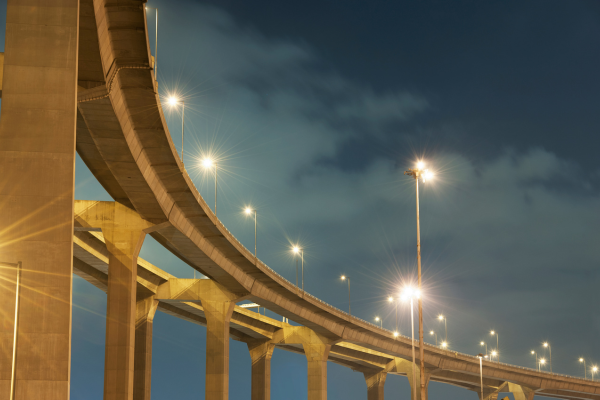
A new double-decker flyover at Savitribai Phule Pune University Chowk has been opened for public use, bringing relief to commuters travelling along Ganeshkhind Road, one of Pune's busiest traffic corridors. The structure was inaugurated virtually by Maharashtra Chief Minister Devendra Fadnavis, after which vehicles were allowed to use the flyover. Advertisement


The project has been developed by the Pune Metropolitan Region Development Authority (PMRDA) as part of efforts to strengthen transport infrastructure in the city and address long-standing congestion in the university area. Deputy Chief Minister Sunetra Pawar attended the inauguration ceremony in Pune and stated that the flyover is expected to improve traffic flow at the junction, which connects several important parts of western Pune.
The intersection near Savitribai Phule Pune University has historically witnessed heavy traffic due to its location between major residential neighbourhoods, educational institutions and the Hinjewadi IT hub. During peak hours, commuters travelling between Baner, Aundh, Pashan, Shivajinagar and the city centre often experienced long delays at this junction. Officials expect the new infrastructure to reduce waiting time and make daily commuting smoother.
The double-decker structure integrates two levels of transport infrastructure. The lower deck functions as a road flyover designed to ease vehicle movement through the intersection, while the upper deck carries a Metro viaduct that will serve the upcoming Hinjewadi-Shivajinagar Metro Line-3. This combined design allows both road and rail transport to run within the same corridor, which helps optimise land use in densely developed urban areas.
The flyover project has been built at an estimated cost of around INR 277 crore. The overall length of the structure is about 1.7 km, including connecting ramps, while the main viaduct section extends for more than 1.1 km. Engineers adopted a single-pier structural design capable of supporting both the flyover deck and the Metro viaduct above it. A steel span of about 55 metres has also been installed at the central junction to manage structural load and traffic movement.
Multiple ramps have been constructed to improve connectivity across different directions. These include a two-lane ramp of around 210 metres connecting the Aundh side, a four-lane ramp of approximately 151 metres towards Baner, and another ramp connecting the Pashan side. A six-lane section on the Ganeshkhind Road side allows smoother movement of vehicles travelling towards Shivajinagar and other parts of the city.
The development of this infrastructure followed a phased process. The older flyover at the same location had been demolished during the COVID-19 period to make way for the integrated Metro and road corridor. The decision at that time had drawn criticism in political and public discussions because it temporarily increased congestion in the area.
Construction of the new structure began after the demolition, with certain ramps and sections opened earlier to provide partial traffic relief. The latest opening completes a major part of the integrated flyover system, allowing vehicles to bypass signals at the busy intersection.
Apart from easing traffic congestion, the project is also expected to support the future functioning of the Hinjewadi-Shivajinagar Metro corridor. The Metro Line-3 project aims to connect Pune's central areas with the Hinjewadi IT hub, which houses several technology companies and attracts thousands of daily commuters.
Residents of western Pune, IT professionals travelling to Hinjewadi and students commuting to Savitribai Phule Pune University are expected to benefit from improved connectivity once traffic patterns stabilise and the Metro corridor becomes operational.
Urban planners have increasingly used double-decker structures in cities facing land constraints. By combining a road flyover with a Metro corridor in the same structure, authorities aim to manage growing transport demand while limiting the need for additional land acquisition in built-up areas.
Source PTI
FAQ
1. What is the new infrastructure project opened at University Chowk in Pune?
A double-decker flyover has been opened at Savitribai Phule Pune University Chowk to improve traffic flow at one of the city's busiest intersections. The structure combines a road flyover with a Metro viaduct above it and has been developed to ease congestion along Ganeshkhind Road, a key corridor connecting several residential and commercial areas in western Pune.
2. Which authority developed the flyover and what is the project cost?
The project was built by the Pune Metropolitan Region Development Authority at an estimated cost of around INR 277 crore. The authority undertook the project as part of broader efforts to improve transport infrastructure and address long-standing congestion in the university area.
3. How is the double-decker structure designed?
The infrastructure has two levels. The lower deck functions as a road flyover that allows vehicles to bypass the busy junction, while the upper level carries the Metro viaduct for the Hinjewadi-Shivajinagar Metro Line 3. This integrated design allows both road and rail transport to operate within the same corridor, helping optimise space in a densely developed urban area.
4. What are the main features of the flyover?
The structure is about 1.7 km long, including connecting ramps, while the main viaduct section extends for over 1.1 km. Engineers used a single-pier design capable of supporting both the road deck and the Metro structure above it. A steel span of around 55 metres has also been installed at the central junction to support structural loads and manage traffic flow.
5. Which areas will benefit from the new flyover?
The flyover improves connectivity between several major areas in western Pune, including Baner, Aundh, Pashan and Shivajinagar. These areas include residential neighbourhoods, educational institutions and routes leading to the Hinjewadi IT hub.
6. Why was the earlier flyover at this junction demolished?
The previous flyover at the same location was demolished during the COVID-19 period to make space for the integrated road-and-Metro structure. Although the demolition initially caused traffic congestion, the new design was planned to accommodate both road traffic and the future Metro corridor in a single structure.
7. How will the project impact traffic and commuting in Pune?
Officials expect the new flyover to significantly reduce signal waiting time at the intersection and improve travel between western Pune and the city centre. Once the Metro corridor becomes operational, the combined road-and-rail infrastructure is expected to support smoother commuting for residents, students and IT professionals travelling to the Hinjewadi technology hub.

5th Jun, 2025

25th May, 2023

11th May, 2023

27th Apr, 2023
Advertisement





 Facebook
 Whatsapp
