Advertisement






What really powers the cloud? Behind every Google search, A...
A lot of what defines a home isn’t visible at handover. I...
Private equity has played a significant role in shaping Indi...
Luxury real estate is one of the most talked-about segments ...
Airports play a much bigger role than just enabling travel -...
Solex Energy has received approval under the Ministry of New and Renewable Energy's Approved List of Models and Manufacturers (ALMM) framework for its 3.78-gigawatt solar module manufacturing facility in Surat, Gujarat. The listing confirms that the company's solar modules meet the government's quality and reliability standards for use in domestic solar projects. The ALMM mechanism is aimed at strengthening India's solar manufacturing ecosystem and ensuring energy security. Solex Energy said the approval supports its clean energy ambitions as it plans to significantly expand its solar module manufacturing capacity to 15 GW with an estimated investment of about INR 8,000 crore.
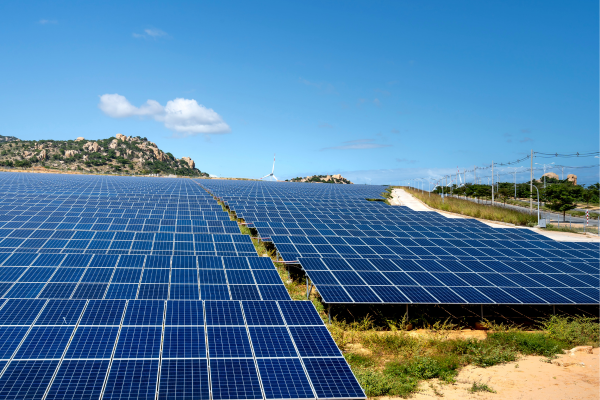
Solex Energy has received approval under the Ministry of New and Renewable Energy's Approved List of Models and Manufacturers (ALMM) framework for its 3.78-gigawatt solar module manufacturing facility located in Surat, Gujarat. Advertisement






The approval places the facility on the government's official list of eligible solar photovoltaic (PV) module manufacturers whose products can be used in government-backed and many domestic solar projects. The listing confirms that the company's modules meet the required standards of quality, reliability and performance for deployment in India's renewable energy sector.
The ALMM framework was introduced by the Ministry of New and Renewable Energy to regulate the use of solar PV modules and cells in the country. The mechanism aims to ensure the credibility of manufacturers and safeguard the interests of project developers and consumers while supporting India's broader energy security goals.
With the Surat facility now included in the approved list, Solex Energy's 3.78 GW solar module manufacturing capacity has officially been recognised under the ALMM framework. The company disclosed the development through a regulatory filing.
Chetan Shah, Chairman and Managing Director of Solex Energy, indicated that the approval strengthens the company's role in India's domestic solar manufacturing ecosystem and supports the country's transition towards cleaner and more sustainable energy sources.
The Gujarat-based company has also outlined plans to significantly expand its manufacturing footprint. Solex Energy is targeting an increase in its solar module manufacturing capacity to 15 gigawatts, a scale-up that is expected to involve an investment of around INR 8,000 crore.
India has been encouraging domestic solar manufacturing in recent years through policy measures such as the ALMM framework and production-linked incentive schemes. These initiatives aim to reduce dependence on imported solar equipment and strengthen the country's renewable energy supply chain as solar capacity continues to expand rapidly across utility-scale and rooftop segments.
Source PTI
FAQ
1. What approval has Solex Energy recently received?
Solex Energy has received approval under the Approved List of Models and Manufacturers for its 3.78-gigawatt solar module manufacturing facility located in Surat. This approval confirms that the company's solar modules meet the quality and reliability standards required for use in many domestic and government-supported solar projects in India.
2. What is the ALMM framework?
The ALMM framework is a regulatory mechanism introduced by the Ministry of New and Renewable Energy. It maintains an official list of approved solar module and cell manufacturers whose products meet specified technical standards. Only manufacturers included in this list are eligible to supply modules for many government-backed solar power projects.
3. Why is ALMM approval important for solar manufacturers?
Being listed under the ALMM framework allows manufacturers to supply solar modules to a wide range of domestic solar projects, particularly those supported by government programmes. The listing also signals that the manufacturer's products meet required performance and reliability benchmarks, which can improve market credibility and business opportunities.
4. What is the manufacturing capacity of Solex Energy's approved facility?
The facility that received approval has a solar module manufacturing capacity of about 3.78 gigawatts. With this listing, the entire capacity of the Surat plant has been officially recognised under the ALMM framework.
5. How does this approval support India's renewable energy goals?
The ALMM system is designed to strengthen India's domestic solar manufacturing ecosystem and reduce reliance on imported solar equipment. By encouraging local manufacturers to meet quality standards, the framework supports the country's efforts to build a more secure and self-reliant renewable energy supply chain.
6. What expansion plans has Solex Energy announced?
Solex Energy has outlined plans to significantly expand its manufacturing footprint. The company aims to increase its solar module manufacturing capacity to around 15 gigawatts in the coming years.
7. What investment is planned for the expansion?
To achieve this expansion, Solex Energy expects to invest around INR 8,000 crore. The planned investment will help scale up production capacity and support the company's broader strategy of contributing to India's clean energy transition.

5th Jun, 2025

25th May, 2023

11th May, 2023

27th Apr, 2023
Advertisement









 Facebook
 Whatsapp
