Advertisement










Private equity has played a significant role in shaping Indi...
In today’s real estate landscape, fitness is often treated...
In this episode of Prop Personalities, we sit down with Hars...
Luxury real estate is one of the most talked-about segments ...
Welcome to Prop Personalities by Prop News Time - a podcast ...
The Delhi government has cleared Phase V(A) of the metro project after receiving the Centre's nod, marking a significant expansion of the city's rapid transit network. The plan involves three new corridors connecting RK Ashram Marg to Indraprastha via Central Vista, Tughlakabad to Kalindi Kunj, and Aerocity to Indira Gandhi Domestic Terminal-1, covering 16.07 km with 13 stations. Most stations will be underground. The total estimated cost is INR 12,014.91 crore, with the state contributing INR 2,940.46 crore. The expansion aims to improve connectivity, reduce congestion, and support sustainable urban mobility.
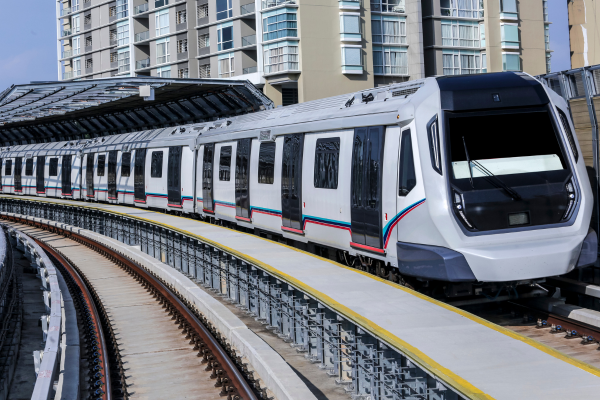
The Delhi government recently approved Phase V(A) of the Delhi Metro, following clearance from the central government. This phase is part of ongoing efforts to expand and modernise the city's public transport system. The total cost of the project is estimated at INR 12,014.91 crore, with the Delhi government providing around INR 2,940.46 crore. Officials stated that the expansion is intended to strengthen connectivity, ease traffic congestion, and promote cleaner mobility across the capital. Advertisement


Phase V(A) includes three major corridors. The first, a 9.91 km stretch from RK Ashram Marg to Indraprastha via Central Vista, will feature nine stations, most of them underground. It will pass through key administrative and cultural hubs such as Kartavya Bhavan, Shivaji Stadium, Central Secretariat, CCS Buildings, India Gate, War Memorial High Court, Baroda House, Bharat Mandapam, and Indraprastha. This corridor is expected to serve around 60,000 government employees and nearly 200,000 daily commuters. The estimated cost of this corridor is INR 9,570.40 crore, with the Delhi government contributing INR 2,337.24 crore.
The second corridor, spanning 2.26 km from Aerocity to Indira Gandhi Domestic Airport Terminal-1, will include a single station and aims to provide direct metro access to the airport. This is expected to reduce traffic congestion in the surrounding areas. The project for this stretch is estimated at INR 1,419.64 crore, with INR 351.86 crore funded by the Delhi government.
The third corridor covers 3.9 km from Tughlakabad to Kalindi Kunj, featuring three stations to improve connectivity in south and south-east Delhi. The estimated cost for this corridor is INR 1,024.87 crore, with the state contributing INR 251.36 crore.
Across all three corridors, 10 stations will be underground while three will be elevated. Officials highlighted that this expansion supports national objectives to reduce congestion, improve air quality, and strengthen urban mobility. The plan also aligns with Prime Minister Narendra Modi's 7-C Vision of mobility -Common, Connected, Convenient, Congestion-free, Charged, Clean, and Cutting-edge.
This phase builds upon previous metro expansions that have gradually extended the network beyond 400km, further integrating important residential, administrative, and commercial areas of Delhi. The government emphasized that these corridors are not only aimed at easing daily commutes but also at reinforcing sustainable public transport infrastructure for the long term.
Source PTI
FAQ
Q1. What is the latest update on the Delhi Metro Phase V(A) expansion?
The Delhi government has approved Phase V(A) of the metro project after receiving the Centre's clearance. This phase marks a major extension of the city's rapid transit network, adding three new corridors covering 16.07 km with 13 stations. Most stations will be underground to serve high-density areas efficiently.
Q2. What is the total cost and funding contribution for this phase?
The estimated total cost for Phase V(A) is INR 12,014.91 crore, with the Delhi government contributing INR 2,940.46 crore. The remainder of the funding is provided by the Centre and other associated bodies.
Q3. Which corridors are being developed under Phase V(A)?
Phase V(A) includes three new corridors:
RK Ashram Marg to Indraprastha via Central Vista 9.91 km with nine stations, mostly underground, passing through key administrative and cultural hubs.
Aerocity to Indira Gandhi Domestic Airport Terminal-1 2.26 km with a single station providing direct airport access.
Tughlakabad to Kalindi Kunj 3.9 km with three stations, enhancing connectivity in south and south-east Delhi.
Q4. What are the benefits of these new corridors?
The new corridors aim to improve connectivity, reduce traffic congestion, provide seamless airport access, and support sustainable urban mobility. The RK Ashram Marg Indraprastha corridor alone is expected to serve around 60,000 government employees and 200,000 daily commuters.
Q5. How many stations will be underground or elevated?
Out of the 13 stations across the three corridors, 10 will be underground and three elevated. The design prioritizes efficient land use in high-density urban areas while reducing environmental impact.
Q6. How does Phase V(A) align with broader urban mobility goals?
The expansion supports national objectives to reduce congestion, improve air quality, and enhance public transport. It aligns with Prime Minister Narendra Modi's 7-C Vision of mobility -Common, Connected, Convenient, Congestion-free, Charged, Clean, and Cutting-edge and builds upon Delhi Metro's existing network of over 400km.

5th Jun, 2025

25th May, 2023

11th May, 2023

27th Apr, 2023
Advertisement





 Facebook
 Whatsapp
