Advertisement










Private equity has played a significant role in shaping Indi...
In today’s real estate landscape, fitness is often treated...
In this episode of Prop Personalities, we sit down with Hars...
Luxury real estate is one of the most talked-about segments ...
Welcome to Prop Personalities by Prop News Time - a podcast ...
The Noida Authority has decided to implement a land pooling policy to secure agricultural land from farmers for urban development, after efforts to buy land at existing rates stalled due to resistance from landowners. The policy, already approved for industrial bodies under state regulations, will allow farmers to contribute land to pooled development and receive a share of the developed plots with 80 % for industrial use, 12 % for residential and 8 % for commercial instead of receiving outright cash compensation. Officials estimate around 500 acres along the Noida Expressway could be brought under the scheme. The authority has also raised the direct purchase rate from INR 5,500 to INR 9,000 per square metre to encourage voluntary sales of smaller plots. Farmers leaders welcomed the policy's use, noting that retaining a share of developed land may offer better long-term value than direct sale.
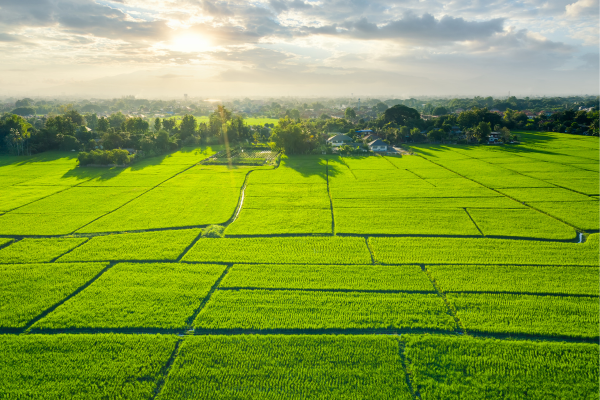
The Noida Authority has moved to implement a land pooling policy as a key mechanism to acquire agricultural land from farmers for planned urban and infrastructure development, officials said earlier this week. The decision comes in response to reluctance among landowners to sell land at previously offered rates, prompting the authority to seek alternative acquisition routes that are less contentious and more attractive to stakeholders. Advertisement


Under the policy, which was approved by the state government in 2020 for industrial bodies, farmers can contribute their land to a pooled development scheme. Once the land is developed, the original owners receive a share of the developed land, rather than a one-time cash payment. The pooled distribution mandates that 80 % of the developed land be allocated for industrial use, 12 % for residential and 8 % for commercial purposes. Farmers are free to retain or sell their share as they choose.
The authority estimates that around 500 acres of agricultural land along the Noida Expressway could be acquired through this policy in the near term. To support direct purchases of smaller plots, the Noida Authority has increased the rate offered to farmers from INR 5,500 to INR 9,000 per square metre, aiming to make outright sale more acceptable to landowners. Where smaller parcels are concerned, the policy allows direct purchase through registry at these updated rates.
Farmers representatives welcomed the adoption of the land pooling approach, arguing that it allows farmers to retain a stake in the benefits of development rather than being left with a one-time payment that relinquishes all future value. They urged the authority not to delay implementing the policy, suggesting it could help resolve long-standing acquisition disputes and unlock stalled development.
Under the land pooling framework, expressions of interest can be invited from landowners willing to participate. Proposals are reviewed by a committee led by the authority's chief executive officer. Once accepted, the land can be acquired without requiring immediate payment of compensation; authorities will pay a monthly rent per acre until the developed land is allotted to the original owners. This blend of incentives is designed to reduce litigation, build a contiguous land bank and attract investment into the region's development plans.
The introduction of the policy reflects broader efforts by the Noida Authority to address land scarcity constraints that have slowed infrastructure projects in the area and to promote structured, litigation-free land acquisition in line with urban expansion priorities.

5th Jun, 2025

25th May, 2023

11th May, 2023

27th Apr, 2023
Advertisement





 Facebook
 Whatsapp
