Advertisement










Private equity has played a significant role in shaping Indi...
In today’s real estate landscape, fitness is often treated...
In this episode of Prop Personalities, we sit down with Hars...
Luxury real estate is one of the most talked-about segments ...
Welcome to Prop Personalities by Prop News Time - a podcast ...
The Delhi Meerut Namo Bharat RRTS corridor is nearing full completion and is expected to handle around 1.67 lakh passengers daily once fully operational. The 82.15 km line, developed by the National Capital Region Transport Corporation, is designed to reduce travel time between Delhi and Meerut to under an hour. Over 96 percent of construction has been completed, with more than 55 km already operational. The project is expected to ease road congestion and improve regional connectivity.
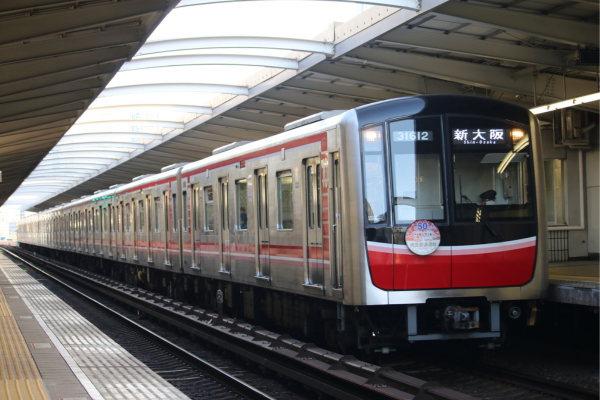
The Delhi Meerut Namo Bharat Regional Rapid Transit System (RRTS) corridor is approaching its final stages of completion, with authorities projecting daily ridership of around 1.67 lakh passengers once the entire stretch becomes operational. The 82.15 km corridor, which connects Sarai Kale Khan in Delhi with Meerut, is being implemented by the National Capital Region Transport Corporation (NCRTC) as part of a larger plan to improve high-speed regional mobility in the National Capital Region. Advertisement


As per information shared recently in Parliament, physical progress on the project has crossed 96 percent, while financial progress stands at just over 90 percent. At present, nearly 55 km of the corridor is operational, allowing passengers to travel between New Ashok Nagar and Meerut South. The remaining sections are under advanced stages of construction, although no specific timeline has been indicated for full commissioning.
Once the corridor is fully functional, travel time between Delhi and Meerut is expected to reduce to less than one hour, compared to the current road journey that typically takes between 90 minutes and two hours, depending on traffic. The trains are built for a maximum operating speed of 180 kmph, making the RRTS one of the fastest regional rail systems in the country.
The NCRTC has indicated that the improved travel time will significantly expand employment access for commuters. Workers from Meerut will be able to reach nearly 6.9 to 7.6 lakh jobs within an hour, while commuters from Sarai Kale Khan will gain access to around one lakh additional employment opportunities. This is expected to encourage a shift from private vehicles to public transport, easing pressure on key arterial roads.
The project has also generated substantial employment during construction, accounting for about 166 lakh mandays so far. Once fully operational, the system is expected to generate around 12 lakh mandays of employment every year. Women participation has been a notable aspect, with more than 35 percent of train operators and station controllers recruited from nearby areas.
In terms of integration, the Sarai Kale Khan terminal is being developed as a major multimodal hub, connecting the RRTS with the Delhi Metro, Indian Railways and interstate bus services. The corridor also supports the Meerut Metro, which operates on shared infrastructure, resulting in estimated cost savings of around INR 6,300 crore. Transit-oriented development zones have been notified around several stations to support planned urban growth.

5th Jun, 2025

25th May, 2023

11th May, 2023

27th Apr, 2023
Advertisement





 Facebook
 Whatsapp
