Advertisement










Private equity has played a significant role in shaping Indi...
In today’s real estate landscape, fitness is often treated...
In this episode of Prop Personalities, we sit down with Hars...
Luxury real estate is one of the most talked-about segments ...
Welcome to Prop Personalities by Prop News Time - a podcast ...
Delhi's Public Works Department has begun a pilot initiative to ease traffic congestion at the Rajghat and Shanti Van intersections on Ring Road by removing traffic signals and introducing a structured U-turn system. The trial aims to reduce stoppages and improve vehicle flow on this high-traffic corridor connecting central, north and east Delhi. Road safety elements such as reflective lane markers, flexible medians and advance signage have been added to support the change. Officials will study traffic movement during the trial before considering similar interventions at other congested junctions in the city.
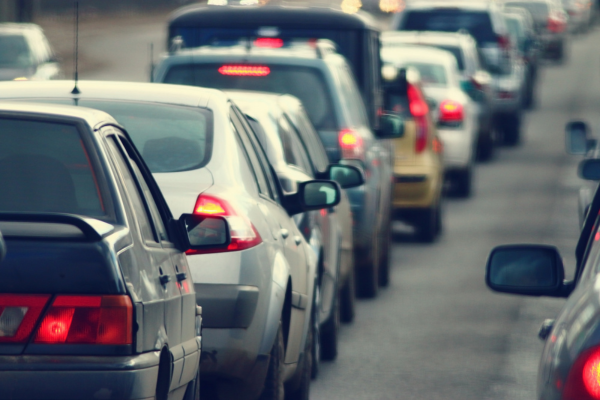
The Public Works Department of Delhi has initiated a trial to make the Rajghat crossing and the adjoining Shanti Van junction signal-free as part of efforts to improve traffic movement on Ring Road. Instead of traffic signals, vehicles are being guided through a planned U-turn system designed to allow continuous movement and reduce waiting time at intersections. Ring Road is one of Delhi's most heavily used arterial routes and frequently experiences congestion due to signalised crossings. Advertisement


To facilitate the new traffic pattern, the department has upgraded on-ground infrastructure at the junctions. Reflective cat-eye lane markers have been installed to improve night-time visibility, while flexible median delineators are being used to prevent sudden lane changes. Additional directional and advance signage has also been placed to guide motorists smoothly through the redesigned intersections and minimise confusion during peak hours.
Officials associated with the project indicated that Rajghat and Shanti Van serve as critical connectors between central Delhi and the northern and eastern parts of the city. The area witnesses a mix of private vehicles, buses and commercial traffic, making signal delays a key contributor to congestion. By removing signal stoppages and organising traffic through controlled U-turns, the department expects to reduce bottlenecks, fuel wastage and erratic driving behaviour.
The performance of the signal-free system will be closely monitored during the trial period. Traffic flow, safety aspects and commuter response will be assessed before taking a call on extending similar designs to other high-density intersections across Delhi. The initiative builds on earlier traffic management measures where design-based solutions were used instead of adding new road capacity.

5th Jun, 2025

25th May, 2023

11th May, 2023

27th Apr, 2023
Advertisement





 Facebook
 Whatsapp
