Advertisement










Private equity has played a significant role in shaping Indi...
In today’s real estate landscape, fitness is often treated...
In this episode of Prop Personalities, we sit down with Hars...
Luxury real estate is one of the most talked-about segments ...
Welcome to Prop Personalities by Prop News Time - a podcast ...
The Ministry of Road Transport and Highways has established a Centre of Excellence for Road Safety at IIT Madras to support safer road planning and implementation across the country. The initiative focuses on research-driven solutions, improved highway design, and the use of technology to reduce accidents. Alongside this, the ministry is rolling out advanced traffic management systems and stricter vehicle safety norms. Mandatory active safety features and advanced driver assistance systems will be introduced in phases from 2027 and 2028 to address high accident rates on national highways.
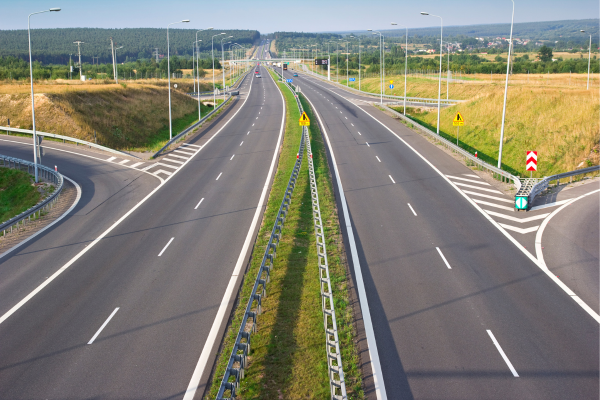
The Ministry of Road Transport and Highways has set up a Centre of Excellence for Road Safety at the Indian Institute of Technology Madras as part of its wider effort to reduce road accidents and improve safety standards on national highways. The centre is expected to act as a knowledge and research hub, supporting the ministry and state agencies with data-based inputs, design guidance and policy support related to road safety. Advertisement


The ministry has informed Parliament that national highways are being planned and constructed using standards issued by the Indian Roads Congress, along with globally accepted engineering norms. Specific safety interventions are being carried out on identified accident-prone locations, based on detailed studies and on-ground assessments rather than uniform solutions.
To strengthen monitoring and enforcement, the government is deploying advanced traffic management systems across major highway stretches. These systems include AI-enabled video incident detection, automatic traffic violation identification, and tools to support quicker response during road incidents. The focus remains on corridors with a high number of fatalities, where timely intervention can significantly reduce risks.
Vehicle safety norms are also being tightened in a phased manner. The ministry has notified rules mandating active safety systems such as anti-lock braking systems and endurance braking systems for medium and heavy commercial vehicles. These requirements will apply to new vehicle models from early 2027 and to existing models later that year.
In addition, advanced driver assistance systems, including lane departure warning, blind-spot detection, driver drowsiness alerts and related features, will become compulsory for several categories of commercial vehicles. These norms will be applicable to new models from late 2027, while existing vehicle models will need to comply from early 2028.
The move builds on earlier initiatives where data-driven road safety models developed by IIT Madras were adopted by multiple states and union territories. These models have helped authorities collect structured accident data and identify targeted safety improvements rather than relying on broad measures.

5th Jun, 2025

25th May, 2023

11th May, 2023

27th Apr, 2023
Advertisement





 Facebook
 Whatsapp
