Advertisement










Private equity has played a significant role in shaping Indi...
In today’s real estate landscape, fitness is often treated...
In this episode of Prop Personalities, we sit down with Hars...
Luxury real estate is one of the most talked-about segments ...
Welcome to Prop Personalities by Prop News Time - a podcast ...
Vietnam has awarded the first phase of a major wind power project to VinEnergo, a new subsidiary of Vingroup, sidelining Germany's PNE despite its planned USD 4.6 billion investment. PNE said the decision was unexpected after years of project work. The move reflects a broader policy tilt towards national champions and adds to recent challenges faced by foreign renewable investors. Vietnam aims to rapidly expand wind capacity, but regulatory uncertainty and financing conditions continue to test overseas participation.
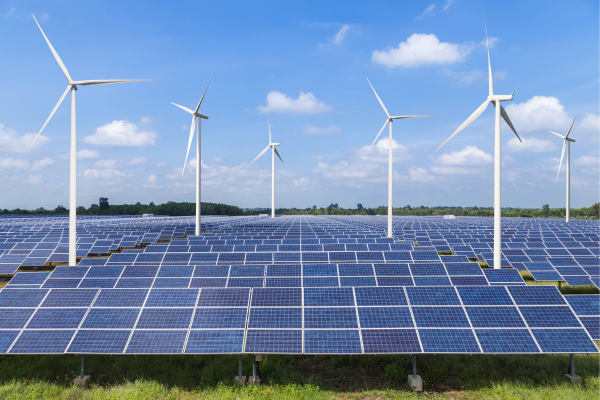
Vietnamese authorities have selected a newly formed subsidiary of real estate-led conglomerate Vingroup to develop the first phase of one of the country's largest wind power projects, leaving out Germany's PNE, a Morgan Stanley-backed renewable energy firm that said the outcome was unexpected. The decision adds to recent concerns among foreign investors operating in Vietnam's energy sector, where policy shifts and regulatory uncertainty have affected several large renewable investments. Advertisement


The approval marks another gain for Vingroup, Vietnam's largest listed company by market value, which continues to expand beyond property into sectors including energy, transport, steel, healthcare, education and electric vehicles. The group also owns Nasdaq-listed EV maker VinFast and has benefited from a policy push that favours domestic champions under the country's evolving growth model.
PNE had planned to invest around USD 4.6 billion in the 2,000-megawatt wind project, initially classified as offshore but recently reclassified as nearshore without any material change to the development plan. Vietnam has set targets of 6,000 megawatts of offshore wind capacity by 2030-2035, starting from zero at present, alongside up to 38,000 megawatts from onshore and nearshore wind projects.
The People's Committee of Gia Lai province approved Vingroup subsidiary VinEnergo's proposal for the first 750-megawatt phase, with a stated investment of 48.3 billion dong, equivalent to about USD 1.9 million. The provincial note announcing the decision did not refer to PNE or another local bidder that were not selected.
PNE indicated that it had taken note of the decision with surprise and was reviewing the reasoning before deciding on next steps. VinEnergo, which was set up only in March, has yet to develop a wind farm but has already secured other projects since its formation. Requests for comment sent to Vingroup and provincial authorities did not receive a response.
According to people familiar with the matter, PNE had been working on the project since 2019, carrying out feasibility studies and wind measurements. These sources said the company had already invested several million USD during the development stage, though PNE did not confirm specific figures. They added that Vietnamese authorities raised unexpected concerns about financial commitments, including a request for the company to deposit investment funds in local accounts as a form of guarantee.
PNE has previously established a local office in Vietnam and signed a memorandum of understanding with authorities on electricity pricing. However, it now joins a growing list of Western energy firms that have scaled back or exited Vietnam in recent months, including Norway's Equinor, Denmark's Orsted and Italy's Enel, largely as part of wider global restructuring efforts.
Vietnam's leadership has been advocating a new economic approach that prioritises strong domestic groups, a shift that has at times created friction with foreign investors who have played a central role in the country's export-led growth for decades. At the same time, electricity demand continues to rise, occasionally leading to power shortages. The country has often relied on increased coal use to bridge supply gaps, even as it maintains commitments to cut emissions and diversify its energy mix.
Source Reuters

5th Jun, 2025

25th May, 2023

11th May, 2023

27th Apr, 2023
Advertisement





 Facebook
 Whatsapp
