Advertisement










Private equity has played a significant role in shaping Indi...
In today’s real estate landscape, fitness is often treated...
In this episode of Prop Personalities, we sit down with Hars...
Luxury real estate is one of the most talked-about segments ...
Welcome to Prop Personalities by Prop News Time - a podcast ...
Construction on the Mumbai-Ahmedabad high-speed rail corridor has crossed another structural milestone with the completion of a mountain tunnel in Palghar district, Maharashtra. The tunnel, built using the New Austrian Tunnelling Method, forms part of a larger cluster of tunnels being developed in the region for India's first bullet train project. This achievement follows a similar breakthrough reported in the same district recently and reflects steady progress on critical civil works. Multiple viaducts, bridges and track-related activities are also progressing across the corridor.
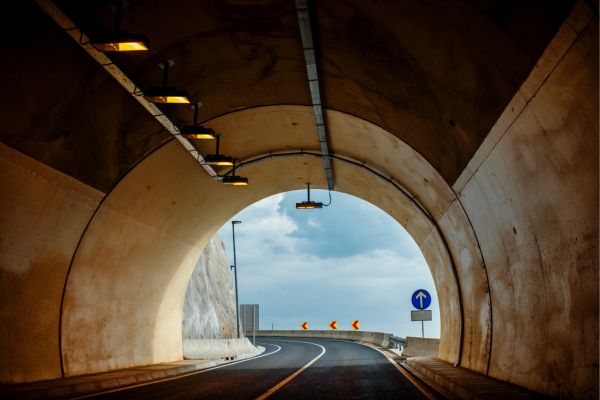
Work on the Mumbai-Ahmedabad bullet train project has progressed with the successful breakthrough of the second mountain tunnel in Palghar district of Maharashtra. The tunnel, identified as MT-6, measures around 454 metres in length and has been designed to carry both the up and down tracks of the high-speed rail line. The breakthrough was achieved after nearly a year of excavation work, marking an important step in addressing the region's complex terrain. Advertisement


The tunnel was constructed using the New Austrian Tunnelling Method, a technique that involves controlled drilling and blasting while allowing flexibility in support systems based on ground conditions. This approach is being used across several tunnel sections in Palghar due to the hilly geology of the area. Officials involved in the project indicated that excavation was carried out simultaneously from both ends to maintain construction timelines and ensure structural safety.
This development comes soon after the completion of another mountain tunnel, MT-5 near Saphale, which was achieved earlier in the past month. With this, two tunnel breakthroughs have been recorded in Palghar in quick succession. The district is a critical stretch of the corridor, with a total of seven mountain tunnels planned, all of which are currently at different stages of construction.
The Mumbai-Ahmedabad high-speed rail corridor spans approximately 508 km, passing through Maharashtra, Gujarat and the union territory of Dadra and Nagar Haveli. The project is designed for train operations at speeds of up to 320 kmph. Along the route, construction agencies have completed around 334 km of viaducts, along with 17 river bridges and 12 crossings over major highways and railway lines. Track laying and electrification activities have also gained pace, particularly in Gujarat.
In Maharashtra, apart from the Palghar tunnels, work is underway on several challenging sections, including the underground corridor connecting Bandra Kurla Complex and Shilphata. This underground stretch is considered one of the most technically demanding components of the project due to dense urban development and geological constraints. Progress on tunnels and associated structures remains central to keeping the overall construction schedule on track.
Source PTI
FAQ
Q1. What is the recent milestone achieved on the Mumbai-Ahmedabad bullet train project?
The project has achieved a key construction milestone with the successful breakthrough of the second mountain tunnel in Palghar district, Maharashtra. The tunnel, known as MT-6, is about 454 metres long and has been built to carry both up and down tracks of the high-speed rail corridor. This breakthrough marks steady progress in one of the most geologically challenging sections of the project.
Q2. How was the Palghar mountain tunnel constructed and why is the method important?
The tunnel was built using the New Austrian Tunnelling Method, which relies on controlled drilling and blasting while adapting support systems based on real-time ground conditions. This method is particularly suitable for hilly and variable terrain like Palghar, as it allows flexibility during construction while maintaining structural stability and safety.
Q3. Why is Palghar district a critical stretch for the bullet train corridor?
Palghar is a crucial section because of its mountainous terrain, which requires multiple tunnels to maintain the alignment and design speed of the high-speed rail line. A total of seven mountain tunnels are planned in the district, all at different stages of construction, making progress here vital for overall project timelines.
Q4. How does this tunnel breakthrough compare with recent progress in the same region?
The MT-6 breakthrough follows the completion of another tunnel, MT-5 near Saphale, achieved earlier in the past month. Recording two tunnel breakthroughs in quick succession highlights improved construction momentum and reflects successful handling of geological challenges in the region.
Q5. What is the overall status of construction along the Mumbai-Ahmedabad corridor?
Across the 508 km corridor, significant progress has been made, including the completion of around 334 km of viaducts, 17 river bridges and 12 crossings over major highways and railway lines. Track laying and electrification activities have also accelerated, particularly in Gujarat, supporting phased advancement of the project.
Q6. What other challenging sections are being worked on in Maharashtra?
Apart from the Palghar tunnels, construction is underway on the underground corridor between Bandra Kurla Complex and Shilphata. This stretch is among the most technically demanding parts of the project due to dense urban development and complex geology, making tunnel progress critical to keeping the bullet train project on schedule.

5th Jun, 2025

25th May, 2023

11th May, 2023

27th Apr, 2023
Advertisement





 Facebook
 Whatsapp
