Advertisement










Private equity has played a significant role in shaping Indi...
In today’s real estate landscape, fitness is often treated...
In this episode of Prop Personalities, we sit down with Hars...
Luxury real estate is one of the most talked-about segments ...
Welcome to Prop Personalities by Prop News Time - a podcast ...
The full commissioning of the Delhi-Meerut RRTS corridor strengthens regional rail infrastructure in the National Capital Region. By significantly reducing travel time and offering high-speed, high-frequency services, the system changes the way people commute between Delhi and nearby cities. Beyond passenger convenience, the corridor is likely to influence residential choices, commercial development and workforce mobility across western Uttar Pradesh. As additional RRTS corridors move forward, the Delhi Meerut stretch sets the operational benchmark for future regional rapid transit projects in India.
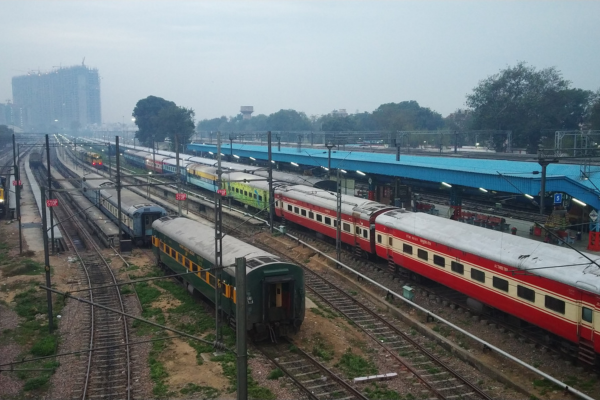
The full 82 km Delhi-Meerut Namo Bharat Regional Rapid Transit System corridor became operational in the past week, reducing travel time between the two cities to around 55 minutes. The project, developed by the National Capital Region Transport Corporation, also saw the launch of the Meerut Metro running on the same infrastructure. Designed for speeds up to 180 kmph, the corridor connects key urban centres such as Sarai Kale Khan, Ghaziabad and Modinagar. The project is India's first operational RRTS corridor and is expected to improve regional mobility across the NCR. Advertisement


The complete Delhi-Meerut Namo Bharat Regional Rapid Transit System (RRTS) corridor was inaugurated in the past week, making the entire 82 km stretch operational. The project was flagged off by Prime Minister Narendra Modi, marking the commissioning of India's first fully functional RRTS corridor.
The corridor connects Sarai Kale Khan in Delhi to Meerut in Uttar Pradesh, passing through key locations including Sahibabad, Ghaziabad and Modinagar. With trains designed for a maximum speed of 180 kmph and an operational speed of around 160 kmph, the system reduces travel time between Delhi and Meerut to nearly 55 minutes. Road travel between the two cities earlier took two to three hours depending on traffic conditions.
Alongside the RRTS, the Meerut Metro was also launched on the same infrastructure. The metro service operates at speeds of up to 120 kmph, making it the fastest metro service in the country in terms of operational speed. The Meerut Metro covers the city stretch in about 30 minutes and runs on a mix of elevated and underground sections within Meerut.
The corridor has 25 stations across the 82 km stretch. Major interchange stations such as Sarai Kale Khan have been developed as multimodal hubs with integration to Indian Railways, Delhi Metro and bus services. This integration is aimed at reducing transfer time and improving last-mile connectivity.
The project has been implemented by the National Capital Region Transport Corporation, a joint venture of the central government and the states of Delhi, Haryana, Rajasthan and Uttar Pradesh. Construction work began several years ago, and sections of the corridor were opened in phases before the full stretch became operational. The project is part of a larger plan to develop multiple RRTS corridors in the National Capital Region to improve regional connectivity.
Officials stated that the corridor is expected to reduce congestion on roads, lower vehicular pollution and support economic activity between Delhi and western Uttar Pradesh. The trains are equipped with CCTV surveillance, dedicated seating areas, mobile charging points and energy-efficient systems. Separate coach space has been provided for women passengers to improve safety.
The Delhi-Meerut RRTS corridor is seen as a model for similar rapid rail systems planned in other parts of the country. Two additional corridors Delhi-Alwar and Delhi-Panipat are also proposed under the NCR transport plan.

5th Jun, 2025

25th May, 2023

11th May, 2023

27th Apr, 2023
Advertisement





 Facebook
 Whatsapp
