Advertisement










In this episode of Prop Personalities, we sit down with Hars...
Luxury real estate is one of the most talked-about segments ...
Welcome to Prop Personalities by Prop News Time - a podcast ...
Airports play a much bigger role than just enabling travel -...
Why does the same hotel brand operate multiple properties in...
Maharashtra's principal infrastructure agencies this week detailed plans for a coordinated development strategy encompassing expressways, airports, urban transit and industrial corridors, intended to underpin the state's long-term economic expansion. Speaking at the Mumbai Global Economic Cooperation (GEC) Summit 2026, agency officials said the emphasis had shifted from individual projects to an integrated network approach that knits together highways such as the 701-km Samruddhi Mahamarg, expanded metro systems, multimodal corridors and the emerging Navi Mumbai International Airport. The Maharashtra State Road Development Corporation described development efforts around strategic interchanges and logistics nodes, while the City and Industrial Development Corporation highlighted urban expansion, cargo connectivity and aviation-linked commercial zones. The Maharashtra Industrial Development Corporation reaffirmed its role in driving the next phase of industrialisation through corridors and manufacturing hubs, and the Mumbai Metropolitan Region Development Authority outlined plans for extensive metro lines, multimodal corridors and bullet-train connectivity to unlock jobs and investment in emerging growth areas.
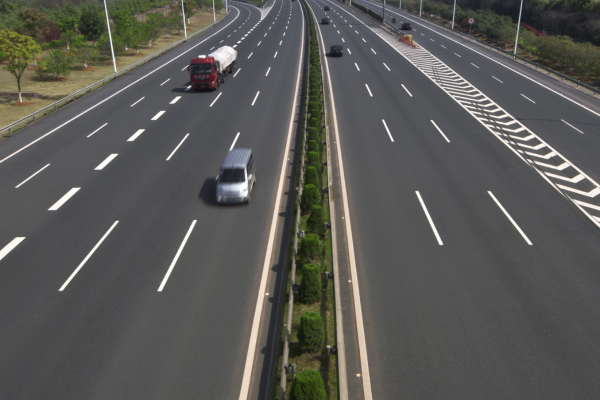
At the Mumbai Global Economic Cooperation Summit 2026, Maharashtra's key infrastructure entities presented a framework for integrated development that spans expressways, airports, urban transport and industrial infrastructure. Officials emphasised that future economic momentum will be anchored in a cohesive network of roads and transit systems rather than isolated projects. Advertisement


The Maharashtra State Road Development Corporation (MSRDC) reiterated its role in broadening highway connectivity beyond its historic projects, such as the Mumbai-Pune Expressway and the Bandra Worli Sea Link, to statewide infrastructure. Its current focus centres on the 701-km Hindu Hridaysamrat Balasaheb Thackeray Maharashtra Samruddhi Mahamarg, with 26 interchanges planned and development envisaged across more than 7,000 sq km, including areas in the Mumbai Metropolitan Region (MMR) and near Vadhavan to support freight, logistics and manufacturing nodes.
The City and Industrial Development Corporation of Maharashtra (CIDCO) described efforts to scale Navi Mumbai, augmenting cargo facilities, multimodal connectivity and inner-city development projects, and creating aviation-enabled commercial zones around the new Navi Mumbai International Airport. The airport, which began operations late last year, has two runways, four terminals and an annual capacity of 90 million passengers, and has already attracted significant investment, including a major logistics hub.
The Maharashtra Industrial Development Corporation (MIDC) outlined its contribution to the next stage of industrialisation, including advancing the Mumbai-Pune industrial corridor, establishing cluster-based industrial estates and promoting public private partnership manufacturing hubs connected with improved road and port infrastructure. MIDC said it manages more than 300 industrial areas across the state and acts as a single-window nodal agency for investment facilitation.
Meanwhile, the Mumbai Metropolitan Region Development Authority (MMRDA) detailed plans to enhance urban mobility with a 337-km metro network, the Alibaug-Virar multimodal corridor and bullet-train connectivity. Officials highlighted the unlocking of new growth areas under initiatives such as Mumbai 3.0 and 4.0, which are expected to stimulate job creation and attract capital.
Collectively, the strategy reflects a shift towards integrated planning across transport, logistics and industrial infrastructure to support Maharashtra's economic objectives and position its urban and regional nodes for future growth.

5th Jun, 2025

25th May, 2023

11th May, 2023

27th Apr, 2023
Advertisement





 Facebook
 Whatsapp
