Advertisement






What really powers the cloud? Behind every Google search, A...
A lot of what defines a home isn’t visible at handover. I...
Private equity has played a significant role in shaping Indi...
Luxury real estate is one of the most talked-about segments ...
Airports play a much bigger role than just enabling travel -...
The Bangalore Metro Rail Corporation Limited (BMRCL) is preparing to open a 7.5-km elevated stretch of the Namma Metro Pink Line between Kalena Agrahara and Taverekere later this year. While trial runs have begun and seven stations are nearing readiness, poor road conditions, broken footpaths, garbage accumulation and weak pedestrian access along Bannerghatta Road are raising concerns among residents. Commuters fear that without proper last-mile connectivity and basic civic works, the Metro's ability to ease congestion and improve daily travel may remain limited.
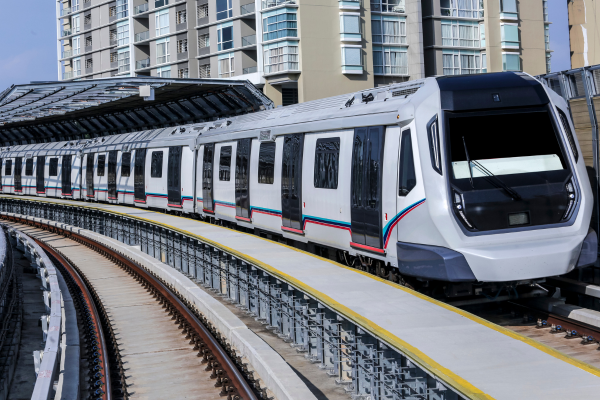
The Bangalore Metro Rail Corporation Limited (Bangalore Metro Rail Corporation Limited) is preparing to commission a 7.5-km elevated section of the Namma Metro Pink Line from Kalena Agrahara to Taverekere later this year. The stretch includes seven stations and forms part of the 21-km corridor that will eventually connect Kalena Agrahara in south Bengaluru to Nagawara in the north. Trial runs using prototype trains have already been carried out on this section. Advertisement






Despite construction nearing completion, civic infrastructure along Bannerghatta Road, which runs beneath the Metro corridor, remains in poor condition. Several road stretches between NICE Road Kanakapura Road junction and Dairy Circle continue to have deep potholes, uneven surfaces and loose debris, creating difficulties for both motorists and pedestrians. In many locations, footpaths remain blocked by construction materials such as concrete pipes, unused barricades and accumulated waste.
Residents near the Himagiri bus stop have reported persistent garbage piles and open drains that have not been addressed despite repeated complaints. These conditions, they say, make walking to nearby Metro stations unsafe and uncomfortable. Similar issues exist near Hulimavu station, which is expected to serve surrounding residential pockets including Arekere, Kothnur and parts of JP Nagar. While the main road here has been widened, pedestrians still struggle due to broken or obstructed footpaths.
Near the IIM-B station, road surfaces remain dusty and cluttered following utility works, with restoration yet to be completed. The stretch near Vega City Mall continues to face long-standing maintenance issues, while the JP Nagar 4th Phase station is located in one of the most congested sections of Bannerghatta Road, adding to access challenges during peak hours.
Jayadeva station currently benefits from relatively better bus connectivity, but residents say proper pedestrian crossings and feeder services are still required to ensure smooth first- and last-mile movement. At the Taverekere terminal, garbage dumping and poorly maintained approach roads remain unresolved.
Local residents point out that Metro construction along this corridor has stretched over nearly eight years, during which the area has seen rapid real estate and population growth. Many housing developments were marketed around the promise of Metro connectivity, raising expectations of improved mobility. However, commuters argue that without coordinated civic work by local agencies, the benefits of the Metro may not be fully realised once operations begin.
Please tar the bannergatta road completely
Advertisement













 Facebook
 Whatsapp
