Advertisement










Private equity has played a significant role in shaping Indi...
In today’s real estate landscape, fitness is often treated...
In this episode of Prop Personalities, we sit down with Hars...
Luxury real estate is one of the most talked-about segments ...
Welcome to Prop Personalities by Prop News Time - a podcast ...
The Capital Region Development Authority (CRDA) is planning a consolidated layout approach for returnable plots under Amaravati's Land Pooling Scheme (LPS) phase two. Unlike the first phase, where plots were developed village-wise, the new plan groups plots from multiple villages into one or two central layouts. This aims to reduce infrastructure costs, provide contiguous land for major projects such as an international airport and sports complex, and accelerate plot handovers for farmers. Officials have placed the proposal before the state government and are awaiting approval for the final layout structure.
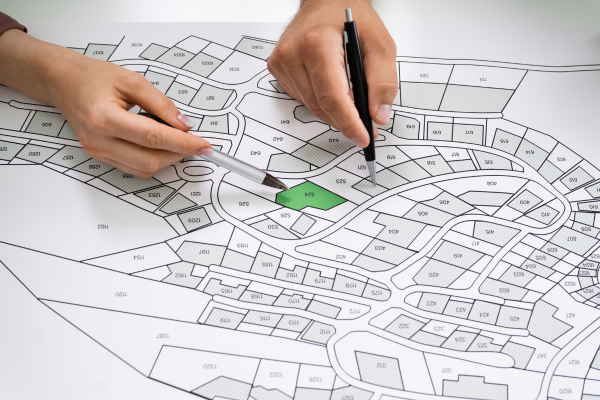
The Capital Region Development Authority (CRDA) is preparing to implement a unified layout for returnable plots in the second phase of Amaravati's Land Pooling Scheme. In the initial phase, layouts were developed separately for each village as farmers preferred plots within or close to their original lands. However, this scattered approach created fragmented parcels, making it difficult for the government to allocate large contiguous land blocks for infrastructure and major development projects. Advertisement


To address these issues, officials are considering consolidating plots from several villages into one or two centralized layouts. One proposal involves allotting land from four villages in the Pedakurapadu constituency into a single layout, and plots from three villages in the Tadikonda constituency into another. Another option under review is a single layout for all seven villages included in phase two. Authorities are also evaluating whether to develop a new layout for plots in Tulluru mandal or to use existing lands from the first phase.
Officials have noted that multiple layouts increase infrastructure requirements, including roads, drainage, and utilities, which raises costs and slows development. By consolidating plots, infrastructure can be built more efficiently, and larger contiguous parcels will be available for key projects like the proposed international airport and an integrated sports complex. Consolidation would also allow faster completion of works, meeting farmers demands for quicker handover of developed plots.
Phase two of the land pooling scheme covers approximately 20,494 acres. Recent developments indicate that land pooling activities have begun in several villages, supporting broader infrastructure initiatives in Amaravati, including road networks and a potential railway line. The CRDA has submitted its proposal to the state government for approval, with a decision expected soon.
Consolidating returnable plots marks a strategic shift from the first phase of Amaravati's LPS, addressing lessons learned from fragmented land development. It ensures government-acquired lands are optimally used for large-scale projects while reducing overall costs and facilitating faster handovers to landowners. Authorities continue to assess the most efficient way to implement the plan while balancing farmer expectations and infrastructure needs.

5th Jun, 2025

25th May, 2023

11th May, 2023

27th Apr, 2023
Advertisement





 Facebook
 Whatsapp
