Advertisement










Private equity has played a significant role in shaping Indi...
In today’s real estate landscape, fitness is often treated...
In this episode of Prop Personalities, we sit down with Hars...
Luxury real estate is one of the most talked-about segments ...
Welcome to Prop Personalities by Prop News Time - a podcast ...
The National Highways Authority of India (NHAI) has outlined a plan to redesign the Dasna junction where the Delhi Meerut Expressway (DME) intersects with National Highway9 (NH9) to address persistent traffic congestion. Key measures include widening the main Uturn, merging a service road to create an extra lane, installing concrete barriers to separate traffic flows, and closing an underpass that has caused bottlenecks. The revised circulation plan has been shared with traffic authorities, with construction expected to start soon to improve vehicle movement and commuter safety.
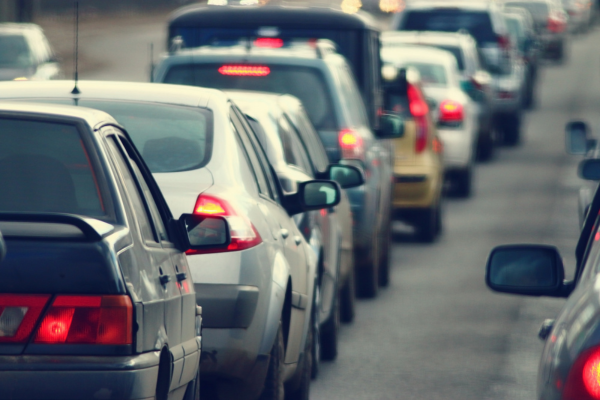
The National Highways Authority of India is set to implement a redesign at Dasna junction, a key point where the Delhi-Meerut Expressway (DME) meets National Highway 9 (NH9). This junction has been a major source of congestion due to heavy daily traffic and multiple merging points. Vehicles from the expressway and the highway often meet at the same spot, causing queues and delays that frequently spill onto the expressway. Advertisement


NHAI officials note that roughly 300,000 vehicles travel on NH9 each day, while the DME carries more than 60,000 vehicles daily. The main problem occurs at a narrow Uturn where vehicles from NH9 try to enter the city side, often creating backups during peak hours. In addition, traffic from Hapur merging with city-bound vehicles on NH9 has been another source of congestion, especially near the underpass that currently facilitates this movement.
To ease the situation, NHAI plans to widen the critical Uturn by about 15 metres. This will allow larger vehicles to turn more smoothly, reducing delays. The existing service road along NH9 will also be merged with the main carriageway, adding an extra lane for through traffic. Concrete barriers will be installed to prevent unsafe lane changes where traffic from DME and NH9 currently intersects without clear separation.
Another major change involves closing the underpass used by Hapur-bound traffic. Instead, vehicles will be rerouted to make Uturns at designated points Hapur-bound traffic will use a Uturn near Bamheta, and city-bound vehicles from NH9 will continue past Dasna to a later Uturn to rejoin the main lanes. These changes aim to reduce conflict points, smooth traffic flow, and improve overall safety.
The revised traffic circulation plan has already been shared with local traffic authorities to coordinate implementation. NHAI expects construction to begin shortly, which should relieve congestion at this crucial junction connecting the National Capital Region with surrounding towns and industrial hubs.

5th Jun, 2025

25th May, 2023

11th May, 2023

27th Apr, 2023
Advertisement





 Facebook
 Whatsapp
