Advertisement










Private equity has played a significant role in shaping Indi...
In today’s real estate landscape, fitness is often treated...
In this episode of Prop Personalities, we sit down with Hars...
Luxury real estate is one of the most talked-about segments ...
Welcome to Prop Personalities by Prop News Time - a podcast ...
India's building materials sector is witnessing a structural shift as plasterboard systems increasingly replace traditional plaster of Paris (POP) sheets in residential and commercial construction. The transition is being driven by demand for faster installation, cleaner processes and improved durability, alongside labour shortages and rising costs. Industry participants note that plasterboard is becoming the preferred solution for ceilings due to its fire resistance, ease of finishing and cost efficiency. Despite strong momentum, per capita plasterboard consumption in India remains significantly lower than global and regional benchmarks, indicating substantial growth potential. The overall ceiling market has expanded sharply over the past two decades and is expected to scale further, supported by government housing initiatives and sustained construction activity. Manufacturers are responding by expanding capacity, diversifying product portfolios and strengthening technical support ecosystems.
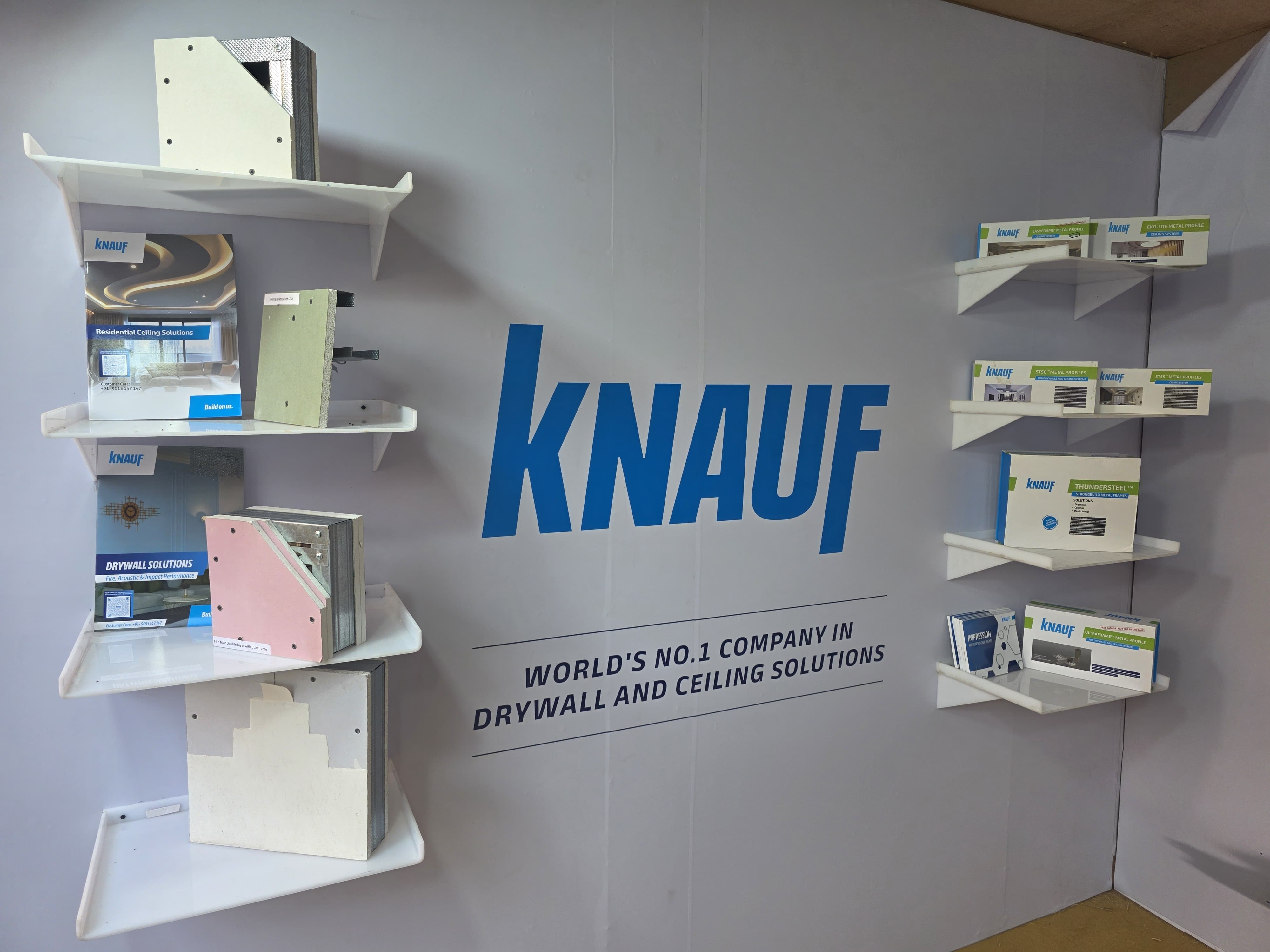
India's construction and building materials industry is undergoing a notable transition, with plasterboard systems steadily replacing traditional plaster of Paris (POP) sheets across a wide range of projects. The shift reflects changing construction practices that favour speed, efficiency and reduced dependence on manual labour, particularly in urban residential and commercial developments. Advertisement


Industry executives indicate that plasterboard has increasingly become the standard choice for ceiling applications across the country. Vijay Mishra, commercial director at Knauf India, has said that plasterboard offers advantages such as versatility, paint-ready finishes, fire resistance and cost efficiency, with typical pricing ranging between INR 55 and INR 70 per sq ft. He has also pointed out that the traditional POP sheet segment has seen a sharp decline since the pandemic, largely due to shortages of skilled labour and rising installation costs.
Knauf India, part of the global drywall and ceiling solutions provider, has highlighted the scale of untapped demand in the domestic market. According to company data, per capita plasterboard consumption in India stands at approximately 0.13 sq m, compared with a global average of around 1.4 sq m. In Southeast Asian markets such as Thailand and Vietnam, consumption levels range between 2.5 and 3 sq m per capita. This disparity, industry participants say, underscores the long-term growth potential of plasterboard adoption in India.
The ceiling and drywall segment has expanded significantly over the past two decades. The market, once valued at around INR 65 crore and dominated by unorganised POP sheet manufacturers, has grown to an estimated INR 5,000 crore. Growth is expected to accelerate further as modern construction systems gain acceptance and government-led housing programmes such as the Pradhan Mantri Awas Yojana support sustained building activity.
Knauf's product portfolio extends beyond plasterboard to include gypsum plaster, insulation solutions and raised flooring systems. The company's gypsum plaster is designed to set within a few hours, requires no curing and is ready for painting, while its insulation offerings are used to improve energy efficiency in HVAC and industrial applications. Its raised flooring systems are positioned for commercial and specialised use cases.
To address rising demand, Knauf is expanding capacity at its existing manufacturing facilities in Khushkhera near Delhi and Shree City near Tirupati, and is planning an additional production unit. The company has stated that its strategy focuses on providing design support, installer training and performance assurances rather than competing solely on product pricing.
Plasterboard and dry construction systems are increasingly being adopted in IT parks, corporate offices, hotels and other commercial developments, where speed of execution, fire safety and acoustic performance are key requirements. As India's construction sector continues to grow, industry participants expect plasterboard systems to play a central role in shaping modern building practices.

5th Jun, 2025

25th May, 2023

11th May, 2023

27th Apr, 2023
Advertisement





 Facebook
 Whatsapp
