Advertisement










Private equity has played a significant role in shaping Indi...
In today’s real estate landscape, fitness is often treated...
In this episode of Prop Personalities, we sit down with Hars...
Luxury real estate is one of the most talked-about segments ...
Welcome to Prop Personalities by Prop News Time - a podcast ...
The Economic Survey 2025-26 advocates congestion pricing and parking reforms as central strategies to reduce traffic congestion in Indian cities, emphasising a shift from vehicle-centric planning to people-focused urban mobility. It highlights global models like Singapore's Electronic Road Pricing and London's Congestion Charge which dynamically charge vehicles in dense business districts to manage demand, improve travel speeds and cut emissions. The survey also notes India's own policy progress, including demand-based parking management, such as the Chennai Metropolitan Area Parking Policy (2025), which treats parking as valuable urban real estate and supports public transport, walking and cycling. These demand-management tools are proposed alongside scaling up bus fleets, accelerating e-bus adoption and strengthening last-mile and shared mobility options, as part of a broader integrated approach to tackle gridlock and improve liveability in fast-growing metropolitan regions.
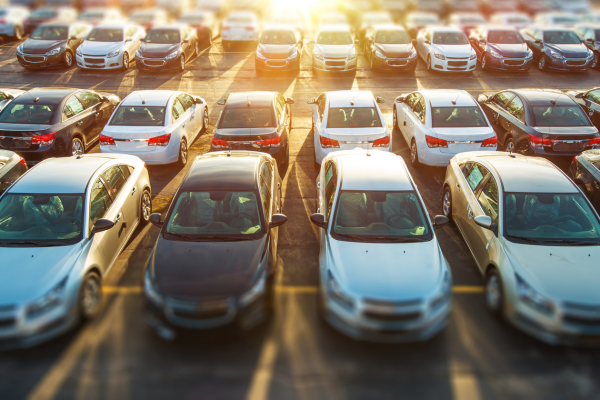
The Economic Survey 2025-26, tabled in late January, places renewed emphasis on urban mobility reforms as essential for decongesting Indian cities, calling congestion pricing and parking reforms key tools in managing traffic and prioritising people over vehicles. According to the survey, dense business districts stand to benefit significantly from targeted congestion pricing mechanisms that discourage unnecessary private vehicle use, alleviate gridlock, and improve air quality drawing on long-standing global examples such as Singapore's Electronic Road Pricing (ERP) system and London's Congestion Charge. In both cases, drivers pay automated tolls or zone entry fees during peak hours, which has demonstrated measurable reductions in traffic volumes and journey times over the years. Advertisement


Congestion pricing works by internalising the external costs of traffic such as time lost, fuel consumed, and emissions into the travel decision, which helps reshape commuter behaviour while providing a revenue stream for reinvestment in public transport or active mobility infrastructure. The survey points out that introducing such demand-based pricing arrangements on busy urban corridors could help regulate peak-period traffic and make public and non-motorised transport more attractive alternatives.
In addition to congestion pricing, the Economic Survey underscores the importance of parking reforms that treat parking space as a valuable urban asset rather than a free commodity. Demand-based parking management, which adjusts fees according to real-time demand and location, can discourage long-stay on-street parking and reduce cruising a common contributor to traffic build-up. Recent Indian policy examples like the Chennai Metropolitan Area Parking Policy (2025) are cited as early steps toward this approach, complementing investments in transit systems and pedestrian-friendly infrastructure.
Beyond pricing and parking, the Survey calls for an integrated urban transport strategy that expands city bus fleets, accelerates electric bus adoption, and strengthens last-mile and shared mobility services, noting these are crucial to making private vehicle use a choice rather than a necessity. Ultimately, these reforms align with the broader narrative of shifting urban planning from vehicle-centric models to people-oriented frameworks that enhance liveability, reduce pollution, and enable smoother, more sustainable mobility in India's rapidly growing urban landscape.

5th Jun, 2025

25th May, 2023

11th May, 2023

27th Apr, 2023
Advertisement





 Facebook
 Whatsapp
