Advertisement










Private equity has played a significant role in shaping Indi...
In today’s real estate landscape, fitness is often treated...
In this episode of Prop Personalities, we sit down with Hars...
Luxury real estate is one of the most talked-about segments ...
Welcome to Prop Personalities by Prop News Time - a podcast ...
India is increasingly looking at inland waterways to boost freight transport, according to the latest Economic Survey. The government highlighted that cargo movement via rivers and canals, though currently limited, has been growing steadily, reaching over 145 million tonnes recently. Ongoing projects like the Jal Marg Vikas Project and initiatives under the Maritime India Vision 2030 aim to increase cargo volumes and the waterways modal share. Digital tools, incentives for operators, and integration with road, rail, and ports are expected to strengthen this eco-friendly and cost-efficient freight network.
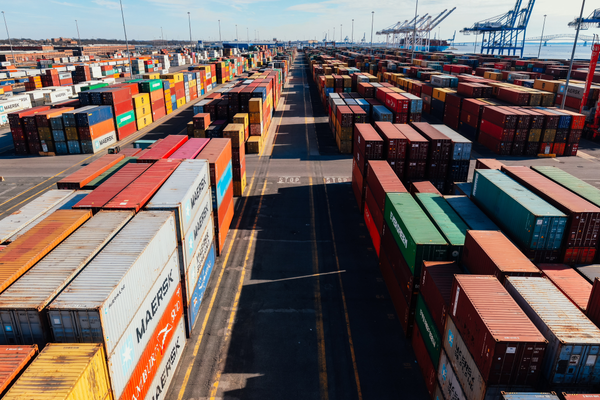
The Economic Survey has underlined the government's focus on expanding the role of inland waterways in India's freight transport system. While rivers and canals currently handle only a small fraction of cargo, their share has grown steadily over recent years, demonstrating potential to ease pressure on roads and railways. The government aims to enhance this mode of transport by improving infrastructure, offering operational incentives, and integrating waterways into broader logistics networks. Advertisement


Cargo movement through inland waterways reached over 145 million tonnes recently, marking significant growth compared with previous years. The Jal Marg Vikas Project along National Waterway 1, connecting Varanasi to Haldia, has been a major driver, improving navigability and cargo handling capacity. Plans are in place to extend similar projects on other national waterways and strengthen connectivity with ports, roadways, and rail corridors.
The government projects that the modal share of inland waterways could rise from about 2% to 5% in the near future, with annual cargo volumes expected to surpass 200 million tonnes by 2030. These targets are part of larger visions, including the Maritime India Vision 2030 and the Maritime Amrit Kaal Vision 2047, aiming to improve efficiency, attract private investment, and reduce logistics costs.
Digital initiatives are also a key part of the expansion. Centralized vessel registration, real-time monitoring systems, and integrated cargo tracking are being implemented to reduce delays and operational inefficiencies. Incentives for scheduled cargo services, especially along key routes such as Indo-Bangladesh protocol corridors, encourage private operators to participate. Passenger services and tourism along waterways are also being explored to maximize utilization.
The survey emphasized that inland waterways are not only cost-effective but also environmentally friendly, offering lower energy consumption and reduced carbon emissions compared with road and rail freight. By complementing existing transport infrastructure, waterways can support India's multimodal logistics strategy, integrating ports, dedicated freight corridors, and logistics parks to improve the overall efficiency of goods movement.

5th Jun, 2025

25th May, 2023

11th May, 2023

27th Apr, 2023
Advertisement





 Facebook
 Whatsapp
