Advertisement










Private equity has played a significant role in shaping Indi...
In today’s real estate landscape, fitness is often treated...
In this episode of Prop Personalities, we sit down with Hars...
Luxury real estate is one of the most talked-about segments ...
Welcome to Prop Personalities by Prop News Time - a podcast ...
The Economic Survey for FY 2025-26 highlights that passenger fare revisions over the past five years have lowered Indian Railways' reliance on freight revenue. Freight's share in total earnings fell from 68% in FY 2023 to 65% in FY 2025, with projections of 62% in FY 2026. Despite this, freight profits continue to cover passenger losses, leaving an uncovered deficit of INR 5,257 crore. Improved operational efficiency, capacity expansion, and sustained demand from core sectors have kept freight loading above historical averages, while high rates and cross-subsidisation remain challenges for competition and cost control.
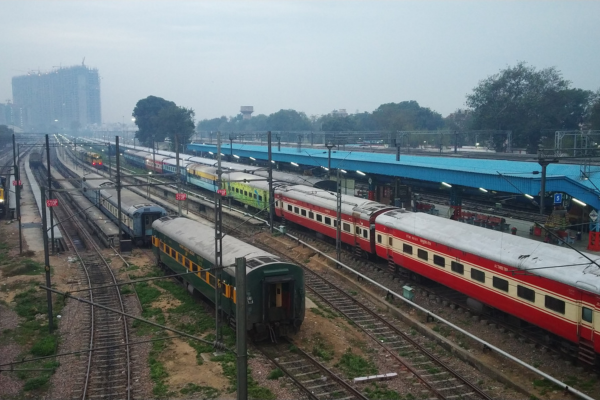
The Economic Survey presented this past week revealed that adjustments in passenger fares have significantly influenced the revenue structure of Indian Railways. Over the last five years, fares were revised on three occasions, leading to a gradual reduction in the proportion of freight earnings in total revenue from 68% in FY 2023 to 65% in FY 2025, and now projected at around 62% for FY 2026. This trend reflects the longstanding practice of cross-subsidising passenger and other services using profits from freight.
Advertisement


Despite this shift, passenger services still record substantial uncovered losses, which amounted to INR 5,257 crore in FY 2023. The survey noted that the Comptroller and Auditor General has recommended a critical analysis of passenger operating costs, measures to reduce these losses, and diversification of the freight basket to boost revenue.
The report also highlighted the impact of high freight rates on competition and costs. It stated that elevated rates, partly due to cross-subsidisation, distort competition with road transport and raise commodity prices and logistics costs. Rationalising freight rates is suggested as a measure to enhance revenue stability, encourage a shift from road to rail transport, and ease congestion, while also supporting green transport initiatives.
Freight loading continues to play a key role in the economy. In FY 2025, freight volume exceeded 1.6 billion tonnes, slightly higher than the previous year and 12.5% above the FY 2021-24 average, showing strong underlying demand. Growth has continued into FY 2026, with freight loading rising by 3.3% to approximately 1,215 million tonnes between April and December. Core sectors such as coal (601 MT), iron ore (138 MT), cement (109 MT), container traffic (71 MT), steel products (56 MT), fertilisers (52 MT), mineral oil (38 MT), foodgrains (36 MT), raw materials for steel plants (23 MT), and other goods (91 MT) have been major contributors.
Operational efficiency has improved, with average daily freight loading increasing from 4.2 MT in 2024 to 4.4 MT in 2025. This was supported by new track commissioning, expansion of dedicated freight corridors, and reduced congestion. Policy interventions such as bulk terminals, rationalised rates for containerised cement, and adoption of digital platforms like the Freight Operation Information System have strengthened operational efficiency and bulk handling.
Source PTI
FAQ
Q1. How have passenger fare adjustments affected Indian Railways’ revenue structure?
Over the past five years, Indian Railways revised passenger fares three times, leading to a gradual reduction in freight’s share of total revenue. Freight earnings dropped from 68% in FY 2023 to 65% in FY 2025, and are projected at 62% in FY 2026. This reflects a deliberate attempt to reduce Railways’ dependence on freight to cross-subsidise passenger services, though passenger operations still record substantial losses.
Q2. What is the current financial impact of passenger services on Indian Railways?
Passenger operations continue to incur losses despite fare revisions. In FY 2023, the uncovered deficit from passenger services stood at INR 5,257 crore. Freight profits still cover a significant portion of these losses, but the gap underscores the need for better cost management, efficiency improvements, and revenue diversification.
Q3. Which sectors contribute most to Railways’ freight traffic?
Freight loading remains robust, with FY 2025 volumes exceeding 1.6 billion tonnes. Key contributors include:
Q4. How has operational efficiency improved for freight services?
Operational efficiency has seen notable gains. Average daily freight loading increased from 4.2 million tonnes in 2024 to 4.4 million tonnes in 2025, aided by:
Q5. What challenges remain with Railways’ freight pricing?
High freight rates, partly resulting from cross-subsidisation of passenger fares, remain a concern. Elevated rates:
Q6. What are the broader implications of these developments for the economy?
The strong performance in freight, alongside reduced dependence on freight profits for passenger services, indicates better financial health and operational resilience for Indian Railways. Sustained freight demand from core sectors ensures supply chain continuity, while efficiency improvements and rate rationalisation could enhance competitiveness, reduce logistics costs, and contribute to sustainable transport growth in India.

5th Jun, 2025

25th May, 2023

11th May, 2023

27th Apr, 2023
Advertisement





 Facebook
 Whatsapp
